19 Dec, 2025
19 Dec, 2025

This article is medically reviewed by Dr. Tanay Shah, Consultant - Surgical Oncology and Breast Cancer Specialist, HCG Aastha Cancer Centre, Ahmedabad.
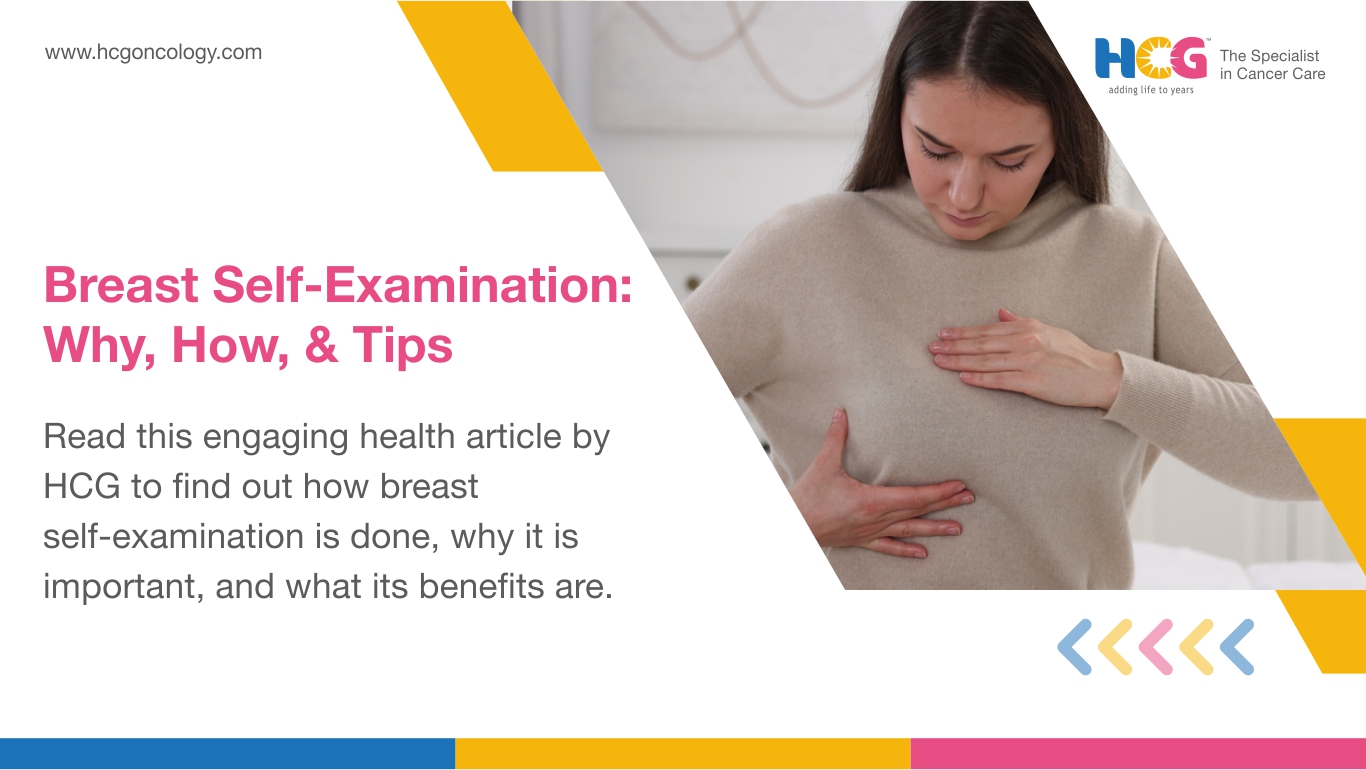
Monthly breast self-examination (BSE) is a crucial practice that can help you stay ahead of breast cancer. While many women are familiar with breast self-examinations, some might still question if they are doing it correctly. Several women ask about how to check for breast cancer at home.
This article provides all the information you need to know about conducting a proper breast self-examination.
Breast self-examination, or self-breast examination, is a simple breast cancer screening tool.
A breast self-examination involves a woman examining her breasts with her hands periodically at home in a systematic, stepwise fashion.
This helps women become familiar with the look and feel of their breasts and immediately notice when something is not normal. It also helps detect breast lumps that may or may not be cancerous.
"Regular breast self-examinations are essential as they empower women to
understand their bodies and detect changes early. While not a
replacement for mammograms, self-exams are crucial for early detection,
increasing the chances of successful treatment and better outcomes."
Dr. Tanay Shah
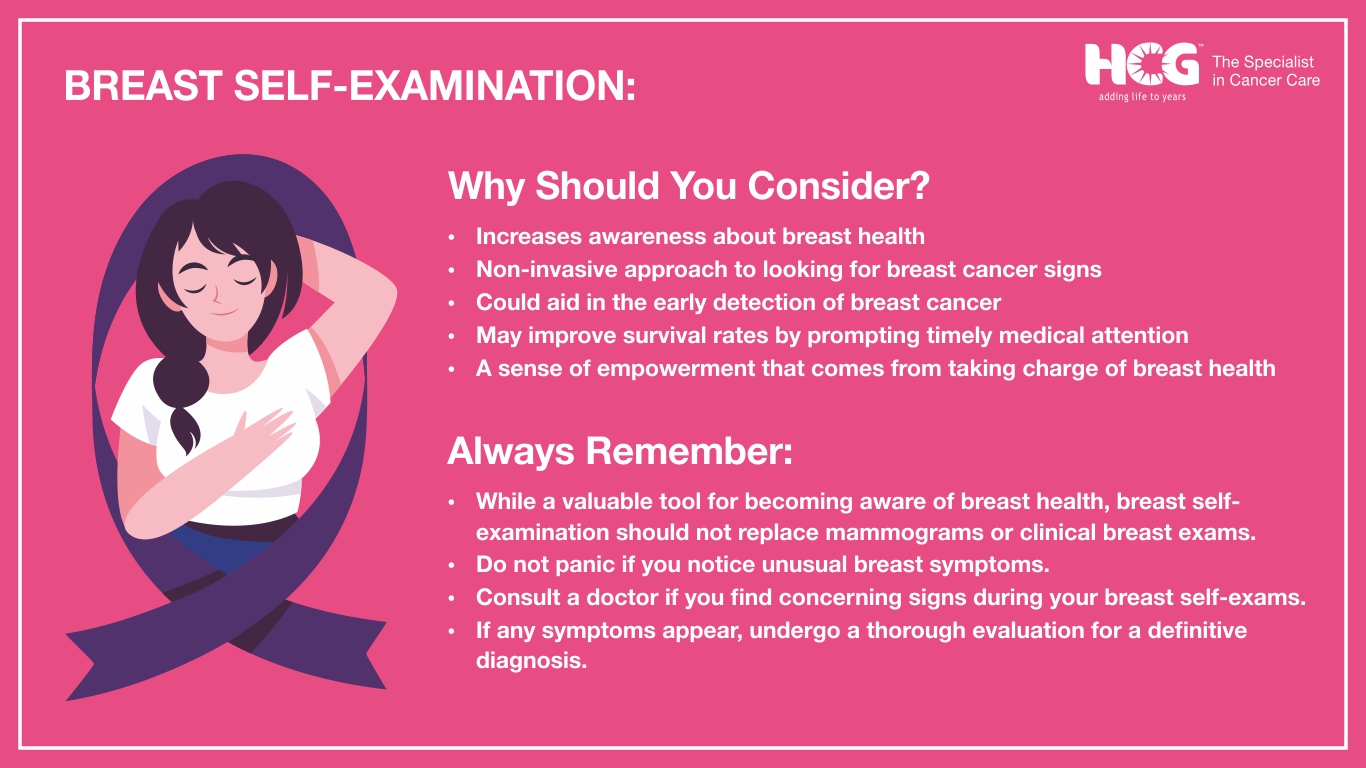
Many are not aware of the importance of breast self-exams. Performing a breast self-examination helps in many ways. Most importantly, self-breast examination makes early detection of breast cancer possible.
The following are a few reasons why you should consider breast self-exams every month:
Like any other cancer, it is important to detect breast cancer in the early stages for appropriate management. Breast self-examination allows you to look for abnormalities that indicate breast cancer, which prompts you to see a doctor for additional examination.
These signs and symptoms can be caused by benign breast conditions as well.
Nonetheless, it is important to pay attention to the different signs of breast cancer and immediately consult with a doctor to rule out the underlying serious condition.
Watch this video as one of our specialists talks about the importance of early detection of breast cancer:
Regular breast examinations help you become more aware of how your breasts look and feel. This helps detect changes, such as lumps, thickening of the skin, and other irregularities.
Breast cancer examination at home is a non-invasive, cost-free method. It is simple, can be easily incorporated into the routine, does not require special equipment, and does not require a visit to the doctor.
Like other cancers, the early detection of breast cancer improves overall survival. Further, managing breast cancer in its early stages requires less aggressive treatment.
Breast self-examination improves the overall quality of life by reducing the anxiety and stress of developing breast cancer, especially in women with a high risk for breast cancer.
However, it is important to note that women at high risk for breast cancer should follow the routine mammography screening schedule as recommended by their gynecologists, in addition to breast self-examination.
The best time for breast self-examination is a few days after the menstrual cycle, when the breasts are least likely to be tender or swollen.
Self-breast examinations should ideally be performed once every month. Also, it is advisable to do it on the same day every month.
To make breast self-examination easy for you, we have broken down the entire procedure into five steps, and they are listed here. Please follow these breast self-exam steps every month.
Women should relax their arms on their hips and look at their breasts in the mirror. They should note the size, shape, and color of their breasts and examine them for any dimpling of the skin, swelling, or changes in the nipples.
Women should raise their arms above their heads and look for changes in the appearance of their breasts. This position allows women to view the lower and upper parts of the breasts more clearly.
Women should also observe any discharge from their nipples and any sign of fluid on their clothes. In the case of abnormal discharge from the nipples, note the color, consistency, amount, and smell of the discharge.
This step involves a breast physical examination. Women should lie down on their backs in a comfortable position. This position helps to spread the breast tissue evenly. Use of the left hand to examine the right breast and vice versa is advisable.
They must then move their fingers in small circular motions to feel the breast tissue's surface, middle, and deeper layers. Later, they should gently squeeze the nipples to observe any discharge. A breast examination will be followed by an examination of the armpits and the upper chest for any lumps or unusual changes.
Performing a breast cancer self-exam while standing or sitting is an effective way to check for changes or abnormalities in the breast tissue. This position is particularly useful for examining the upper parts of the breasts and the areas near the armpits.
"For effective breast self-examinations, adhere to these steps: Observe
your breasts in front of a mirror, lift your arms, inspect for
discharge, palpate for lumps while lying down, and repeat while
standing. Consistency and thoroughness are vital for early detection of
any changes."
Dr. Tanay Shah
It is recommended to use the pads of the fingers during breast self-examination. The finger pads provide an even and sensitive surface for detecting any lumps or changes in the breast tissue.
It is important to apply different pressure levels, i.e., light, medium, and firm, with the fingers to ensure that all the layers of the breast tissues are thoroughly checked. While light pressure is effective in evaluating the breast tissues near the skin, firm pressure is useful for examining the tissues near the chest and the ribs during a self-check for breast cancer.
It is important to follow a specific pattern during a BSE to ensure that all areas of the breast tissue are thoroughly checked. The most common patterns for BSE are circular, vertical strips, and wedges. Regardless of the pattern used, the nipple and armpit areas should be checked thoroughly.
If you observe any changes in the appearance and texture of your breasts, the presence of lumps, or unusual discharge from your nipples, you should see a doctor for a detailed evaluation. Do not ignore the pain or tenderness either.
In addition to breast self-exams, it is important for women to consider annual mammography, which can help women catch breast cancer even before the symptoms appear.
It is important to note that not all breast lumps are cancerous. Breasts have a nodular or lumpy texture, which can vary based on age, hormonal changes, and individual anatomy.
Lumps may occur due to fibrocystic changes, fibroadenoma, lobular carcinoma in situ, fat necrosis and lipomas, and cysts.
The doctor should comprehensively evaluate any type of lump to arrive at a conclusive diagnosis. Learning about the abnormalities that indicate the presence of breast cancer can help women seek timely medical attention and take care of their breast health.
The 7 Ps of breast self-exam is a mnemonic to easily remember the key steps involved in breast self-examination, and they are as follows:
Fact: Breast self-examination does not prevent breast cancer. However, it may prompt women to see a doctor by helping them identify signs that could indicate breast cancer.
Fact: There is no evidence that regular self-breast examination saves lives.
In developed countries, doctors have stopped recommending monthly self-breast examinations for early breast cancer detection. Possible reasons for this include incidences of false positives and negatives, increased cases of unnecessary tests of benign lumps, heightened anxiety, etc. However, in developing countries like India, self-breast examination may still be relevant, as a large percentage of cases are diagnosed in advanced stages, and some parts of these countries have limited access to clinical examination or mammography. A self-breast examination may help women identify lumps and breast cancer signs that may prompt them to seek medical attention, which may in turn save their lives.
Fact: No, a BSE may not help detect any lump in the breast. A self-breast examination may only be effective in finding larger lumps. Smaller lumps, which cannot be felt with bare hands, often go undetected. This often reduces the chances of early detection.
Also, lumps present in the deeper regions cannot be felt during a BSE. This is also true for women with dense breast tissue.
That said, a mammogram or ultrasound may be effective in detecting any lump in the breast.
Fact: In recent years, doctors have encouraged women to prefer annual mammography, as the findings from this procedure are more reliable. Breast self-examination may help women get familiar with their breasts and notice when something is different than usual.
Fact: Finding a breast lump does not always mean you have breast cancer. 60-80% of lumps detected through breast self-examination are non-cancerous. These lumps could be breast cysts, fibroadenomas, lipomas, breast abscesses, breast calcifications, etc. However, you should see a specialist for a proper evaluation and appropriate care.
Breast self-exams help women become more familiar with their breasts and identify signs that may indicate the presence of breast cancer. However, they cannot replace professional screening approaches like mammograms and clinical breast examinations, as these help in identifying subtle changes and detecting early-stage tumors, unlike breast self-exams.
Mammograms and clinical breast exams are just as important as breast self-exams in putting oneself ahead of breast cancer.
False positives and false negatives are significant drawbacks of breast self-examination. A false positive may lead to increased anxiety, unnecessary testing and follow-up procedures, and reduced participation in future screening due to unwarranted fear.
A false negative, on the other hand, can result in a delayed diagnosis, diminished trust, and consequently lower participation in screening procedures.
While it is important to participate in breast screening regularly, one must also note that not always do the lumps or other breast changes indicate breast cancer. To be sure, one must see a specialist and follow their advice.
Before your first self-breast examination, you may have several questions. You may not know what to look for, what is normal, and what needs medical attention.
Therefore, we suggest that you see your gynecologist, who can guide you properly and even demonstrate how to self-examine your breasts, what signs to look for, and the right time to seek medical attention.
Finding signs of breast cancer during a self-exam can be overwhelming. However, it is important not to panic. Consult a specialist for proper evaluation, during which you may be asked to undergo certain tests. Your doctor will recommend the right way forward based on your test results.
Women should not ignore any of the symptoms of breast cancer or any other serious underlying disease detected during breast self-examination. It is important to seek care from a breast surgical oncology service provider in case women experience new or persistent lumps, nipple discharge, altered skin of the breasts, and pain in the breasts. Women, especially those who are at high risk, should consult their doctor to discuss the measures to reduce breast cancer risk.
At HCG Cancer Centre, which is recognized as one of the best breast cancer screening centers in India, specialists recommend highly advanced screening methods that aid in the timely detection of breast cancer. If screening tests indicate breast cancer, we recommend high-end diagnostic tests for a conclusive diagnosis.
With a dedicated department for breast cancer care, we offer comprehensive services, starting from screening to follow-up care and supportive care under one roof. This helps improve the treatment experience for our patients and also optimize the health outcomes.
Regular breast self-examination is a vital, non-invasive tool for early breast cancer detection, raising awareness of breast health, and improving overall quality of life. Conduct these exams monthly to familiarize yourself with your breasts and promptly detect any abnormalities. Always consult your doctor if you notice any unusual changes.
Dr. Tanay Shah
Consultant – Surgical Oncology (Breast Cancer Specialist)
MBBS, MS (General Surgery), DNB (Surgical Oncology)
Dr. Tanay Shah is a seasoned surgical oncology consultant practicing at HCG Aastha Cancer Centre, a comprehensive cancer hospital in Ahmedabad. Dr. Tanay Shah specializes in the surgical management of breast, head, neck, gynecological, and GI oncological cancers. He is highly skilled in endoscopy, including upper gastrointestinal tract endoscopy, colonoscopy, fiberoptic laryngoscopy, and bronchoscopy. His expertise has been recognized by his peers, and he has participated in many oncology conferences and CMEs, which have significantly helped him hone his skills as a surgical oncologist.
Appointment Link: Book an appointment with Dr. Tanay Shah.
Feel free to reach out to us.