10 Apr, 2026
Feel free to reach out to us.
10 Apr, 2026
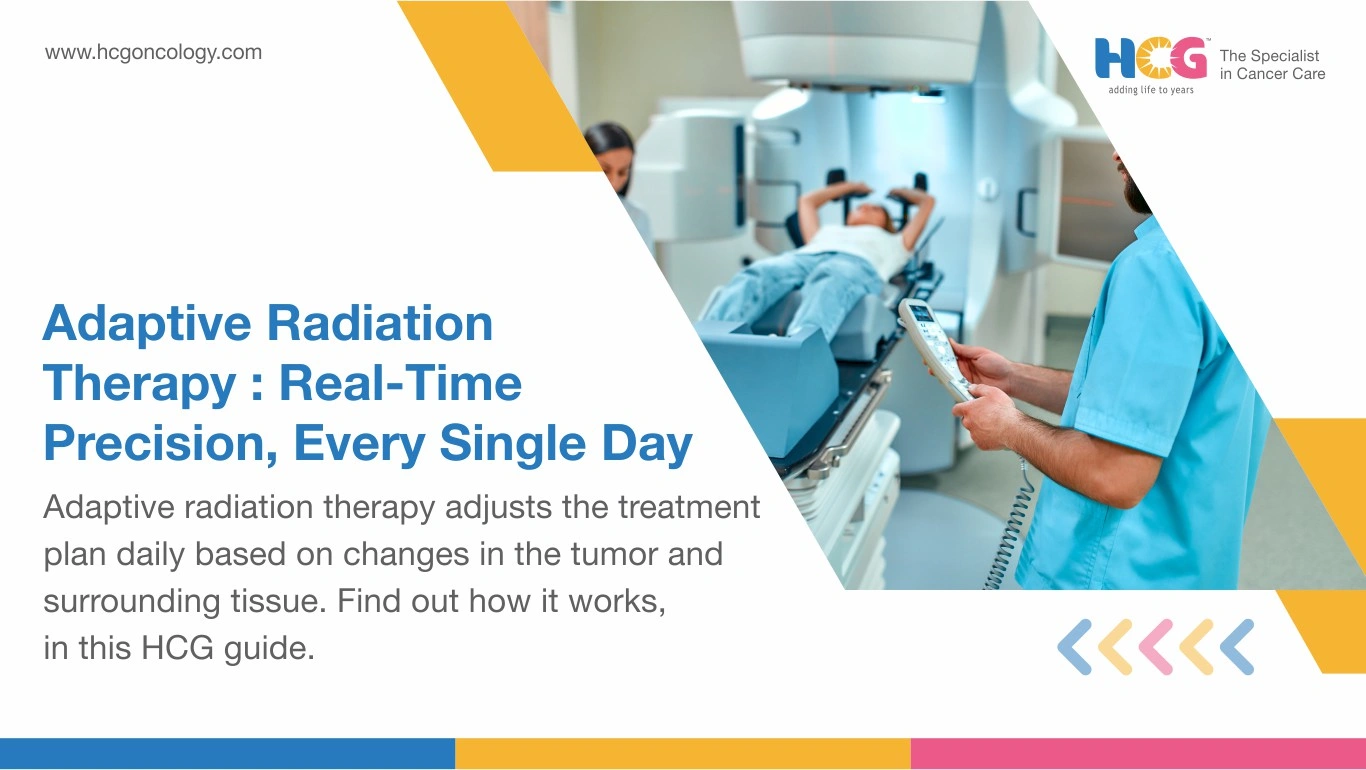
Adaptive radiation therapy redesigns your radiation plan at the start of each treatment session using that day's scan. Tumors shrink. Organs shift after a meal or a full bladder. Conventional radiation ignores both. Adaptive radiation therapy accounts for those changes in real time, targeting the tumor more precisely while sparing surrounding healthy tissue with every single fraction.
Adaptive radiation therapy generates a fresh, patient-specific beam configuration before every fraction, using imaging acquired that same morning. Conventional radiation oncology draws one plan at the start and repeats it unchanged across four to eight weeks, regardless of what has shifted inside the body.
For instance, a prostate gland can migrate up to 10 millimeters depending on bladder and rectal filling. A head-and-neck tumor may shed significant volume after the first two weeks. Treating the original target area when anatomy has moved means either under-dosing the tumor or exposing structures that no longer need radiation.
Adaptive RT is not a different type of radiation. It uses the same beam technology as IMRT or VMAT. The difference is that the plan guiding the beam is rebuilt fresh each day.
Online adaptive radiation therapy acquires a cone-beam CT scan at the start of each daily session while the patient remains on the couch. AI algorithms analyze the new anatomy instantly, identify any shifts in tumor position or volume, and generate a revised beam arrangement. The radiation oncologist approves the adapted plan before the session starts.
Offline adaptive radiation therapy reviews accumulated imaging after several sessions and then issues a corrected plan for the remaining fractions. Online adaptive RT delivers more precise daily adjustments but requires dedicated AI-enabled hardware.
HCG's Varian Ethos Adaptive Radiotherapy system combines AI contour generation with real-time plan optimization, completing the full online adaptation cycle without adding significantly to your total appointment time.
| Factor | Conventional Radiation Therapy | Adaptive Radiation Therapy |
|---|---|---|
| Planning Frequency | A single radiation plan is created at the start of treatment and repeated for the entire course (4–8 weeks) regardless of anatomical changes. | A new radiation plan is generated before each treatment session using that day's imaging and anatomy. |
| Precision | Uses the same beam plan even if the tumor shrinks or organs shift during treatment, which may lead to underdosing the tumor or unnecessary exposure. | Uses daily imaging and AI-driven recalculation to adjust the beam to the tumor's current position and size. |
| Healthy Tissue Sparing | Less responsive to daily organ movement, so nearby organs may receive radiation even when they shift out of the treatment field. | Detects organ movement and re-optimizes the beam to avoid healthy tissues, reducing toxicity to structures like the rectum, bowel, and salivary glands. |
Patients receiving stereotactic body radiation therapy (SBRT) also benefit substantially. When each fraction carries a higher biological dose, anatomical accuracy on that specific day matters proportionally more.
Image-guided RT (IGRT) provides the daily anatomical dataset that drives every plan revision. Without fresh imaging, adaptation has no input. With it, the system detects when a critical organ has drifted into the high-dose zone and recalculates the beam to exclude it for that session.
The clinical payoff of this daily optimization is measurable. Reduced dose to the rectum, parotid glands, and bowel correlates directly with lower late-toxicity rates: less rectal bleeding in prostate cancer patients, less xerostomia in head and neck patients, and better bowel tolerance in pelvic cancer patients.
In summary, adaptive radiation therapy does not intensify the beam. It makes the same dose far more precisely placed every day, based on who you are anatomically on that specific day.
Recovery after adaptive radiation therapy follows the same principles as conventional radiation therapy, typically with a reduced acute side-effect burden from the precise targeting. Skin care, hydration support, and nutritional rehabilitation are the primary immediate priorities. Pelvic adaptive RT patients receive guidance on bowel management and bladder care throughout the treatment course.
Post-treatment follow-up at HCG integrates imaging surveillance; fatigue management; psycho-oncology support; pelvic floor physiotherapy; sexual health rehabilitation; and wound care monitoring, where applicable. Hormone management is built into the survivorship pathway for patients whose treatment affects reproductive function.
When decisions need to be made, HCG helps by matching the right radiation technology to your anatomy on each treatment day, not just on day one. HCG Cancer Hospital's Radiation Oncology Division uses AI-driven platforms, including Varian Ethos, to deliver adaptive radiation therapy with clinical precision at every fraction. The plan treating you on day fifteen should reflect who you are on day fifteen. At HCG, our radiation oncologists and treatment protocols ensure that.
Disclaimer: This information is intended to educate patients and caregivers. It does not replace professional medical advice. All treatment decisions should be made in consultation with a qualified doctor.