01 Apr, 2026
Feel free to reach out to us.
01 Apr, 2026
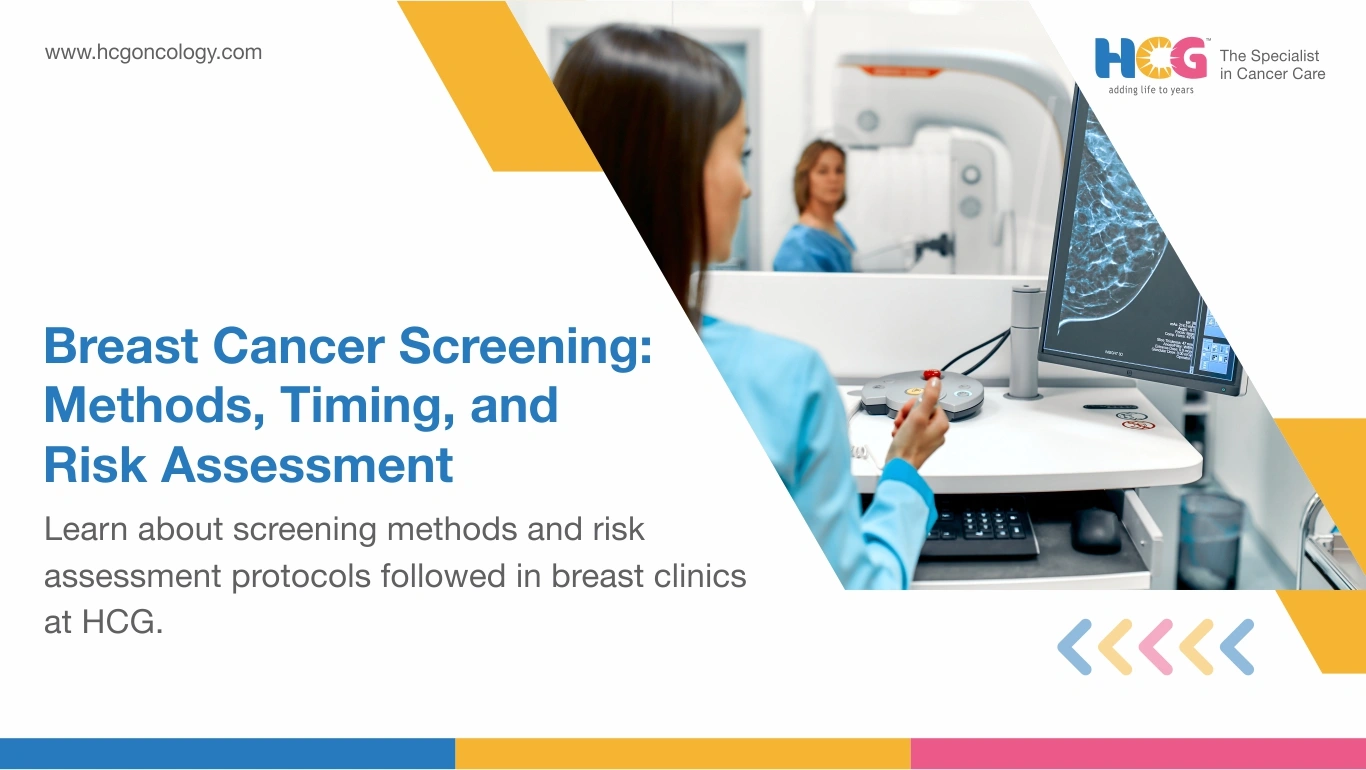
Breast cancer screening refers to the process of using different tests to detect breast cancer before symptoms appear.
The primary goal of screening is to detect cancer early, when treatment is more effective and survival rates are higher. Screening does not prevent breast cancer, but it does increase the likelihood that treatment will be effective by detecting the disease early.
Healthcare professionals use a variety of screening treatments depending on a woman's age, breast density, medical history, and overall risk level. Regular screenings for women are an important aspect of preventative health care.
Breast cancer is one of the most common types of cancer that women develop. Many early-stage breast cancers don't cause pain, lumps, or visible changes. Screening tests can detect anomalies like cancer years before they start presenting symptoms.
Breast cancer screening is important because:
It is critical to understand that screening decisions should always be made in collaboration with a skilled healthcare practitioner.
Most guidelines for breast cancer screening are intended for women with an average risk. However, some women may be at a higher-than-average risk due to specific gene mutations, family history, and personal cancer history they carry.
Women with medium risk are recommended to start mammograms at the age of 40.
In women with a higher-than-average risk, doctors may recommend screening at the age of 25–30, which may also include an annual MRI. An expert must determine whether women at higher risk require screening sooner or more frequently.
The age at which screening should begin depends on a woman’s risk level and overall health condition.
| Age Group | Recommended Screening Test | Typical Frequency | Additional Insights |
|---|---|---|---|
| 20–29 years | Breast self-awareness and clinical risk assessment | Monthly or as advised by the doctor | For average-risk women, routine imaging is not recommended. |
| 30–39 years | Clinical breast exam (selected cases) | As advised by the doctor | Imaging is only recommended for high-risk individuals or those with symptoms |
| 40–49 years | Screening mammography | Every 1–2 years | Recommended for early breast cancer detection |
| 50–74 years | Screening mammography | Every 1–2 years | Helps reduce breast cancer mortality |
| 75 years and above | Mammography (selected individuals) | Individualized | Recommended based on the overall health of the patient, breast cancer risk factors, and the preferences of the patient |
| High-risk (any age) | Mammography + Breast MRI | Annually (often starting earlier) | Recommended for high-risk women |
A mammography is a low-dose X-ray of the breasts. It is the most widely used test for breast cancer screening. It can detect tumors that are too small to touch and are missed during a physical examination.
Breast cancer screening with mammography:
Regular mammograms have been shown to reduce the death rate from breast cancer among those who receive them.
Breast magnetic resonance imaging (MRI) uses radio waves and magnetic fields to produce extremely clear images of breast tissue. It is not routinely used to screen women at average risk.
Doctors may recommend a breast MRI for:
A qualified healthcare professional performs a clinical breast exam (CBE) to check for lumps or changes in the breast.
Women must note that CBEs are not an alternative to mammography.
Self-breast examination was once considered a standard breast cancer screening test. However, today, it is meant for understanding how your breasts naturally look and feel through visual and physical inspections.
Women should visit a doctor if they notice:
Breast ultrasound is often recommended as a supplemental screening tool; it is not a primary cancer screening tool.
It is often recommended for women with dense breasts, and there is no radiation exposure with this procedure. However, there is a high risk of false positives with breast ultrasound.
| Feature | Mammography | Breast Ultrasound |
|---|---|---|
| Purpose | Primary breast cancer screening test | Supplemental or diagnostic tool for breast cancer |
| Technology Used | Low-dose X-ray imaging | Sound waves |
| Best suited for | Average-risk women, population screening | Women with dense breasts, evaluating specific lumps |
| Ability to detect early cancer | High (including microcalcifications) | Limited for early-stage cancers |
| Role in routine screening | Gold standard for breast cancer screening | Not recommended as a standalone breast cancer screening test |
| Radiation exposure | Yes - Low-dose | No |
| False-positive risk | Moderate | Higher when used alone |
The breast cancer risk carried by women can impact the age at which screening will be recommended. It may also impact the frequency of the screening test.
Women with average risk often start at the age of 40. Women with higher-than-average risk are recommended to begin screening at a much earlier age (25-30).
Various factors can influence the risk of breast cancer, including:
A healthcare provider may do a formal risk assessment to determine whether sooner or more screening for breast cancer is required.
Learning about the benefits and risks of breast cancer screening is crucial for patients to make informed decisions about their health:
You may generally receive a breast cancer screening at:
If you are experiencing breast symptoms like the presence of a lump, changes in the appearance and texture of the breast, pain, or discharge from the nipple, you should see a doctor for a detailed evaluation.
Disclaimer: This information is intended to educate patients and caregivers. It does not replace professional medical advice. All treatment decisions should be made in consultation with a qualified doctor.