10 Apr, 2026
Feel free to reach out to us.
10 Apr, 2026
There is still a widespread belief in India that cancer is something that happens after 60. In a GP's waiting room, on a family WhatsApp group, or in casual conversation, the assumption holds.
"I'm only 34. I don't need to worry about that yet," is something that most young adults say to themselves.
According to NCRP data, breast cancer accounts for 27.3% of all cancers in Indian women aged 15 to 39, and oral cancer is the leading cancer site among young Indian males in the same age group. These are not edge-case statistics. These numbers indicate cancer patterns across India, including Mumbai, Bangalore, and Delhi.
The key reason why this is alarming is that most healthy adults under 45 in India have never undergone a cancer screening test.
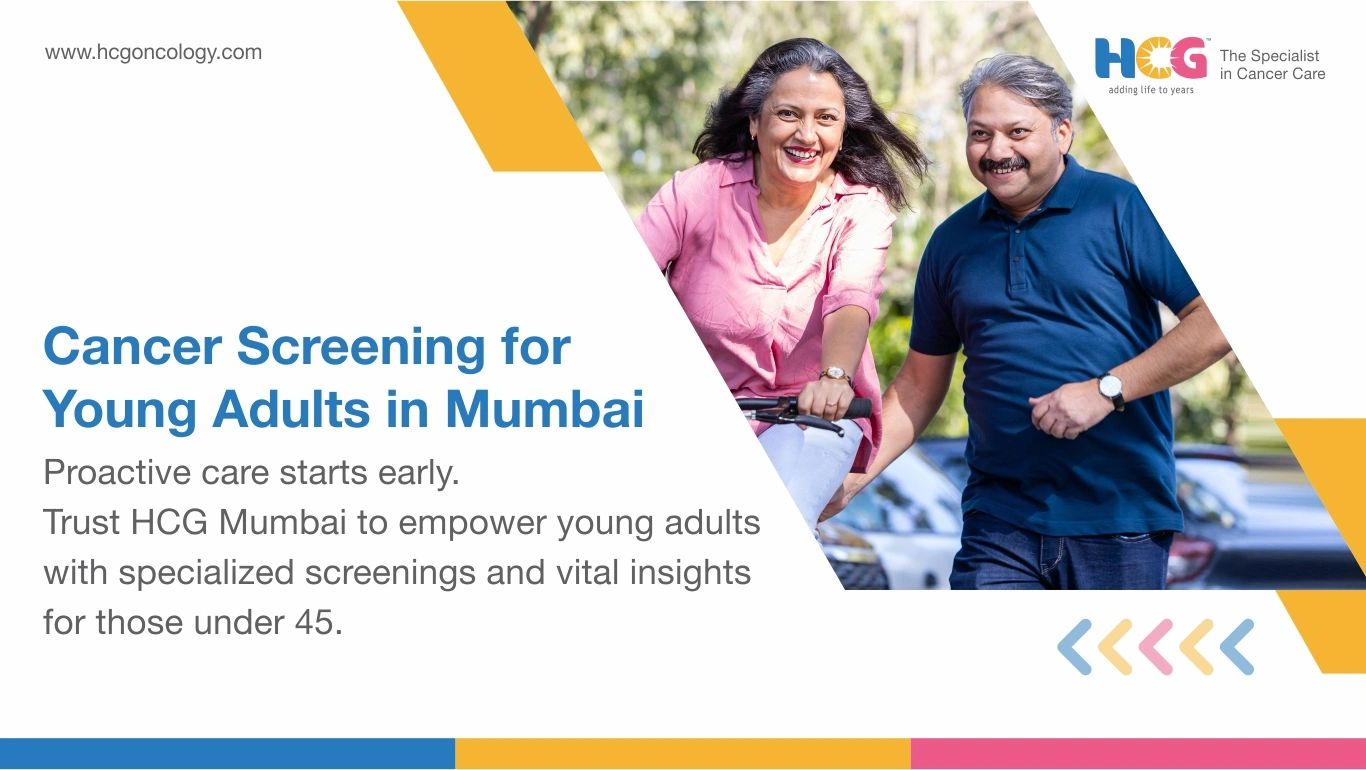
In this article, we discuss what young adults should know about cancer screening and the availability of cancer screening for young adults in Mumbai.
Cancer incidence in younger cohorts is a documented, rising trend, and the reasons are specific.
For women in Mumbai, the picture starts with breast cancer. Urban density, dietary pattern shifts, delayed first pregnancy, and reduced breastfeeding rates are all contributing factors to rising breast cancer incidence in Indian women under 50.
Cervical cancer remains another significant concern in young women as well, despite the availability of HPV vaccination, because screening participation rates in India remain very low.
For men, oral and tongue cancers are the leading cancer type in the 15 to 39 age group, driven largely by tobacco and gutka use. This is not a rural or socioeconomic pattern alone; tobacco use in urban young male populations remains common enough to sustain this trend.
There is also a subtler challenge: early-stage cancer in young adults presents with symptoms, such as fatigue, acidity, bloating, swelling, etc., that are easy to attribute to something else. A busy 30-year-old managing work, family, and traveling can easily miss these signals for months.
The table below maps the cancers most prevalent in younger Indian adults:
| Cancer Type | Gender Most Affected (Under 45) |
|---|---|
| Breast cancer | Female |
| Oral / tongue cancer | Male (tobacco/gutka use) |
| Cervical cancer | Female |
| Colorectal / GI cancer | Male and Female |
| Liver cancer (HCC) | Male (hepatitis/fatty liver risk) |
| Ovarian cancer | Female |
| Lung cancer | Male (smokers, tobacco users) |
A cancer diagnosis in a person under 45 is not rare in India: it is increasingly common. When caught early, most cancers are highly treatable.
The window between 'detectable by a screening test' and 'causing symptoms' is exactly when early action makes the greatest difference.
If I feel fine, why spend money on a cancer test? More often than not, young adults skip screening based on various assumptions.
"Cancer is an older person's problem." This is an assumption only. Cancer incidence in the 25 to 45 age group in India has been rising steadily across breast, oral, and colorectal cancers.
"I'd know if something was wrong." Early-stage cancer rarely announces itself. Fatigue, bloating, urinary changes, etc.: these are easy to normalize and move past. By the time something feels undeniably wrong, the clinical picture is often already more complicated.
"I'll get to it eventually." The gap between detectable and symptomatic is exactly when treatment outcomes are best. Waiting for a reason to screen is, in most cases, waiting too long.
"It probably won't happen to me." 1 in 9 Indians will develop cancer in their lifetime (NCRP 2022). That's not a remote risk; it shows up in most families and most friend groups.
HCG Cancer Hospital, Borivali, has carefully designed some health packages for young adults based on the degree of risk one may carry. The table below has the details of the risk profile, the screening packages that may be helpful, and their costs.
| Your Profile | Recommended Package | Starting Price |
|---|---|---|
| Under 45, no risk factors, no family history of cancer | Early Cancer Alert Male (Rs. 1,799) or Female (Rs. 1,999) | Rs. 1,799 / Rs. 1,999 |
| Family history of any cancer, or history of hepatitis/fatty liver | Essential Screen Male (Rs. 2,299) or Female (Rs. 2,499) | Rs. 2,299 / Rs. 2,499 |
| Family history of breast, ovarian, or cervical cancer; BRCA risk | Comprehensive Cancer Prevention Female: includes HPV DNA, Mammogram, Breast USG, Genetic Counselling | Rs. 13,700 |
| Smoker or tobacco user; family history of lung, GI, or liver cancer | Comprehensive Cancer Prevention Male: includes HRCT Chest, AFP, PIVKA-II, Genetic Counselling | Rs. 10,100 |
If your situation does not fit neatly into one row above, please reach out to the HCG Borivali team. The care team can address your concerns and answer your questions, after which you can book an appointment for a cancer screening package of your choice.
For residents of Borivali, Kandivali, and Dahisar, HCG Cancer Hospital, Borivali, is the nearest dedicated cancer hospital in the area. Specialist oncology services, including the kind of specialist-reviewed screening results that distinguish a comprehensive cancer center from a general diagnostic lab, are available without traveling to South or Central Mumbai.
This matters for screening specifically because the clinical value of an abnormal tumor marker result depends entirely on who interprets it. At HCG Borivali, abnormal results are reviewed by the oncology team, not a general physician; this allows patients to receive timely care and support before there is a serious or life-altering diagnosis.
Disclaimer: This content is for informational purposes only and should not replace professional medical advice, diagnosis, or treatment. Always consult a qualified healthcare provider for guidance tailored to your needs.