18 Feb, 2026
18 Feb, 2026

This article is medically reviewed by Dr. Basant Mahadevappa, HPB and Liver Transplant Surgeon, HCG Cancer Hospital, Bangalore.
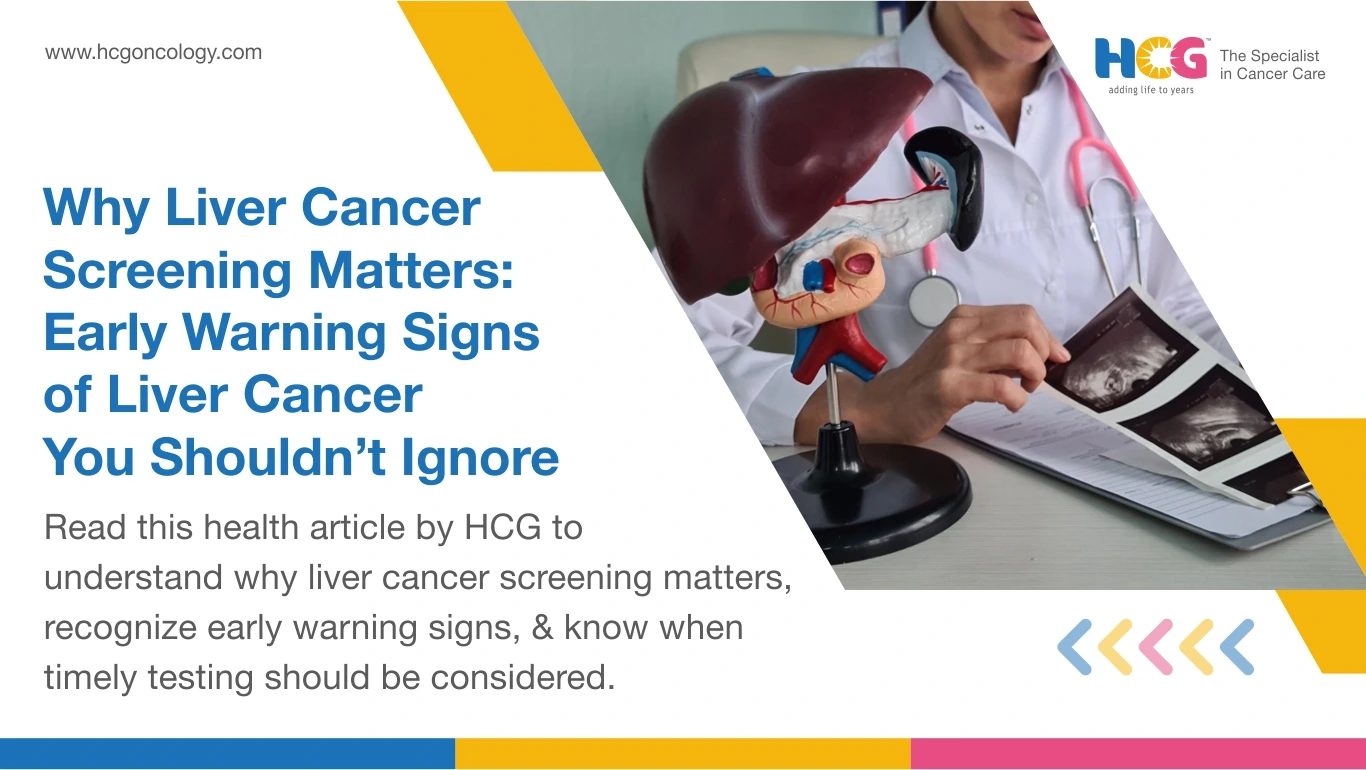
The liver plays a vital role in digestion, detoxification, and metabolism, yet various liver diseases, including cancer, often progress silently without early symptoms. Liver cancer screening helps in the early detection of the disease, even before it starts showing symptoms.
One of the most common tools used in liver cancer screening is a liver function test (LFT), a simple blood test that assesses the liver's functioning. Additionally, serology tests and imaging tests are also recommended for liver cancer screening.
In this article, we’ll learn what a liver function test is, why liver cancer screening is important, what the different tests included in it are, and more.
A liver function test (LFT) is a blood test that measures specific enzymes, proteins, and substances produced or processed by the liver.
This test helps doctors check how well the liver is working and look for signs of inflammation, injury, and other abnormalities that may indicate the presence of cancer.
A liver function test assesses the following components:
| Component | Normal Ranges | What Does it Show |
|---|---|---|
| Alanine Aminotransferase (ALT) | ~7–56 U/L | Liver cell integrity |
| Aspartate Aminotransferase (AST) | ~10–40 U/L | Liver and muscle cell injury |
| Alkaline Phosphatase (ALP) | ~44–147 IU/L | Bile duct function and bone turnover (continuous cycle of bone renewal) |
| Gamma-Glutamyl Transferase (GGT) | ~9–48 U/L | Bile duct health; alcohol-related injury |
| Total Bilirubin | ~0.1–1.2 mg/dL | Processing and removal of bile pigments from the body |
| Albumin | ~3.5–5.0 g/dL | Liver protein synthesis |
| Total Protein | ~6.0–8.3 g/dL | Albumin and globulin levels; this test can point out certain liver conditions |
| Prothrombin Time (PT/INR) | ~11–13.5 seconds | Time taken for the blood to clot; since the liver produces clotting factors, abnormal levels can indicate liver problems |
*The reference/normal ranges for liver function tests can slightly vary depending on the laboratories and population groups.
If the reports have alarming observations, doctors recommend additional testing to find out the causes of abnormal liver function test results. Based on additional diagnostic information, doctors will recommend necessary interventions.
The liver has a strong ability to compensate for damage, meaning it can continue functioning even when disease is present. The following are the key reasons why liver cancer often goes undetected in the early stages:
Strong Compensatory Mechanisms: The liver has strong regenerative capabilities with excellent functional reserve; hence, it rarely causes any alarming symptoms in the early stages of cancer.
Physical Location of the Organ: The liver is located deep behind the rib cage on the right side. This makes it difficult for the doctor to look for small liver tumors through palpation during routine examinations.
Vague or Non-Related Symptoms: Patients often dismiss liver cancer symptoms as vague or age-related.
Underlying Liver Diseases: Those living with liver diseases may ignore new liver cancer symptoms, thinking that they could be a result of existing liver diseases.
Early signs and symptoms of liver cancer are often subtle and may overlap with those of non-cancerous medical conditions. Common liver cancer symptoms include:
Early liver cancer symptoms in males and females are almost similar; however, it has been observed that symptoms are relatively more pronounced in males than in females.
As liver cancer progresses, symptoms may become more noticeable. Understanding the difference can highlight the importance of early screening.
| Early-Stage Symptoms | Late-Stage Symptoms |
|---|---|
| Fatigue | Abdominal swelling (ascites) |
| Appetite changes | Yellowing of skin or eyes (jaundice) |
| Mild abdominal discomfort | Persistent or severe pain |
| Unexplained weight loss | Marked weakness and decline in health |
Paying attention to persistent symptoms is the key to timely cancer diagnosis and treatment.
Liver cancer screening usually follows a structured approach based on individual risk factors and medical history:
1. Blood tests:Liver function tests, which look for liver enzyme levels and other components, are done. In some cases, alpha-fetoprotein (AFP) levels are measured.
2. Imaging tests:Ultrasound is commonly used for routine screening, with CT or MRI recommended if further detail is needed.
3. Specialist review:A hepatologist or oncologist reviews results and determines whether additional tests or follow-up are required.
This stepwise process helps doctors identify abnormalities while minimizing unnecessary procedures.
The table below clearly explains the different types of tests recommended as part of liver cancer screening:
| Attributes | Liver Function Test | Serology Tests | Imaging – Ultrasound/MRI |
|---|---|---|---|
| What is it | A test that checks how the liver is working | A test that looks for liver infections or immune causes | A test that captures the liver’s images to look for structural abnormalities |
| Test type | Blood test | Blood test | Scan |
| What does it find out | Liver damage, bile flow problems, and protein production | Viral infections and increased liver cancer risk | Liver size, masses, tumors, blockage, fat content, or swelling |
| When it is recommended | Routine checks, in case of abnormal symptoms, and chronic liver disease monitoring | When LFT is abnormal, routine checks, or infection signs are observed | When LFT results are abnormal, as part of comprehensive liver screening, or if abnormal symptoms are observed |
| Duration | Drawing blood takes a few minutes | Drawing blood takes a few minutes |
Liver Ultrasound: 15–30 minutes Liver MRI: 45–60 minutes |
Additionally, an alpha-fetoprotein (AFP) test may also be recommended as part of liver cancer screening.
At HCG Cancer Hospital, Bangalore, senior liver specialists recommend liver cancer screening for high-risk individuals who have a history of heavy drinking, liver infections, liver diseases, and genetic conditions that increase liver cancer risk. Our specialists have observed that early detection through regular screening has a positive impact on treatment outcomes, survival rates, and the quality of life among patients.
HCG is promoting a complete package for liver cancer screening in Bangalore, which includes the following test parameters:
more information on this screening package, please speak to our care team at HCG Cancer Hospital in Bangalore by giving a call at +91 9899216956 / +91 74064 99999.
Myth: Normal LFT results mean the liver is completely healthy.
Fact: Some liver conditions, including early cancer, may not immediately affect blood test results.
Myth: Abnormal liver test results always indicate liver cancer.
Fact:Many conditions, such as infections, medications, or fatty liver disease, can cause abnormal results.
Myth: One blood test can detect all liver issues.
Fact:No, blood tests only provide partial information. For a complete evaluation, tests like imaging, serology tests, and biopsy may be necessary.
Myth: All liver diseases are caused by heavy drinking.
Fact:No, liver diseases can also be caused by viral infections, fatty liver disease, autoimmune conditions, genetic and metabolic disorders, and certain medications.
Myth: There’s no cure for liver cancer.
Fact:Liver cancer can be treated at all stages; however, the outcomes are significantly better for early-stage cancers.
Myth: Young people don’t develop liver cancer.
Fact: Liver cancer can occur at any age, depending on individual risk factors; however, it is more common among individuals aged 50 and above.
Clarifying these misconceptions helps reduce unnecessary anxiety and supports informed decision-making.
You may want to discuss liver cancer screening with a doctor if you:
Screening schedules and test selection should always be individualized and guided by a qualified healthcare professional.
specialist carefully reviews and assesses your reports after your liver screening test. The doctor will send you home and make recommendations for your next screening test if the results are normal. If the reports are not normal, they will recommend additional tests for a conclusive diagnosis and prescribe necessary treatments.
Liver cancer screening is a proactive step toward maintaining long-term liver health and reducing the risk of advanced-stage liver cancers. Learning about the key aspects of liver cancer screening can help people make informed health decisions for themselves and their loved ones. For information about liver cancer screening, please contact HCG Cancer Hospital in Bangalore or any hospital near you.
Medical Disclaimer:This information is for educational purposes only and does not replace medical advice. Always consult a qualified healthcare professional for interpretation of test results.
Dr. Basant Mahadevappa
Consultant - HPB and Liver Transplant Surgery MBBS, MS (General Surgery), MRCS (Edinburgh)
Dr. Basant is a highly experienced HPB and liver transplant surgeon, specializing in laparoscopic and robotic liver resections. He is available for consultations at HCG Cancer Hospital, a leading cancer hospital in Bangalore. His expertise, gained from comprehensive training and certifications from the American Society of Transplant Surgeons (ASTS) and New York Medical College, covers a wide range of surgeries, from Whipple’s pancreaticoduodenectomy to esophagectomies to radical cholecystectomy. He also has a wealth of experience in percutaneous interventional surgery that has been honed through his training at IRCAD, Strasbourg, France, and Asan Medical Center, South Korea.
Appointment Link: Book an Appointment with Dr. Basant Mahadevappa.
Feel free to reach out to us.