10 Apr, 2026
Feel free to reach out to us.
10 Apr, 2026
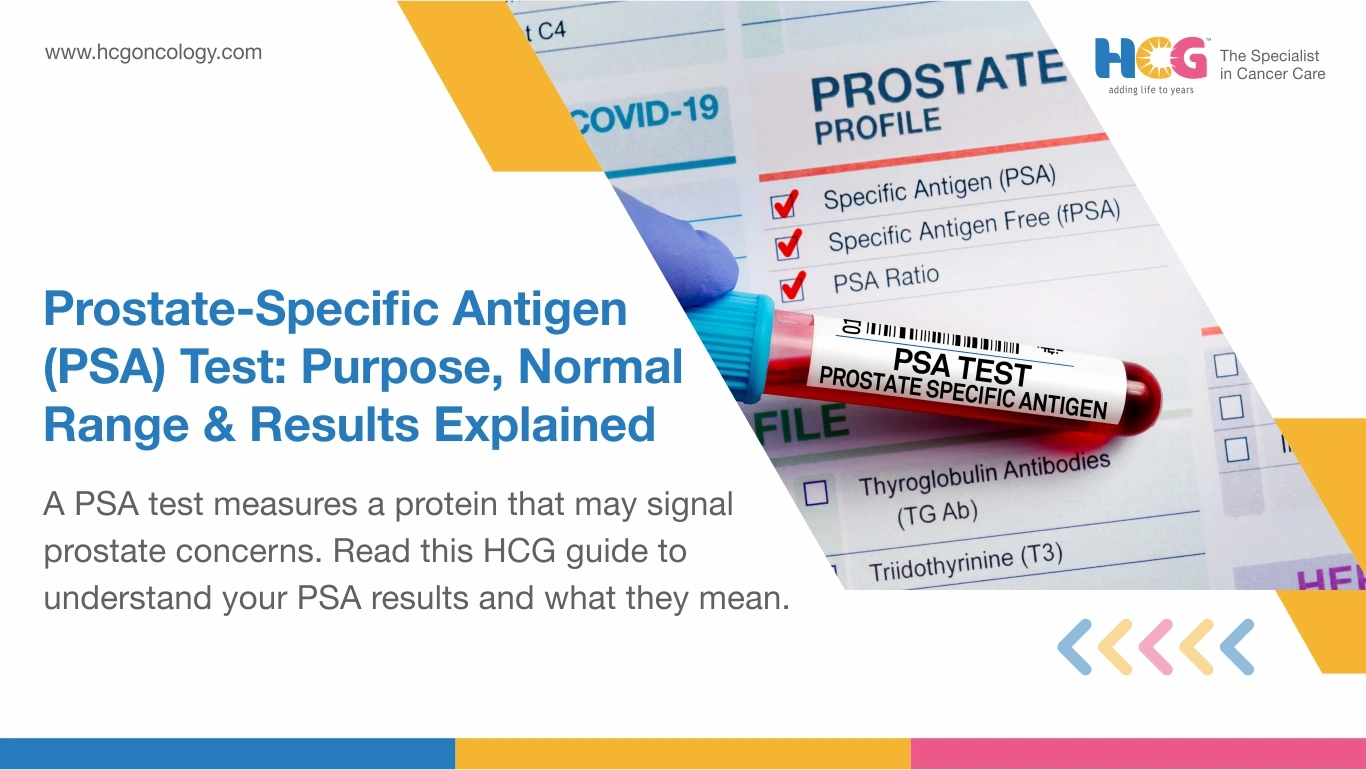
Theprostate-specific antigen test measures a protein produced by the prostate gland, which is detectable in your blood. When the prostate gland is affected, whether by infection, benign enlargement, or cancer, PSA levels rise. The test catches that signal early.
Age, symptoms, and trend over time all shape what your result actually means.
Prostate-specific antigen (PSA) is a protein your prostate releases continuously into the bloodstream in small amounts. When something disrupts normal prostate tissue, the PSA levels increase. The PSA test precisely determines the levels of PSA in the bloodstream.
While this test does not tell the exact cause of high PSA levels, it flags that something may need a closer look. Think of it this way: A high PSA level is an early warning indicator, not a diagnosis.
Good to Know: Good to Know: A normal result reduces concern significantly, but it does not eliminate cancer risk entirely.
PSA levels naturally climb as men age and the prostate grows. A reading that is unremarkable at 68 may genuinely warrant attention at 44. Age-adjusted ranges exist for exactly this reason.
| Age Group | Normal PSA (ng/mL) | Borderline (ng/mL) | High / Abnormal (ng/mL) |
|---|---|---|---|
| 40–49 | 0 – 2.5 | 2.5 – 4.0 | Above 4.0 |
| 50–59 | 0 – 3.5 | 3.5 – 4.0 | Above 4.0 |
| 60–69 | 0 – 4.5 | 4.5 – 6.5 | Above 6.5 |
| 70+ | 0 – 6.5 | 6.5 – 8.0 | Above 8.0 |
PSA velocity matters just as much as a single reading. A result that continues to rise across two or three annual tests carries more clinical weight than a single elevated number taken in isolation.
Common Confusion: Many men think any PSA above 4.0 ng/mL means cancer. In practice, most elevated readings have non-cancerous explanations.
| PSA Level (ng/mL) | Probable Cause | Typical Next Step |
|---|---|---|
| Below 4.0 | Normal / Benign enlargement (BPH) | Routine monitoring |
| 4.0 – 10.0 | BPH, prostatitis, or possible cancer | Repeat test, further evaluation |
| Above 10.0 | Infection or cancer is more likely | Prompt urological review |
Yes, elevated PSA correlates with higher cancer probability, but the relationship is not straightforward. The National Cancer Institute found that roughly 25% of men with a PSA between 4 and 10 ng/mL are found to have prostate cancer on biopsy. Above 10 ng/mL, that figure rises beyond 50%.
Equally Important: Some prostate cancers cause modest PSA elevations. This is why PSA functions as a triage signal, not a standalone verdict.
An elevated result unsettles most men. The reality is that cancer ranks far down the list of likely causes.
In summary, identifying which cause is actually responsible is the entire purpose of follow-up testing.
Preparation takes less than 10 minutes.
The timing depends on your personal risk profile, not a blanket age rule.
The decision involves weighing the benefit of early prostate detection against the small but real risk of false positives that can trigger unnecessary procedures. That is a conversation, not a checkbox.
PSA and DRE serve different purposes and work best together. PSA detects biochemical change before anything is physically palpable. A DRE lets the clinician assess the prostate's size, firmness, and surface texture directly.
Neither test alone is sufficient. Combined, they meaningfully improve sensitivity for catching early-stage disease.
Good to Know: A transrectal ultrasound-guided biopsy remains the only way to definitively confirm or rule out prostate cancer.
PSA testing is affordable and accessible across India.
At HCG Hospitals, the Male Cancer Checkup packagbundles PSA with a complete blood count, chest X-ray, urine routine, and abdominal ultrasound, starting at ₹4,700. A standalone PSA test at private diagnostic labs typically costs between ₹700 and ₹4200,depending on various factors, including the location and the facility. Rates differ across Bangalore, Hyderabad, Mumbai, and Vijayawada depending on the facility.
Costs vary by hospital and patient profile. Men covered under PMJAY or state health schemes may access subsidized testing at empaneled centers.
An elevated PSA does not fast-track you to a biopsy. The path forward is methodical.
In Summary:Not every elevated PSA leads to a biopsy. Most men who investigate further receive reassurance rather than a cancer diagnosis.
If your PSA result was elevated or testing is now relevant for your age, take these steps:
For many patients, the next helpful step is a structured clinical conversation rather than an immediate procedure. A PSA test is a starting point. When interpreted alongside age, symptom history, DRE findings, and serial measurements over time, it becomes a genuinely powerful tool for prostate cancer screening and early detection. At HCG Cancer Hospital, specialists review PSA results within the full context of your health, guiding you toward the right next step, whether that is reassurance, monitoring, or further investigation.
Disclaimer: This information is intended to educate patients and caregivers. It does not replace professional medical advice. All treatment decisions should be made in consultation with a qualified doctor.