16 Mar, 2026
Feel free to reach out to us.
16 Mar, 2026
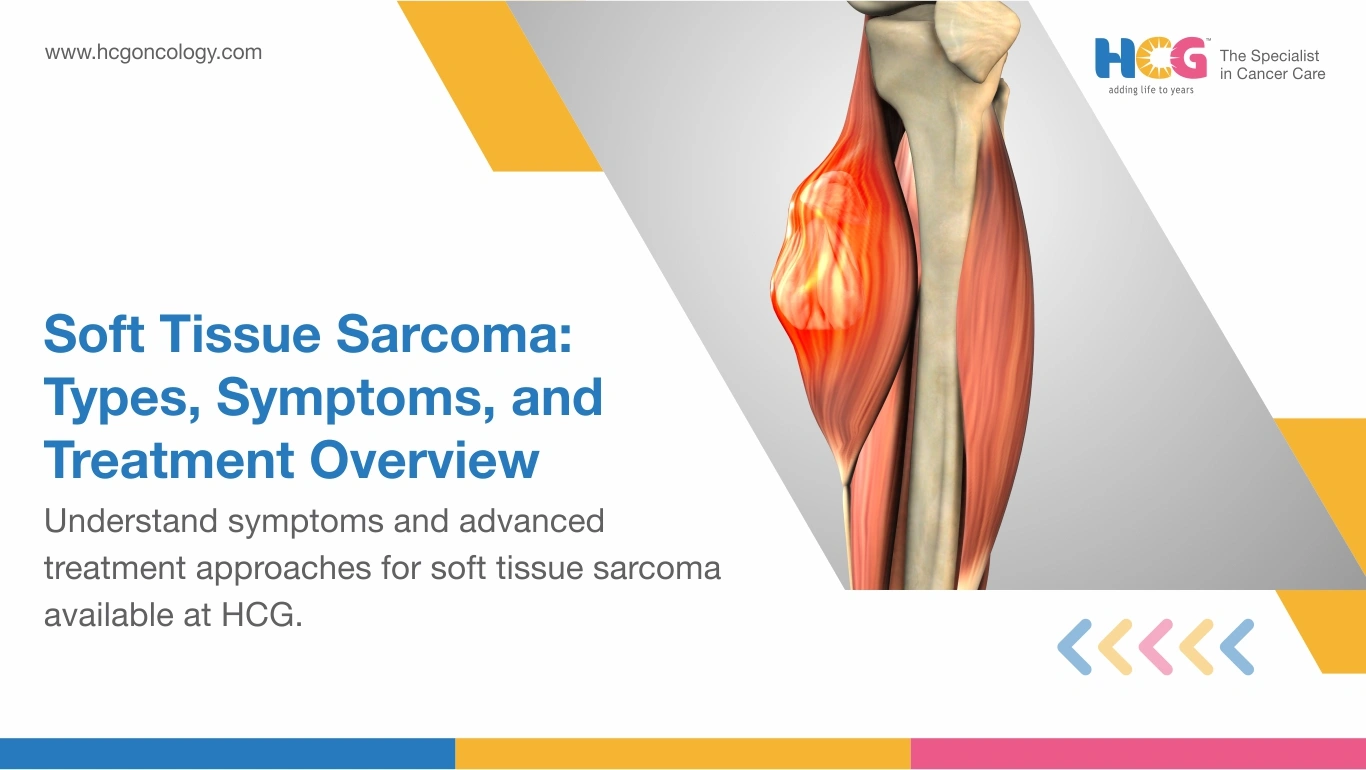
Soft tissue sarcoma is a term covering a group of rare malignant tumors that develop in the body’s connective tissues, including skeletal muscle, smooth muscle, fat, blood vessels, lymphatic vessels, peripheral nerves, and the tissue lining joints. These tumors arise from mesenchymal cells present throughout the body. According to a Global Burden of Disease 2021 analysis, soft tissue sarcoma cases worldwide increased from approximately 54,600 in 1990 to over 96,200 by 2021. The condition accounts for around 1% of all adult cancers but can appear at any age. Many early-stage tumors are painless and go unnoticed for months. When symptoms do appear, they often involve a growing lump or pressure on nearby structures. Diagnosis requires imaging and a tissue biopsy.
Soft tissue sarcoma is not a single cancer. It is a collective name for malignant tumors beginning in the body’s connective and supportive tissues: skeletal muscle, smooth muscle, fat, blood vessels, lymphatic vessels, peripheral nerves, and fibrous tissue around joints. Because soft tissue is distributed throughout the body, these tumors can arise almost anywhere. The limbs, particularly the thigh and the abdomen, are the most frequently involved areas.
The word "sarcoma" comes from the Greek for "fleshy growth," distinguishing it from carcinomas and bone sarcomas such as osteosarcoma. Correct classification matters because each category behaves differently and requires a distinct treatment approach.
Over 70 types of soft tissue sarcoma are recognized. Doctors classify them by the normal tissue the tumor cells most closely resemble under a microscope.
| Type | Origin Tissue | Common Location |
|---|---|---|
| Liposarcoma | Fat cells (adipose tissue) | Thigh, retroperitoneum |
| Leiomyosarcoma | Smooth muscle | Uterus, veins, abdomen |
| Undifferentiated pleomorphic sarcoma | Unclear tissue origin | Arms, legs, trunk |
| Synovial sarcoma | Near joint-lining tissue | Knee, ankle, foot |
| Angiosarcoma | Blood or lymph vessel lining | Skin, liver, breast |
| Malignant peripheral nerve sheath tumor | Nerve sheath cells | Trunk, limbs |
| Rhabdomyosarcoma | Skeletal muscle cells | More common in children |
Liposarcoma and leiomyosarcoma are among the most frequently diagnosed subtypes in adults. "Undifferentiated" means the cells no longer resemble any identifiable normal tissue type.
Sarcomas can arise in soft tissue or bone. The two categories differ in origin, typical presentation, and patient profile.
| Feature | Soft Tissue Sarcoma | Bone Sarcoma |
|---|---|---|
| Origin | Muscle, fat, nerves, vessels | Bone or cartilage |
| Typical sign | Soft, growing lump or swelling | Bone pain, localised tenderness |
| Age pattern | Varies widely by subtype | Often adolescents and young adults |
Soft tissue sarcoma symptoms are often subtle in the early stages. The most common first sign is a firm lump. In many cases this mass is painless, which is precisely why evaluation is delayed. A painless lump feels less urgent, yet some tumors grow considerably before discomfort begins.
As the tumor enlarges, other symptoms may develop:
Good to know: Any lump around 5 centimeters wide or one that keeps growing over weeks should be assessed. Not every lump is cancer, but a new or changing mass always warrants medical review.
What this means in practice: The absence of pain does not mean the absence of a problem. With soft tissue sarcoma, painless lumps are actually more typical than painful ones in the early stages.
No single established cause underlies most soft tissue sarcomas. Certain factors are linked to higher risk: prior high-dose radiation exposure, contact with specific industrial chemicals such as vinyl chloride, and inherited genetic conditions including neurofibromatosis type 1 and Li-Fraumeni syndrome. Neurofibromatosis type 1 affects nerve tissue development; Li-Fraumeni syndrome is a hereditary condition associated with elevated cancer risk across multiple types.
Accurate diagnosis is essential because the subtype drives the entire treatment plan. A doctor typically begins with a physical examination and symptom review, then requests imaging.
Common imaging options:
A biopsy confirms the diagnosis. A tissue sample is examined by a pathologist, a specialist in laboratory disease analysis, who establishes subtype and grade. Grade reflects how aggressively cells are likely to behave; staging records how far the cancer has spread. Together they guide treatment intensity.
Quick note: Biopsy placement requires specialist planning, as incorrect technique can compromise subsequent surgery.
Treatment for soft tissue sarcoma is individualized. Subtype, grade, stage, location, and overall health all shape the recommendation.
Surgery is the cornerstone for most cases, aiming to remove the tumor with a margin of healthy tissue. Limb-sparing surgery removes the cancer while preserving the affected limb and is achievable for many patients when the tumor has not involved critical nearby structures.
Radiation therapy targets remaining cancer cells after surgery, reduces tumor size before surgery, or addresses cases where surgery alone is not sufficient.
Chemotherapy may be recommended for spread disease or high-grade subtypes. Response varies by subtype, so this is decided case by case. Targeted therapy and immunotherapy are additional options for select subtypes. A multidisciplinary team of surgeons, oncologists, radiologists, and pathologists typically collaborates on each plan.
Quick note: Not all sarcoma subtypes respond equally to chemotherapy. Your oncologist will consider the specific subtype when deciding whether chemotherapy adds benefit for your case.
Soft tissue sarcoma spans a wide range of rare cancers, each with distinct biology and treatment needs. Early recognition, specialist diagnosis, and coordinated multidisciplinary planning can make a meaningful difference.
At HCG, complex cancer cases are reviewed by multidisciplinary teams with expertise across surgical, medical, and radiation oncology. Care is evidence-based and patient-centered throughout the entire journey.
Consulting a specialist before any treatment decision is always worthwhile.
Steps to consider: