01 Apr, 2026
Feel free to reach out to us.
01 Apr, 2026
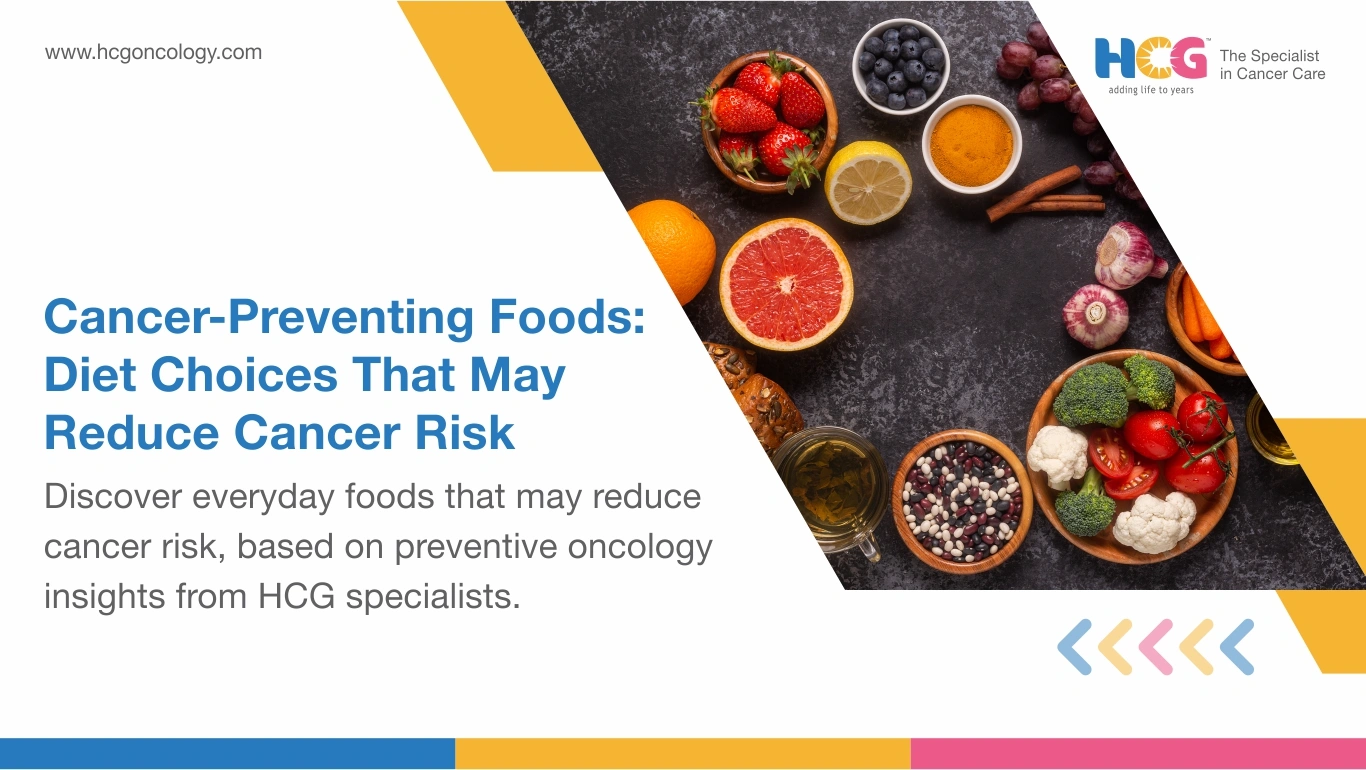
No single food can guarantee protection against cancer, but research consistently links diets built around plant foods, whole grains, and legumes to a lower risk of developing several cancer types. Cancer-preventing foods are foods, mostly from plants, whose protective compounds may reduce long-term cancer risk when consumed regularly as part of a balanced diet. Diet is one of the few cancer risk factors within personal control, which is why organizations like the WCRF and the American Cancer Society study the connection between food and cancer outcomes. No ingredient overrides genetics. What matters most is the overall pattern sustained across years.
Diet influences cancer risk through several overlapping pathways. Excess body weight alone is causally linked to at least 13 cancer types, including breast, colorectal, and endometrial cancers. Diets high in processed foods, added sugar, and refined carbohydrates contribute to weight gain, which partly explains how food affects cancer risk independently of specific plant compounds.
What this means in practice: Weight management through food choices is itself a form of cancer risk reduction.
Beyond weight, plants contain phytochemicals that interact with cells in ways still being mapped. Antioxidants reduce oxidative stress. Fiber feeds gut bacteria that may protect the bowel lining. Anti-inflammatory compounds in vegetables and spices may limit chronic low-grade inflammation associated with cancer development.
Worth knowing: The connection between diet and cancer is not about any single mechanism. Weight, inflammation, gut health, and cell repair all play a role, and food choices influence every one of them.
Broccoli, cauliflower, kale, Brussels sprouts, and cabbage contain glucosinolates. During digestion, these break down into active substances, including sulforaphane. According to the National Cancer Institute, these compounds inhibit cancer development in several organs in animal studies. Human population evidence is supportive but not fully consistent. Steamed, stir-fried, or added to dal, regular inclusion matters more than large single servings.
The color in fruits and vegetables signals the phytochemical inside. Deep reds and purples like berries, jamun, and amla are rich in anthocyanins. Orange and yellow produce, including carrots and papaya, contain carotenoids like beta-carotene. Tomatoes provide lycopene, which has been studied in relation to certain cancer types.
Dal, rajma, chana, and lentils are Indian kitchen staples, and that is a genuine nutritional advantage. Legumes provide fiber and plant protein, supporting a healthy weight while reducing reliance on red or processed meat. Whole grains like oats, brown rice, and whole wheat roti add fiber that feeds beneficial gut bacteria. The AICR/WCRF Third Expert Report rates dietary fiber as having probable evidence for decreasing colorectal cancer risk.
These contain sulfur compounds, including allicin. Population studies suggest regular allium consumption may lower stomach and colorectal cancer risk, though evidence remains associative. Already used daily in Indian cooking, this is a habit worth keeping.
Good to know: Crushing garlic and letting it sit for a few minutes before cooking allows more allicin to form, which may preserve more of its beneficial properties.
Omega-3 fatty acids in flaxseeds, walnuts, and fatty fish may reduce chronic inflammation linked to cancer risk. Olive oil provides healthy monounsaturated fats. Green tea contains catechins studied in prevention contexts, though human trial evidence is mixed.
Quick note: Turmeric contains curcumin with anti-inflammatory lab properties, but human trial evidence is limited. Treat it as a beneficial ingredient, not a therapeutic dose.
Processed meats, including sausages, bacon, and deli products, are classified as Group 1 carcinogens by the IARC, meaning sufficient evidence links them to colorectal cancer (WHO/IARC). Risk accumulates with regular consumption rather than from a single serving.
Alcohol is also a recognized carcinogen. Even moderate drinking is associated with cancers of the mouth, throat, liver, breast, and colon.
Ultra-processed foods, refined carbohydrates, and sugary drinks contribute to weight gain and chronic inflammation, both linked to rising cancer risk over time.
| Include More Often | Limit or Avoid |
|---|---|
| Cruciferous vegetables: broccoli, cauliflower, kale | Processed meats: sausages, bacon, deli products |
| Colorful produce: berries, amla, tomatoes, carrots | Red meat in large or frequent quantities |
| Legumes: dal, rajma, chana, lentils | Alcohol at any quantity |
| Whole grains: oats, brown rice, whole wheat | Sugary drinks and packaged snacks |
| Alliums: garlic, onions, spring onions | Ultra-processed foods and fried snacks |
| Nuts, seeds, flaxseed, olive oil, fatty fish | Foods high in added sugar and refined flour |
| Green tea and water daily | Meats cooked repeatedly at very high heat |
Fill roughly two-thirds of your plate with plant foods and the remaining third with lean protein: fish, poultry, eggs, paneer, or tofu. Red meat works better as an occasional choice than daily.
What this means in practice: A meal of dal, brown rice, and a vegetable dish with garlic already follows this structure without requiring dietary overhaul.
Cooking method matters. Steaming and stir-frying preserve more nutrients than deep frying. Rotating vegetables seasonally naturally increases phytochemical diversity.
Quick note: Seasonal rotation is not just about freshness. Different vegetables peak at different times and bring different protective compounds with them.
HCG Cancer Hospital approaches nutrition as one component of comprehensive cancer care, recognizing that sustained dietary patterns contribute meaningfully to long-term risk reduction. The care teams work alongside dietitians to help patients understand how food choices fit within their broader health picture.
If you have a family history of cancer, are undergoing treatment, or want individualized guidance, speaking with a qualified oncology dietitian can help translate general evidence into a practical plan suited to your life.
Disclaimer: This information is intended to educate patients and caregivers. It does not replace professional medical advice. All treatment decisions should be made in consultation with a qualified doctor.
- PubMed Central (NCBI) | Nutrition and Cancer: A Review of the Evidence for an Anti-Cancer Diet | https://pmc.ncbi.nlm.nih.gov/articles/PMC526387/
- American Cancer Society | ACS Guideline for Diet and Physical Activity for Cancer Prevention | https://www.cancer.org/cancer/risk-prevention/diet-physical-activity/acs-guidelines-nutrition-physical-activity-cancer-prevention.html
- National Cancer Institute | Cruciferous Vegetables and Cancer Prevention | https://www.cancer.gov/about-cancer/causes-prevention/risk/diet/cruciferous-vegetables-fact-sheet
- WHO/IARC | Carcinogenicity of the Consumption of Red Meat and Processed Meat | https://www.who.int/news-room/questions-and-answers/item/cancer-carcinogenicity-of-the-consumption-of-red-meat-and-processed-meat
- AICR | Broccoli and Cruciferous Vegetables: Reduce Overall Cancer Risk | https://www.aicr.org/cancer-prevention/food-facts/broccoli-cruciferous-vegetables/
- AICR | Third Expert Report: Diet, Nutrition, Physical Activity and Cancer | https://www.aicr.org/research/third-expert-report/
- MD Anderson Cancer Center | Diet and Cancer Risk | https://www.mdanderson.org/prevention-screening/manage-your-risk/diet.html
- Harvard T.H. Chan School of Public Health | WHO Report on Processed Meat: Understanding the Findings | https://nutritionsource.hsph.harvard.edu/2015/11/03/report-says-eating-processed-meat-is-carcinogenic-understanding-the-findings/