10 Apr, 2026
Feel free to reach out to us.
10 Apr, 2026
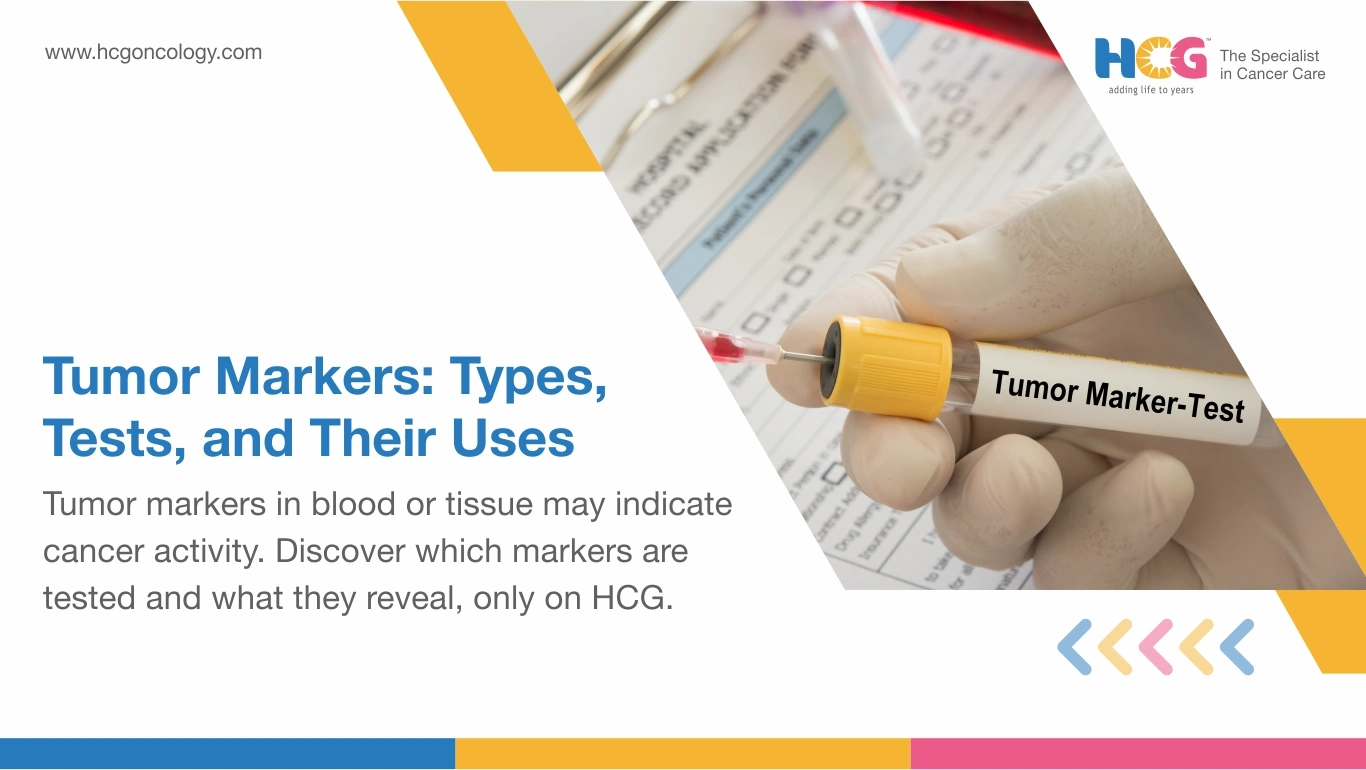
Tumor markers are proteins or genetic substances that appear in blood, urine, or tissue when cancer is active. Most are caught through a simple blood draw.
Oncologists use tumor marker tests to track treatment response, catch recurrence early, and support diagnosis. No marker works alone. Every result needs specialist review alongside imaging and biopsy findings.
A tumor marker is a protein, enzyme, hormone, or other substance that appears at higher-than-normal levels in the blood (or sometimes urine or tissue) when certain types of cancer are present. Some markers are produced directly by cancer cells. Others are produced by the body in response to cancer.
The presence of tumor markers doesn’t confirm a cancer diagnosis. They are one piece of a diagnostic picture, used alongside imaging, physical examination, and clinical history. A single elevated number without context is not clinically meaningful in isolation.
Common Confusion: A raised marker does not automatically mean cancer. Liver disease, endometriosis, and even pregnancy can push markers above normal. Specialist review is always the next step.
| Marker | Associated Cancer | Primary Use |
|---|---|---|
| PSA | Prostate | Screening, monitoring, recurrence |
| CEA | Colorectal, lung, and breast | Post-treatment monitoring |
| CA-125 | Ovarian | Treatment response, recurrence |
| AFP | Liver, Germ Cell | Diagnosis support, monitoring |
| CA 19-9 | Pancreatic, Biliary | Treatment response |
| Beta-hCG | Germ Cell Tumors | Monitoring, recurrence |
| BRCA1/2 | Breast, Ovarian | Hereditary risk, therapy selection |
| EGFR/HER2 | Lung, Breast | Targeted therapy eligibility |
These are the most routinely ordered cancer biomarkers. A lab technique called an immunoassay , specifically an enzyme-linked immunosorbent assay (ELISA), measures the target protein concentration in your blood.
The PSA tumor marker is the most familiar. Elevated PSA prompts prostate cancer evaluation, though benign enlargement and prostatitis also raise it.
Carcinoembryonic Antigen (CEA) tracks colorectal, lung, and breast cancers mainly to gauge treatment response, not to detect a new cancer.
Good to Know: PSA is one of the very few markers used for routine screening. Most others monitor a cancer that is already known.
Cancer Antigen-125, or CA-125follows ovarian cancer activity cycle by cycle. A rising or plateauing value may prompt the team to reassess.
CA 19-9is tracked in pancreatic and biliary cancers. CA 15-3 and CA 27.29serve a similar role in breast cancer follow-up.
Alpha-fetoprotein, or AFP,is normally produced only during fetal development. A significantly elevated AFP in an adult alongside a liver mass raises concern for hepatocellular carcinoma or a germ cell tumor.
Beta-hCGmonitors germ cell tumors of the testis and ovary after treatment.
BReast CAncer gene, or BRCA1/2, mutations flag hereditary risk for breast and ovarian cancer. Epidermal Growth Factor Receptor (EGFR) mutationsdetermine lung cancer targeted therapy eligibility. Human Epidermal Growth Factor Receptor 2 (HER2) overexpression identifies breast cancer candidates for HER2-targeted agents. MSI-high status predicts immunotherapy response.
These are identified through next-generation sequencing (NGS),which analyzes hundreds of genes from a tumor tissue sample.
HCG Cancer Hospital has partnered with Triesta Sciences, a CAP- and NABL-accredited high-end oncology diagnostic laboratory, to carry out NGS panels, including tumor mutation burden (TMB) and microsatellite instability (MSI) assessment, unlocking therapy options standard pathology cannot identify.
In summary, genetic markers need tumor tissue from a biopsy and a specialized NGS panel, not a routine blood draw.
A venous blood draw is sufficient to assess most protein and glycoprotein markers. The sample is measured by immunoassay and compared against a defined reference range. Values above it are flagged for clinical review.
For a few tumor markers, like NMP22 for bladder cancer, a urine sample may be collected. Genetic markers need tissue processed through NGS. A liquid biopsy detecting circulating tumor DNA (ctDNA) from blood is an emerging non-invasive monitoring option.
Most tumor marker blood tests need no fasting. Confirm any prep requirements with your center beforehand.
No marker confirms cancer alone. But elevated AFP alongside a liver mass or raised CA-125 in a postmenopausal woman with pelvic findings adds real clinical weight to the workup. Biopsy remains the definitive confirmation.
Falling CA-125 during ovarian chemotherapy signals the tumor is responding. A rising CEA during colorectal treatment may indicate progression and trigger a plan change. Results always sit alongside imaging and clinical examination, never alone.
A rising PSA after prostate cancer surgery is often the first sign of biochemical recurrence, months to years before imaging shows anything. That lead time enables earlier re-intervention. Surveillance schedules are individually set by your oncologist.
In summary, your monitoring frequency depends on your cancer type, marker, and treatment history. Your oncologist sets the right schedule.
| Clinical Use | Markers Mentioned |
|---|---|
| Diagnosis Support | AFP |
| Treatment Monitoring | CA-125, CEA |
| Recurrence Detection | PSA, CA-125, Beta-hCG |
EGFR, HER2, and MSI-high status all guide which targeted or immunotherapy agents may help. These decisions depend on NGS-based genomic profiling of tumor tissue, not routine bloodwork.
| Purpose | Example Markers | Key Limitation |
|---|---|---|
| Diagnosis Support | AFP, PSA | A biopsy is still required |
| Treatment Monitoring | CA-125, CEA | Serial tracking needed |
| Recurrence Detection | PSA, CA 19-9 | May rise before imaging changes |
| Targeted Therapy | EGFR, HER2, BRCA, MSI | Needs NGS tissue profiling |
Liver disease raises AFP. Endometriosis elevates CA-125. Benign prostatic hyperplasia raises PSA. Early cancers may also produce no detectable elevation at all. A normal result does not rule out cancer. An elevated one does not confirm it.
Most cancer tumor markers lack the specificity to screen unselected populations reliably. PSA is the primary exception. Reference ranges also vary between labs across Indian diagnostic centers, making cross-lab comparisons tricky without specialist context.
Take a breath. An elevated marker is not a diagnosis. Your oncologist will review it alongside imaging, physical examination, and your symptoms before drawing any conclusions. A raised CA-125 without imaging changes, for example, may simply mean watchful waiting and a repeat test.
Serial marker checks at set intervals show whether treatment is working. At HCG Cancer Hospital, tumor marker results are subjected to multidisciplinary tumor board reviews where oncologists, surgeons, radiologists, and pathologists carefully assess them before sharing treatment recommendations. After treatment, survivorship care covers marker surveillance, nutritional support, fatigue management, rehabilitation, and psycho-oncology services.
For many patients, the most helpful thing is not just knowing what a marker number means but knowing what to do with it. Tumor markers give your care team a way to track cancer activity, measure treatment response, and personalize your care. No single reading tells the whole story. The real value lies in the trend, the context, and the specialist interpreting it.
HCG Cancer Hospital combines over 35 years of cancer care experience with advanced genomics through Triesta Sciences, ensuring every result leads to a precise, individualized decision. To schedule a consultation or tumor marker test, contact HCG Cancer Hospital today.
Disclaimer:This information is intended to educate patients and caregivers. It does not replace professional medical advice. All treatment decisions should be made in consultation with a qualified doctor.