01 Apr, 2026
Feel free to reach out to us.
01 Apr, 2026
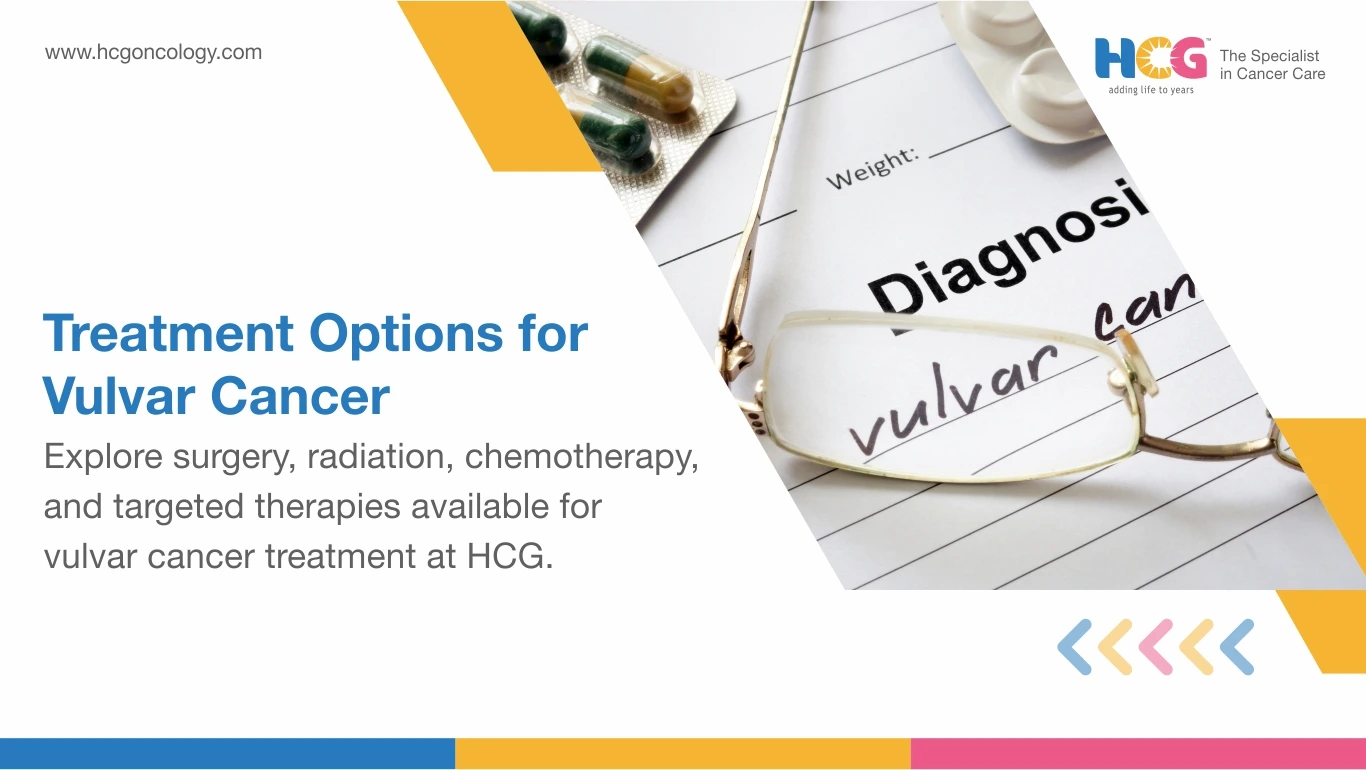
Vulvar cancer treatment covers the surgical and non-surgical approaches used to remove or control cancer in vulvar tissue. The plan depends on the stage, tumor size, lymph node involvement, and general health. Most patients begin with surgery. Radiation and chemo may follow or serve as the primary approach when operating is not safe. According to GLOBOCAN 2022 (IARC/WHO), vulvar cancer makes up a small but growing share of gynecological cancers worldwide. Early disease may need a limited procedure, while advanced cases require coordinated planning across specialties.
For most vulvar cancers, surgery is where treatment begins. The type of operation depends on the tumor's size, depth, and position relative to the urethra or anus. Surgeons aim to remove the cancer completely while sparing as much normal tissue as they can.
Think of wide local excision as the least extensive option. The surgeon removes the tumor along with a rim of healthy tissue. It works well for small, early-stage tumors.
What counts as a successful result? The pathologist examines the edges of the removed tissue. If no cancer cells appear at those edges, the margins are “clear,” meaning a lower chance of local recurrence.
When a tumor is larger, a partial vulvectomy removes the involved section while keeping the rest intact. A radical vulvectomy removes the entire vulva along with deeper tissue. Doctors choose radical surgery only when a smaller surgery would risk leaving the disease behind.
| Feature | Wide Local Excision | Partial Vulvectomy | Radical Vulvectomy |
|---|---|---|---|
| Tissue removed | Tumor plus margin | Affected vulvar section | Entire vulva and deeper tissue |
| Typical use | Small early-stage tumors | Larger localized tumors | Extensive or deeply invasive disease |
| Recovery timeline | Shorter | Moderate | Longer, reconstruction possible |
| Function preservation | Usually high | Varies by location | May be limited |
The inguinofemoral lymph nodes in the groin are usually where vulvar cancer travels first. Surgeons check them during the operation because findings change the rest of the treatment.
One approach is sentinel lymph node biopsy. A tracer identifies the first nodes receiving drainage from the tumor. If those come back clean, removing the remaining groin nodes can often be skipped. Full node removal carries the real risk of lymphedema, persistent leg swelling that can last months or years.
When a sentinel biopsy is not appropriate, surgeons proceed with an inguinofemoral lymphadenectomy.
After extensive vulvar surgery, reconstructive procedures may be offered. Tissue flap techniques reposition tissue from a nearby area to rebuild the site. Planning usually happens before cancer surgery, so both steps map together.
Not everyone needs or wants reconstruction. The decision depends on the tissue removed and personal preference.
Radiation directs high-energy beams at cancer cells. It enters vulvar cancer treatment at different points.
After surgery, radiation may be recommended if the margins were tight or the nodes are positive. Before surgery, it can shrink a large tumor for a cleaner resection. Some patients receive radiation as primary treatment when the tumor sits too close to the urethra or anus, or when health issues make surgery too risky.
Bottom line: Sessions span several weeks, with each plan customized to the patient’s anatomy.
Quick note: Modern radiation techniques such as intensity-modulated radiation therapy (IMRT) allow more precise targeting, which helps reduce side effects to surrounding healthy tissue.
Chemoradiation means giving chemo and radiation at the same time. Certain drugs make cancer cells more vulnerable to radiation, a process called radiosensitization.
Where does it fit? Mainly in locally advanced vulvar cancer, where the tumor has grown into structures that cannot be safely removed. It can also follow surgery when pathology suggests a higher recurrence risk. The oncology team selects drugs based on overall condition and prior treatment history.
Systemic treatments work through the bloodstream rather than targeting one spot. Two categories apply for advanced or recurrent vulvar cancer:
Whether systemic therapy fits depends on tumor biology, prior treatments, and current overall health. Clinical trials may also be worth discussing with the care team.
Stage is the single biggest factor when choosing treatment.
Early-stage vulvar cancer, still confined to the vulva, is usually managed with wide local excision plus sentinel node biopsy. Clear margins and negative nodes may mean no additional treatment is needed.
Advanced disease typically calls for surgery combined with radiation or chemoradiation. Which comes first depends on imaging and pathology findings.
Recurrent cancer gets a fresh evaluation based on what was done before and where the disease has returned.
No two vulvar cancer treatment plans look the same. Stage, tumor characteristics, lymph node status, and personal health all feed into the decisions.
When decisions need to be made, HCG helps by centering each plan on an evidence-based, multidisciplinary review. Specialists at HCG Cancer Hospital evaluate cases collaboratively, weighing both what the disease demands and what matters to the patient’s quality of life.
If you or a family member is navigating this diagnosis, a conversation with a gynecologic oncology team can bring clarity:
Disclaimer: This information is intended to educate patients and caregivers. It does not replace professional medical advice. All treatment decisions should be made in consultation with a qualified doctor.
- NCI (cancer.gov) | Vulvar Cancer Treatment (PDQ) - Patient Version | https://www.cancer.gov/types/vulvar/patient/vulvar-treatment-pdq
- NHS UK (nhs.uk) | Treatment for Vulval Cancer | https://www.nhs.uk/conditions/vulval-cancer/treatment/
- Mayo Clinic (mayoclinic.org) | Vulvar Cancer - Diagnosis and Treatment | https://www.mayoclinic.org/diseases-conditions/vulvar-cancer/diagnosis-treatment/drc-20368072
- Cancer Research UK (cancerresearchuk.org) | Treatment for Vulval Cancer | https://www.cancerresearchuk.org/about-cancer/vulval-cancer/treatment
- Cleveland Clinic (clevelandclinic.org) | Vulvar Cancer: Symptoms, Causes & Treatment | https://my.clevelandclinic.org/health/diseases/6220-vulvar-cancer
- Johns Hopkins Medicine (hopkinsmedicine.org) | Vulvar Cancer | https://www.hopkinsmedicine.org/health/conditions-and-diseases/vulvar-cancer
- IARC/WHO GLOBOCAN 2022 | Global Cancer Statistics 2022 | https://acsjournals.onlinelibrary.wiley.com/doi/full/10.3322/caac.21834
- PubMed Central (PMC) | Global Burden of Gynaecological Cancers in 2022 and Projections to 2050 | https://pmc.ncbi.nlm.nih.gov/articles/PMC11327849/