10 Apr, 2026
Feel free to reach out to us.
10 Apr, 2026
Most people picture a cancer-prevention diet as something punishing. Restrictive, expensive, and completely disconnected from how real families cook and eat. That picture is wrong.
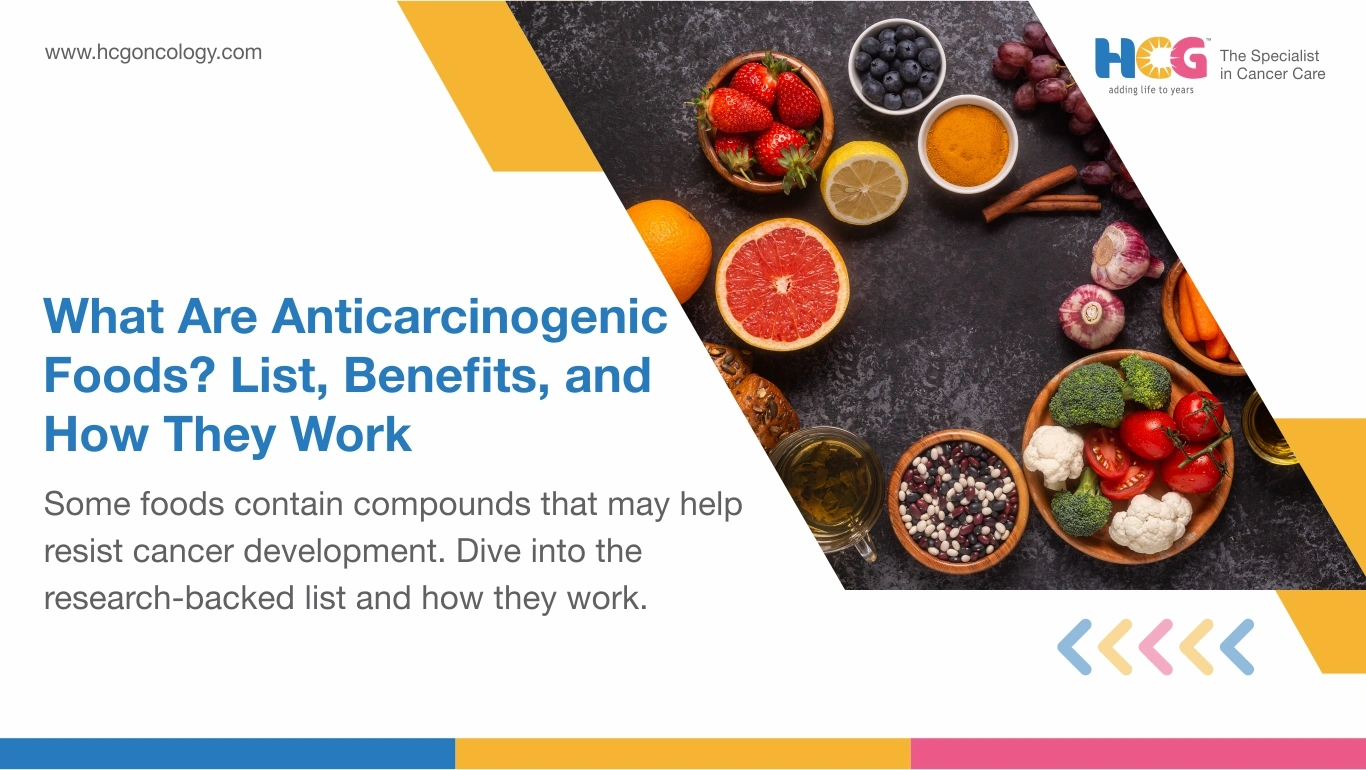
Anticarcinogenic foods are not clinical-grade supplements or imported superfoods. Many of them have lived in Indian kitchens for centuries: turmeric packed into every masala, garlic crushed into the daily tadka, and lentils simmering before anyone thought to call them functional foods.
Anticarcinogenic foods are dietary items whose naturally occurring compounds may reduce the biological conditions that allow cancer to develop. Anticarcinogenic foods don’t prevent cancer with certainty or cure it. However, these foods can help reduce the risk of cancer development when incorporated into consistent eating habits. Overstating that evidence is as clinically irresponsible as ignoring it.
People eating diets rich in vegetables, fruits, whole grains, and plant-based phytochemicals tend to develop cancers at relatively lower rates than those eating predominantly processed, high-fat, low-fiber food. That is an association, not a causal proof. No controlled human trial has shown that any single food shown eliminates cancer risk. Genetics, carcinogen exposure, and individual tumor biology all shape risk independently of diet.
Good to Know: The protective effect is pattern-dependent. Consistency across the whole plate is what the biology requires, not heroics from a single ingredient added to an otherwise poor diet.
Antioxidant activity is where much of the evidence begins. Free radicals, unstable molecules amplified by pollution, cigarette smoke, and ultra-processed food, attack cellular DNA at a structural level. That damage accumulates silently over the years, contributing to the genetic instability that precedes malignancy.
Antioxidant-rich foods supply polyphenols and flavonoids that intercept these radicals before the damage becomes biologically irreversible.
Think of oxidative stress as a slow, invisible corrosion inside cells. Amla, blueberries, and green tea work like a maintenance crew, slowing that corrosion year after year.
Chronic inflammation sustains a tumor microenvironment where abnormal cells survive, replicate, and evade immune detection.
Curcumin from turmeric, omega-3 fatty acids from walnuts and fatty fish, and organosulfur compounds from garlic suppress the specific inflammatory signaling cascades that create this environment.
The association between anti-inflammatory dietary patterns and lower colorectal and gastric cancer rates is among the most consistent findings in nutritional oncology research.
Dietary fiber works through an entirely different mechanism. Fiber accelerates gut transit time, limiting how long carcinogenic byproducts remain in contact with the intestinal lining.
Gut bacteria fermenting fiber produce short-chain fatty acids that appear to trigger apoptosis in abnormal colorectal cells. Nutritional oncologists recognize this as a core principle of dietary chemoprevention (a strategy of reducing cancer risk through healthy eating).
These dietary patterns support, but do not replace, age-appropriate cancer screening as part of a comprehensive prevention approach.
Broccoli, cauliflower, cabbage, and kale contain sulforaphane, which activates liver detoxification enzymes that clear carcinogens before they bind to DNA (AICR). Light steaming preserves more sulforaphane than boiling.
Indole-3-carbinol, also present in this vegetable family, may influence estrogen metabolism in ways relevant to hormone-sensitive cancers.
Allicin and organosulfur compounds are released only when garlic or onions are physically crushed or chopped. A whole, uncut clove delivers almost none of these protective agents.
Long-term cohort studies consistently link regular allium vegetable intake to lower gastric and colorectal cancer rates, one of the more robust associations in published cancer epidemiology.
Curcumin demonstrates anti-inflammatory and antioxidant activity across a substantial body of peer-reviewed studies. Bioavailability is the key clinical variable: curcumin absorbs poorly when consumed alone. Cooking turmeric with fat and black pepper, which contains piperine, significantly improves absorption. Most Indian cooking already achieves this goal without deliberate effort.
Good to Know: Curcumin capsules are not a clinical equivalent to dietary turmeric. Whole-food context changes how these compounds behave inside the body. Supplements are not a validated shortcut.
Measured per gram, Indian gooseberry ranks among the most antioxidant-dense fruits in nutritional research. Its ellagic acid content has shown antiproliferative properties in cell-culture models. Inexpensive, seasonally abundant, and usable as juice, raw fruit, or dried powder, amla is India's most underused protective food with strong anticarcinogenic properties.
Lentils, chickpeas, rajma, and whole wheat deliver the sustained fiber intake that colorectal cancer risk research consistently identifies as protective. A daily nutritional assessment of most Indian diets will already show these foods present.
No dietary change reverses an active cancer diagnosis. Patients on chemotherapy, radiation, or targeted therapy must consult their oncologist before modifying their diet, because certain bioactive compounds interfere with how cancer drugs are metabolized in the liver. This requirement is a documented clinical interaction, not a theoretical caution.
In summary, the evidence is built on population dietary patterns observed across decades. It is not built on supplement trials or short-term food interventions.
| Food Group | Mechanism / How It Works |
|---|---|
| Cruciferous vegetables (broccoli, cauliflower, cabbage, kale) | Sulforaphane activates liver detoxification enzymes that help clear carcinogens before they bind to DNA |
| Garlic and onions | Allicin and organosulfur compounds are associated with lower gastric and colorectal cancer rates |
| Turmeric | Curcumin possesses strong anti-inflammatory and antioxidant activity |
| Amla | High antioxidant content; ellagic acid shows antiproliferative properties in cell models |
| Legumes and whole grains | Dietary fiber shortens gut transit time and produces short-chain fatty acids that may trigger apoptosis in abnormal colorectal cells |
| Green tea | The polyphenols and flavonoids present in green tea reduce oxidative stress by intercepting free radicals |
Most protective foods are affordable Indian staples available year-round. An approximate daily cost guide at Indian market rates (2025):
A daily diet incorporating all the major food groups above costs approximately Rs. 80 to Rs. 200. Metro cities, including Mumbai, Bengaluru, and Delhi, show higher price points than Tier-2 and Tier-3 markets. Costs vary by season, city, and individual dietary volume.
For cancer survivors and patients in remission, anticarcinogenic foods shift from a risk-reduction tool to active nutritional rehabilitation. Clinical priorities include rebuilding lean muscle mass lost during treatment, restoring gut microbiome diversity disrupted by chemotherapy, managing treatment-related fatigue, and reinforcing immune reconstitution.
Dietary counseling every four to eight weeks post-treatment helps monitor weight stability and detect nutrient deficiencies early. HCG's onco-dietetics team integrates this support directly within follow-up schedules across its NABH-accredited cancer centers.
Speak with an HCG-registered dietitian for a personalized nutritional assessment grounded in your treatment history and current health status.
Disclaimer:This information is intended to educate patients and caregivers. It does not replace professional medical advice. All treatment decisions should be made in consultation with a qualified doctor.