30 Apr, 2026
30 Apr, 2026
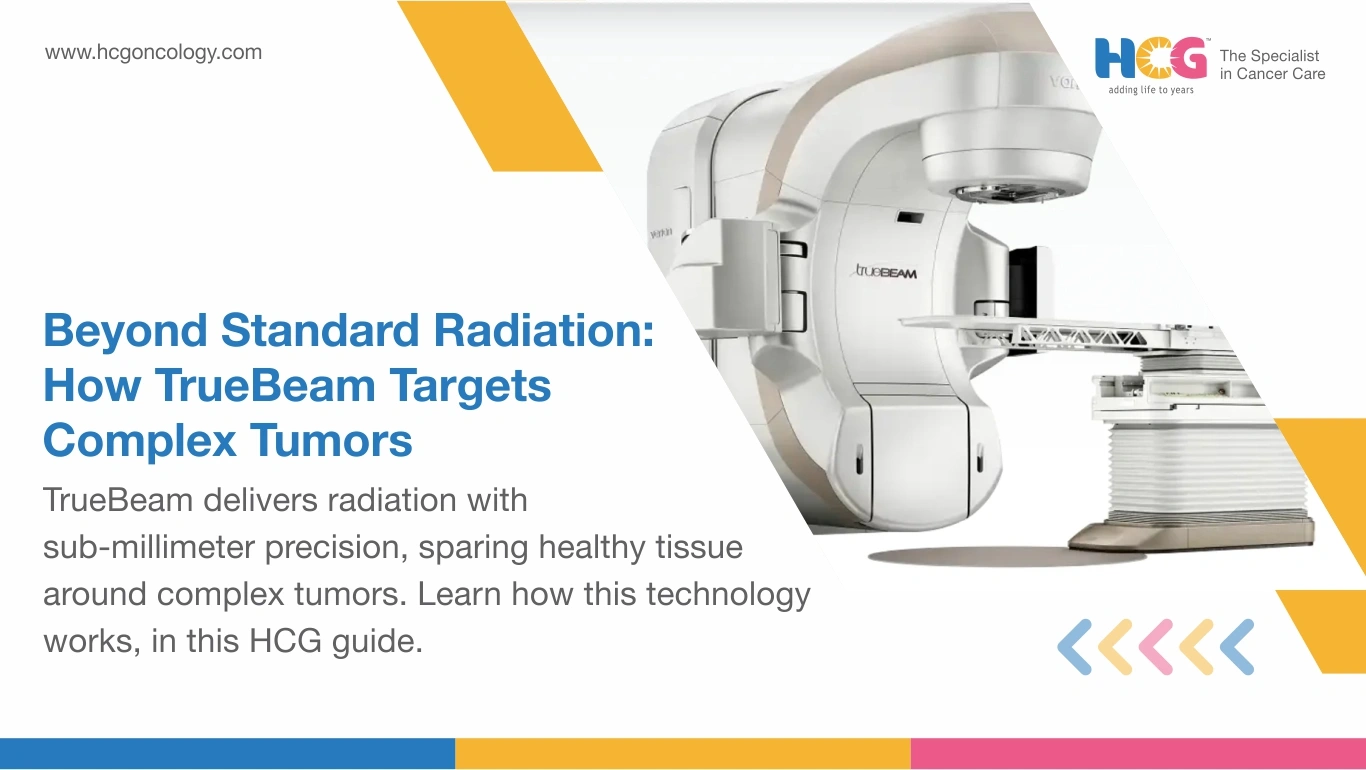
TrueBeam radiation therapy works differently from anything most patients have encountered in a conventional radiotherapy suite. Rather than directing a fixed beam at a predicted tumor position, this advanced linear accelerator continuously images the target during delivery, adjusting in real time as the tumor shifts with each breath or physiological movement.
The clinical result is measurable. Higher doses reach the tumor. Less radiation lands on the surrounding healthy tissue. For patients with lung, liver, brain, or spinal tumors where precision genuinely determines the margin between therapeutic success and serious toxicity, that distinction carries real weight.
TrueBeam is a linear accelerator built specifically for stereotactic body radiation therapy (SBRT) and radiosurgery in anatomically difficult tumor sites. The distinction from standard radiotherapy machines comes down to three integrated capabilities working simultaneously.
Image-Guided Radiotherapy (IGRT) captures continuous imaging during treatment delivery, not only at setup. When a lung tumor shifts several millimeters during a breathing cycle, the system detects that displacement and either compensates automatically or pauses the beam until the tumor returns to its planned coordinates.
Flattening Filter Free (FFF) delivery removes a physical component from the beam path, raising dose rate output significantly. Fewer minutes on the table per session means less opportunity for involuntary patient movement and a more comfortable experience overall.
The table below elucidates how TrueBeam stands apart from conventional radiotherapy platforms:
| Feature | Conventional Radiation | TrueBeam |
|---|---|---|
| Tumor Tracking | Static plan, no real-time adjustment | Continuous motion tracking throughout delivery |
| Dose Rate | Standard flattened beam | FFF beam, substantially accelerated |
| Treatment Sessions | 25 to 35 fractions typically | As few as 1 to 5 fractions with SBRT; varies by protocol |
| Targeting Precision | Millimeter-to-centimeter margin | Sub-millimeter accuracy |
| Healthy Tissue Exposure | Broader radiation field | Tight dose conformity |
| Suitable For | Wide range of tumor sites | Complex, moving, or re-irradiation cases |
Lung tumors respond particularly well because respiratory gating keeps the beam locked onto moving tissue. Liver lesions, brain metastases, spinal tumors, and prostate cancer are among the most frequently treated indications at HCG.
The system also addresses a specific clinical challenge wherein patients who have already completed a full conventional radiation course and developed recurrence in a previously irradiated field. Re-treating those sites with standard equipment raises serious toxicity risk. The conformity of TrueBeam radiation therapy makes re-irradiation more viable in carefully selected cases.
No sensation occurs during beam delivery itself. Patients lie still on the treatment table while the machine rotates around them. No heat, vibration, or physical sensation accompanies the radiation.
Side effects develop in the days following treatment, not during the session. Post-radiation fatigue is the most commonly reported response. Localized skin sensitivity near the treatment site may feel like sunburn warmth. Patients receiving thoracic treatment sometimes notice a transient dry cough. These responses vary based on tumor site, total dose, and individual physiology.
All three platforms deliver stereotactic radiation, but their technical designs serve different patient populations.
Gamma Knife employs 192 fixed cobalt sources and remains highly effective for intracranial targets but cannot treat tumors outside the skull without frame-based constraints.
CyberKnife uses a robotic arm delivering radiation from hundreds of angles, handling non-cranial sites effectively, though its dose rate is lower than that of TrueBeam.
For moving thoracic and abdominal targets where real-time compensation and FFF speed matter most, TrueBeam holds a clear procedural advantage.
HCG Cancer Hospital's radiation oncologists bring specialized expertise in TrueBeam-based radiotherapy, tailoring every treatment plan to the patient's diagnosis, tumor characteristics, and clinical goals.
Here’s what you can expect during your radiotherapy treatment on the TrueBeam platform at HCG:
Post-radiation fatigue management forms the central focus of the weeks following treatment. HCG's oncology dietitian team supports patients with nutritional guidance and hydration protocols to sustain energy during recovery. Patients treated near the gastrointestinal tract may notice temporary appetite changes or mild bowel sensitivity.
Follow-up imaging at defined intervals, alongside survivorship care pathway reviews, monitors tumor response and screens for late radiation effects. Emotional support resources and rehabilitation referrals are available throughout the recovery window for patients managing fatigue or treatment-related anxiety.
When decisions need to be made, HCG helps by bringing together radiation oncologists, medical physicists, and dosimetry specialists to evaluate each case as a coordinated clinical process. HCG Cancer Hospital's radiation oncology department applies TrueBeam, where the clinical evidence supports it and applies equal rigor to determining when a different approach serves the patient better.
When you visit the hospital for your radiotherapy treatment:
Disclaimer:This information is intended to educate patients and caregivers. It does not replace professional medical advice. All treatment decisions should be made in consultation with a qualified doctor.
Feel free to reach out to us.