30 Jul, 2026
30 Jul, 2026
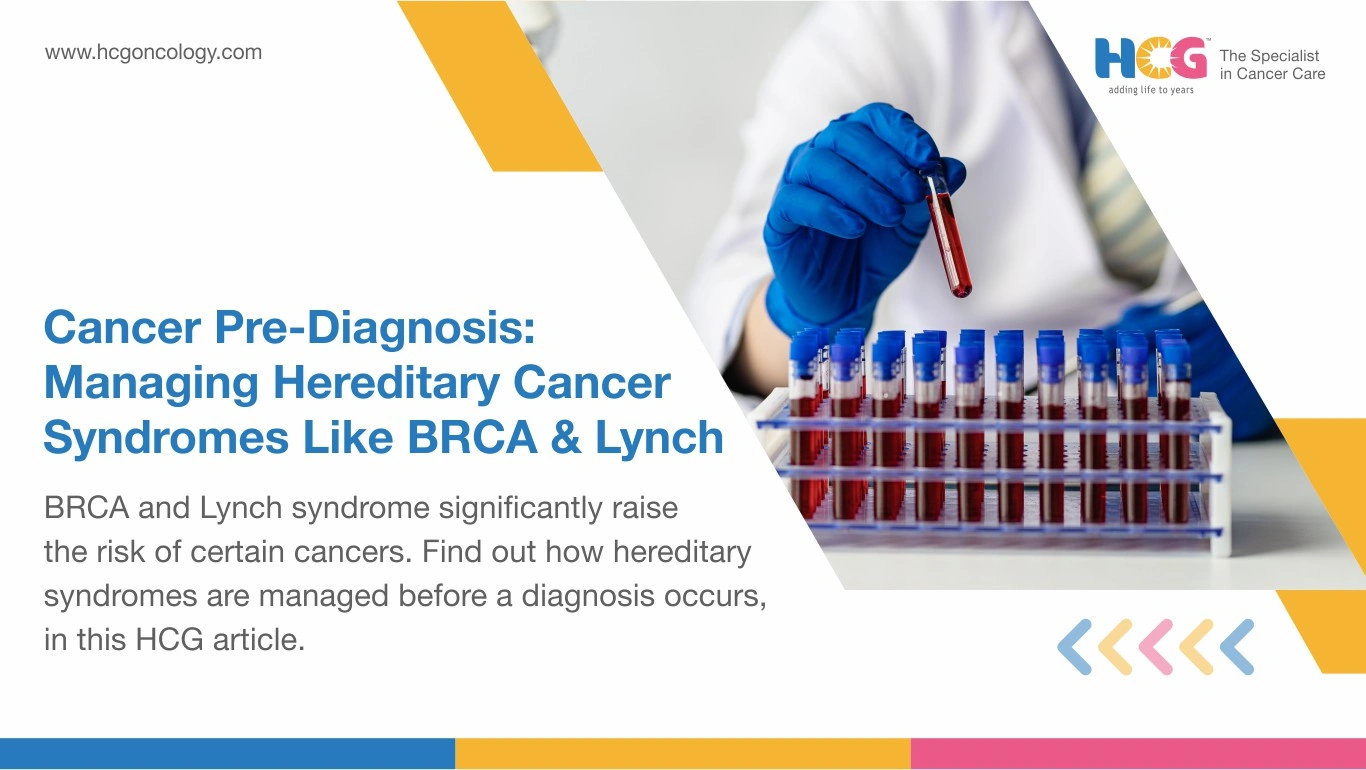
Not every cancer begins with a tumor. For some families, the risk is written into their DNA from birth. Hereditary cancer syndromes like BRCA and Lynch account for 5 to 10% of all cancer diagnoses globally. Researchers are prioritizing the identification of germline mutations in 2026, before cancer is diagnosed in patients through genetic counseling and structured surveillance.
Is cancer pre-diagnosis possible? Can you know about your cancer diagnosis even before a tumor develops in your body? This blog article answers these questions.
When a germline mutation corrupts a tumor suppressor gene, every cell carries that error from conception. Sporadic cancers build risk slowly through environmental exposure. Hereditary syndromes arrive pre-loaded.
Carrying a BRCA1 variant is not a cancer diagnosis. It is an elevated biological probability. Previvor care rests on this distinction: locate the risk, build the surveillance plan, and intervene before malignancy develops.
A positive genetic test is not a cancer diagnosis. It quantifies the elevated risk that a structured clinical program can actively manage.
Hereditary Syndrome Comparison
| Syndrome | Gene | Primary Cancer Risks | Core Screening |
|---|---|---|---|
| BRCA1 | BRCA1 | Breast (72%), Ovarian (44%) | Annual MRI and mammogram from age 25 |
| BRCA2 | BRCA2 | Breast (69%), Ovarian (17%), Pancreatic, Prostate | Annual MRI and mammogram from age 25 |
| Lynch | MLH1, MSH2, MSH6, PMS2 | Colorectal (40–80%), Endometrial (40–60%) | Colonoscopy every 1–2 years from age 20 to 25 |
Both BRCA variants have similar mechanisms and disrupt homologous recombination, the biological process that corrects double-strand DNA breaks. Entirely different cancer risk landscapes require tailored responses.
Lynch syndrome follows a separate pathway. Faults in mismatch repair genes trigger microsatellite instability, where DNA copying errors accumulate uncorrected. The result is colorectal and endometrial cancer risk emerging decades earlier than average population timelines.
Genetic testing is not a general population tool. HCG's genetic counselors deploy validated risk stratification frameworks to identify who warrants panel testing (ACOG).
A genetic testing for BRCA mutations should be considered in the following cases:
For Lynch syndrome, genetic testing should be considered in the following cases:
When one affected family member tests first, relatives can then be tested for that single confirmed variant at a significantly lower cost.
HCG's High-Risk Cancer Clinic Protocol
Genetic counseling bridges a laboratory report and a clinical action plan. HCG's counselors map a three-generation family pedigree, apply probability models, and structure a surveillance pathway regardless of whether the result is positive, negative, or a variant of uncertain significance (VUS).
Post-result sessions cover family communication, insurance implications, preimplantation genetic testing options, and psycho-oncology referral for carriers managing a high-risk result.
Surgical Risk Reduction
Prophylactic bilateral salpingo-oophorectomy cuts ovarian cancer probability by approximately 80% and reduces breast cancer risk in premenopausal BRCA1 carriers by 50%. Risk-reducing mastectomy brings breast cancer probability down by 90% or more.
Non-Surgical Prevention
Chemoprevention through tamoxifen or raloxifene delivers approximately a 38% reduction in breast cancer incidence for high-risk individuals not yet ready for surgery. Lynch syndrome carriers benefit from colonoscopy every one to two years from age 20 to 25, with polypectomy removing premalignant tissue before transformation.
In summary, surveillance, chemoprevention, and lifestyle adjustments together represent a credible prevention program without surgery.
The following are the costs associated with various tests:
BRCA germline panel: Rs. 15,000 to Rs. 45,000.
Multi-gene panel (76 - 500 genes): Rs. 60,000 to Rs. 3,65,000.
Genetic counseling per session: Rs. 1,500 to Rs. 4,000.
Annual breast MRI: Rs. 14,000 to Rs. 27,000.
Colonoscopy surveillance: Rs. 6,500 to Rs. 15,000.
Risk-reducing salpingo-oophorectomy: Rs. 80,000 to Rs. 3,00,000.
The above costs may vary by hospital and patient profile. Metro facilities carry higher charges than Tier 2 and Tier 3 centers. HCG's patient navigation team identifies financial support pathways before testing begins.
When decisions need to be made, HCG helps by translating a genetic finding into a structured prevention plan built around each patient's specific mutation and family profile. HCG Cancer Hospital's Genetic Counseling and High-Risk Cancer teams treat a BRCA or Lynch result not as a verdict but as a clinical starting point. The right surveillance plan, built early, gives carriers every advantage.
When you visit a hospital for genetic testing:
Disclaimer:This information is intended to educate patients and caregivers. It does not replace professional medical advice. All treatment decisions should be made in consultation with a qualified doctor.
Feel free to reach out to us.