HCG Cancer Hospital, Bangalore, is the first hospital in India to install the MP1000B Surgical Robot by AMS Edge Medical, bringing a globally validated robotic cancer surgery approach to India to serve patients who need advanced treatment. This breakthrough makes robotic cancer surgery in India more accessible, allowing patients to benefit from carefully planned robotic surgery for cancer without traveling abroad.
The MP1000B is a four-arm, multi-port endoscopic surgical robot developed by Shenzhen AMS Edge Medical, a company that has built three successive generations of robotic surgical systems. This arrival represents a significant advance in robotic oncology care for Indian patients.
What does "multi-port" mean for a patient?
When surgeons describe the MP1000B as a multi-port robotic system, it simply means that the operation is performed through several small keyhole incisions, typically less than a centimeter each, rather than one large open cut across the abdomen or chest.
Each port allows a robotic arm or a camera to enter the body. This approach is one of the reasons that robotic surgery for cancer causes less disruption to surrounding tissue compared to traditional open surgery.
Which Cancers and Specialties Does It Treat?
The MP1000B is approved for use across four surgical specialties, covering a wide range of cancer types. The table below shows which conditions are treated under each specialty.
| Specialty | Cancers and Conditions Treated |
|---|---|
| Urology | Prostate cancer, kidney cancer, bladder cancer, ureteral reimplantation, partial and radical nephrectomy |
| Gynaecology | Ovarian cancer, endometrial cancer, cervical cancer, hysterectomy, lymph node dissection, and bilateral oophorectomy |
| General Surgery | Colon cancer, rectal cancer, esophageal cancer, gastrectomy, hernia repair, and colectomy |
| Thoracic Surgery | Lung cancer, mediastinal tumor resection, lobectomy, and lung resection of intrinsic segments |
Across these four specialties, the MP1000B supports more than 340 surgical procedures, making it one of the most versatile robotic surgical platforms available today.
How Does the MP1000B Surgical Robot Help Cancer Patients?
A common question patients and families ask is, "Does robotic surgery work in cancer patients?"
Based on the clinical record of the MP1000B platform, the answer is yes. The system is specifically designed to help surgeons achieve precise tumor removal with clear surgical margins, which is one of the most important factors in cancer outcomes.
For patients, the practical benefits are tangible. Smaller incisions mean less damage to surrounding healthy tissue. Less blood loss during the operation reduces the need for transfusions and speeds up recovery.
A shorter hospital stay means patients can return home sooner and, critically, resume any ongoing cancer treatment such as chemotherapy or radiation without prolonged delays.
| Feature | Clinical Benefit | Patient Impact |
|---|---|---|
| Four robotic arms with 7 degrees of freedom | Greater precision in confined surgical spaces | Accurate tumor removal with clear margins |
| Small keyhole incisions | Minimal tissue disruption | Less pain, reduced scarring |
| 3D high-definition vision | The surgeon sees tissue and vessels clearly | Lower risk of injury to healthy structures |
| Reduced blood loss | Less physiological stress during surgery | Fewer complications, faster stabilization |
| Shorter operative time | Less time under anesthesia | Faster recovery and discharge |
| Faster return to activity | Fewer delays in the treatment plan | Patients resume chemotherapy or radiation sooner |
How Does the MP1000B Surgical Robot Work?
The MP1000B consists of three components that work together during every procedure. Each one plays a specific role in keeping the patient safe and giving the surgeon full control.
The Surgeon Console
The surgeon sits at the console throughout the operation, never in direct physical contact with the patient. Through an immersive 3D high-definition viewer, the surgeon sees a magnified, real-time image of the surgical site.
Using hand controls and foot pedals, every movement the surgeon makes is translated precisely into the robotic instruments inside the patient's body. The console also includes a touchscreen for adjusting settings, an emergency stop button, and built-in communication tools.
The Patient Cart
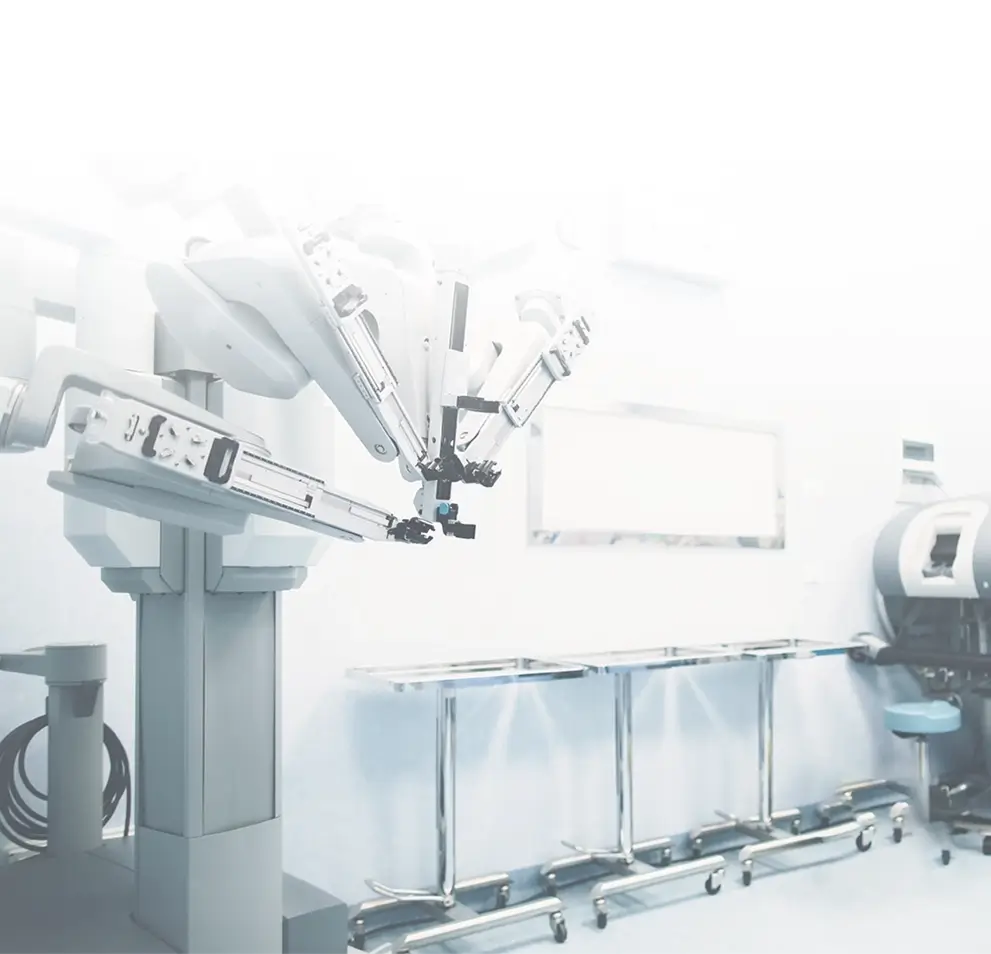
The patient cart is the robotic unit positioned beside the operating table. It holds four robotic arms: one for the camera and three for surgical instruments. A height-adjustable boom design allows the arms to reach all four abdominal quadrants without the team needing to reposition the patient during surgery.
Each arm connects to purpose-built surgical instruments with seven degrees of freedom, meaning they can bend and rotate in ways that a human hand cannot, allowing the surgeon to work precisely in tight spaces inside the body.
The Vision System
The vision system captures and transmits everything the surgeon sees during the operation. The endoscope, available in 0 or 30 degree angles, sends live video to an image processor that delivers it to the surgeon's viewer with a transmission delay of just 40 milliseconds.
This near-instant image is further enhanced by AI-powered processing that improves lighting balance, sharpens texture detail, and improves colour contrast between different tissue types. The system also supports three modes of fluorescence imaging that help surgeons identify lymph nodes, tumor boundaries, and blood vessel perfusion in real time.
What Makes the MP1000B Surgical Robot Stand Out?
India's adoption of robotic surgery has grown steadily over the past decade. Until now, most hospitals offering robotic-assisted cancer surgery in India have relied on a single platform category. The arrival of the MP1000B adds meaningful choice and introduces a set of clinical capabilities that set it apart. For patients researching cancer surgery options in India, understanding how platforms compare helps in making informed decisions about their care.
The table below compares the MP1000B against conventional laparoscopy and open surgery across the dimensions that matter most to cancer patients.
| Feature | MP1000B Surgery | Robotic Conventional Laparoscopy | Open Surgery |
|---|---|---|---|
| Incision size | Multiple small keyhole ports | Multiple small ports | Large single incision |
| Surgeon control | Master-slave robotic precision | Direct hand instruments | Direct hand instruments |
| Degrees of freedom | 7 DoF-wristed instruments | 4 DoF rigid instruments | Full hand movement |
| 3D visualization | Immersive 3DHD with AI enhancement | Standard 2D or basic 3D | Direct line of sight |
| Tremor filtration | Yes, built into the system | No | No |
| Fluorescence imaging | 3 modes, including gradient and mono | Limited or unavailable | Not applicable |
| Blood loss | Significantly reduced | Reduced vs open | Higher |
| Hospital stay | Shorter | Moderate | Longer |
| Recovery time | Faster | Moderate | Slower |
| Telesurgery capability | Yes, via the AMS Edge Cloud system | No | No |
| Approvals | NMPA (2024), CE (2025) | Standard regulatory approval | Standard regulatory approval |
The MP1000B is also the only robotic surgical system by AMS Edge with a built-in telesurgery platform, meaning expert surgeons can participate in or guide procedures from a remote location. This has direct relevance in a country as large as India, where specialist surgical expertise is concentrated in a few major cities.
India's First MP1000B Surgical Robot by AMS Edge Medical is Now at HCG Cancer Hospital, Bangalore
HCG Cancer Hospital, Bangalore, is the first hospital in India to install the MP1000B Surgical Robot by AMS Edge Medical. This is not a pilot program or a trial installation. The system is operational and available to cancer patients today.
HCG Cancer Hospital has consistently been at the forefront of bringing the most advanced cancer care technologies to India. As part of HCG Group, India's largest dedicated cancer care network, this milestone has immediate reach. When a new technology arrives at HCG, it becomes accessible to the broadest base of oncology patients in the country across all specialties and stages of cancer care.
For patients considering robotic cancer surgery, the clinical validation of this platform matters. The MP1000B has been used in over 14,000 surgical procedures globally, across hospitals in China and internationally.
Indian patients are accessing a platform with a documented clinical track record. This is what makes the arrival of the MP1000B at HCG significant for robotic cancer surgery and what positions HCG as the best hospital for robotic cancer surgery in India for patients seeking the most advanced available option.
Advantages of Undergoing Robotic Cancer Surgery on the MP1000B Platform
In cancer surgery, achieving clean surgical margins, minimizing operative trauma, and getting the patient back to their full treatment plan quickly are all factors that influence long-term outcomes.
The comparison between open cancer surgery vs. robotic cancer surgery often comes down to exactly these practical factors. When patients ask about prostate cancer robotic surgery success rates or success rates for robotic surgery across gynecology and thoracic procedures, the data from the MP1000B platform across 14,000 global cases consistently points to better precision, fewer complications, and faster recovery compared to open approaches.
- Precise tumor removal: The 7 DoF robotic instruments and 3D magnified vision allow surgeons to work with a level of precision that is difficult to replicate in open or standard laparoscopic surgery, particularly in confined anatomical spaces.
- Clear surgical margins: Better visualization and instrument control reduce the risk of leaving cancer cells behind at the margins of the removed tissue.
- Less blood loss: Minimally invasive access and precise dissection reduce intraoperative bleeding, lowering the need for transfusion and reducing postoperative complications.
- Smaller incisions and less scarring:Keyhole ports leave minimal external marks and cause less disruption to abdominal or chest wall muscles.
- Shorter hospital stay:Most patients undergoing robotic surgery are discharged significantly sooner than those who have open surgery.
- Faster recovery: Reduced tissue trauma means patients regain strength and normal function more quickly.
- Earlier return to systemic treatment:For cancer patients on a combined treatment plan, a faster surgical recovery means less interruption to chemotherapy, radiation, or immunotherapy schedules.
- Reduced risk of infection: Smaller wounds are associated with lower rates of postoperative wound infection.
- AI-enhanced intraoperative imaging: The fluorescence imaging system helps surgeons identify lymph nodes and tumor margins in real time, supporting more thorough oncological resection.
Why Choose HCG Cancer Hospital, Bangalore, for Robotic Cancer Surgery?
India's first and only center with the MP1000B Surgical Robot by AMS Edge Medical: No other hospital in India currently has this platform. Patients seeking robotic surgery for cancer in India at this level of technology have one destination.
India's largest dedicated cancer care network:HCG Group operates exclusively in oncology. Every resource, specialist, and facility is oriented around cancer care. This is not a general hospital with a cancer wing. It is a cancer hospital with full-spectrum capability.
Experienced surgical oncology team: The surgeons at HCG Cancer Hospital, Bangalore, have trained in robotic-assisted cancer procedures across urology, gynaecology, general surgery, and thoracic surgery. Robotic surgery requires specific training beyond general surgical skill, and the team here has it.
Multidisciplinary tumor boards:Every surgical decision at HCG is reviewed by a team of specialists, including medical oncologists, radiation oncologists, pathologists, and radiologists. Robotic cancer surgery at HCG is part of a complete, coordinated cancer management plan.
24/7 support across all critical specialties: Medical oncology, anesthesia, and critical care teams are available around the clock, ensuring continuity of care from the operating room through recovery.
Best hospital for robotic cancer surgery in India:For patients evaluating options for robotic cancer surgery in Bangalore or across India, HCG Cancer Hospital combines clinical expertise, multidisciplinary infrastructure, and now the most advanced robotic surgical platform available in the country.
Frequently Asked Questions
Meet Our Robotics Expert | HCG Bangalore
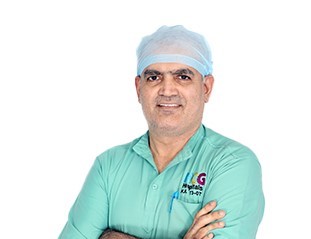
Dr. Raghunath S. K.
Director and Senior Consultant - Uro-Oncology and Robotic Surgery, HCG Cancer Hospital, Bangalore
Dr. Raghunath is the senior consultant and director of the Uro-Oncology and Robotic Surgery Department at HCG Cancer Hospital, Bangalore . His expertise lies in performing open and minimally invasive surgery (laparoscopic surgery and robotic surgery) for all major urological cancers. His areas of interest include robotic surgery and medical equipment innovation and design.
Dr. Raghunath is the 1st Uro-oncologist to establish the 1st dedicated Uro-oncology department in South India at HCG. He is also the 1st Uro-oncologist in South India to perform robotic radical cystectomy and total intracorporeal ileal neobladder surgery for bladder cancer and robotic perineal radical prostatectomy for prostate cancer. He has authored and co-authored several publications for national and international journals. He has also authored several book chapters for several Uro-oncology books. He is also a visiting professor at the Department of Uro-oncology at the University of Minnesota, Minneapolis. He was one of the speakers at the TEDx DSCE event 2019 and spoke on robotic surgery.