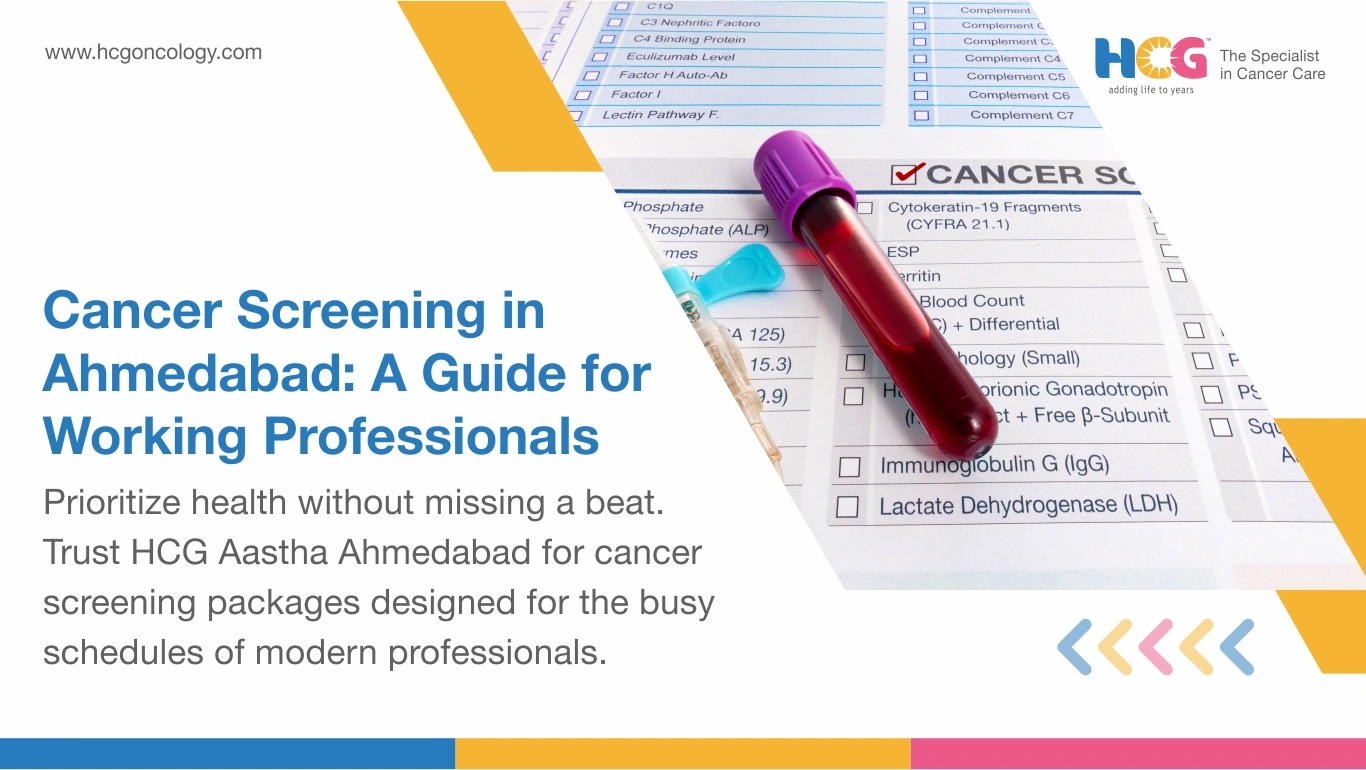
10 Apr, 2026
Feel free to reach out to us.
10 Apr, 2026
According to NCRP 2022, 1 in 9 Indians will develop cancer in their lifetime. These aren't statistics about elderly populations in distant cities. They describe working-age groups in India, including urban Gujarat.
The core problem is straightforward: cancer is best treated in its early stages, when there are no apparent symptoms. Most people seek help only after something feels wrong. By then, the picture is often more complicated than it needs to be.
This guide explains what the cancer risk looks like for Ahmedabad's working population, what a structured screening program typically includes, and how to identify the tier that fits your age and health profile.
Gujarat's urban cancer profile has a few distinct patterns. Oral cancers, driven largely by gutka and tobacco use, are disproportionately common in younger male patients. Breast cancer is the leading cancer in Indian women nationally (NCRP 2022), and urban Gujarat follows that trend. GI and gallbladder cancers are also notable in the wider region.
Then there's the lifestyle side. Sedentary work, sustained stress, shifting dietary patterns, and variable air quality are not individually alarming. Together, they add up to a risk profile worth monitoring proactively.
There's also a structural gap most people miss. Employer health checkups and insurance cover basic blood panels but rarely tumor markers. And without tumor markers, cancer has no way to show up in your report.
A cancer screening package is not a full-body health checkup. It's specifically designed to detect early cancer signals through tumor markers and imaging. Having an annual employer checkup does not mean you've had cancer screening.
A structured cancer screening package typically includes a baseline blood panel (CBC, blood glucose, lipid profile, liver, and kidney function), tumor marker tests, and an oncology consultation. Imaging such as ultrasound, chest X-ray, or CT is added from mid-tier packages upward.
The common tumor markers in a tiered program include PSA (prostate cancer), CEA (colorectal and GI risk), CA 19.9 (pancreatic and gallbladder), CA-125 (ovarian), CA 15.3 (breast monitoring), AFP (liver cancer), and PIVKA-II, an enhanced liver cancer marker usually reserved for higher-risk tiers.
Tiered screening programs are structured so that entry-level packages provide a meaningful cancer screen at an accessible price, while higher tiers add imaging, additional markers, genetic counseling, and dietary consultations for those with greater risk.
For those wondering about cancer prevention checkup costs in Ahmedabad in 2026, the table below shows different cancer screening packages at HCG Aastha side by side, with updated pricing as of March 2026.
| Package Tier | Price | Tumor Markers Included | Imaging | Best Suited For |
|---|---|---|---|---|
| Early Cancer Alert Male | Rs. 1,799 | PSA, CEA, CA 19.9 | None | Men under 45, no risk factors, first-time screening |
| Early Cancer Alert Female | Rs. 1,999 | CA-125, CA 15.3, CEA, CA 19.9 | None | Women under 45, no risk factors, first-time screening |
| Essential Screen Male | Rs. 2,299 | PSA, CEA, CA 19.9, AFP | None | Men above 45 or with a hepatitis/fatty liver history |
| Essential Screen Female | Rs. 2,499 | CA-125, CA 15.3, CEA, CA 19.9, AFP | None | Women above 45 or with a family history of breast/ovarian cancer |
| Essential Health & Cancer (M/F) | Rs. 4,700 (M) / Rs. 5,499 (F) | As above per gender | USG Abdomen, Chest X-ray | Adults wanting marker and imaging correlation in one consultation |
| Comprehensive Cancer Prevention Male | Rs. 10,100 | PSA, CEA, CA 19.9, AFP, PIVKA-II | HRCT Chest (low-dose) | Smokers, tobacco users, family history of cancer, high-risk individuals |
| Comprehensive Cancer Prevention Female | Rs. 13,700 | CA-125, CA 15.3, CEA, CA 19.9, AFP, PIVKA-II + HPV DNA, Pap Smear | Mammogram, Breast USG | Women with family history of breast, ovarian or cervical cancer; BRCA risk |
All packages include a baseline blood panel and an oncology consultation. Prices are current as of March 2026 and may be revised. Confirm with HCG Aastha before booking.
For male working adults, the relevant risk picture is centered around GI and colorectal cancer (CEA, CA 19.9), prostate cancer (PSA), and liver cancer for those with a specific history. An entry-level screen covering these markers is the appropriate starting point for men under 45 with no known risk factors.
For men above 45, or those with a history of hepatitis, fatty liver, or a family history of GI cancer, adding AFP for liver cancer screening is clinically appropriate. This is particularly relevant given Gujarat's GI cancer profile.
For men who smoke, use tobacco, or have a known family history of cancer, a comprehensive screen adds PIVKA-II alongside AFP for liver cancer, HRCT Chest for lung screening, and genetic counseling. The HRCT Chest in higher-tier packages is a low-dose CT calibrated for lung cancer screening, not a diagnostic scan.
Breast cancer is the leading cancer in Indian women and is increasingly seen in those under 50. A baseline screen for women should cover CA-125 for ovarian cancer and CA 15.3 for breast cancer monitoring, alongside the standard CEA and CA 19.9 panel.
For women above 45 or those with a family history of breast or ovarian cancer, adding AFP is appropriate. For women with a family history of breast, ovarian, or cervical cancer, a comprehensive screen should include HPV DNA RT-PCR, a Pap smear, a mammogram, a breast ultrasound, genetic counseling, and a diet consultation.
Genetic counseling in the comprehensive tier is not an optional extra. It's a clinical service for women who carry a hereditary cancer risk, including those with BRCA-associated family histories.
The right package depends on your age, gender, and risk factors, not your symptoms. Under 45 with no family history? The entry-tier packages cover the most relevant markers. Above 45 or with a known risk factor, the Essential Screen or Comprehensive tier offers broader coverage. The HCG Aastha team can help you decide.
HCG Aastha Cancer Centre, S.G. Highway, is one of Ahmedabad's dedicated cancer hospitals, with specialist oncology services spanning surgery, radiation, and systemic therapy. The distinction that matters most for screening: abnormal results are reviewed by a multidisciplinary care team, not a general physician. For someone seeing an elevated marker for the first time, that makes a real difference.
The genetic counseling service in the Comprehensive tier is a practical differentiator. Most private screening programs in Ahmedabad require a separate specialist referral for this. HCG Aastha includes it within the package. Every package includes an oncology consultation. This way, you will have proper guidance to make informed health decisions.
Disclaimer: This content is for informational purposes only and should not replace professional medical advice, diagnosis, or treatment. Always consult a qualified healthcare provider for guidance tailored to your needs.