18 Feb, 2026
Feel free to reach out to us.
18 Feb, 2026

This article is medically reviewed by Dr. S. Bhattacharjee, Senior Consultant - Radiation Oncology, HCG Cancer Hospital, Bangalore.
Cancer begins when the body's cells begin to grow uncontrollably. Advanced-stage cancer usually means that the cancer has spread from where it started to other places in the body. Advanced cancers may refer to locally advanced cancers or metastatic cancers.
Early-stage cancers are confined to specific areas and are more amenable to surgical intervention or localized therapy for potential cure. In contrast, advanced-stage cancers demand a multifaceted approach involving systemic therapies to regulate the illness, alleviate symptoms, and enhance quality of life.
In advanced-stage or metastatic cancer, cancer cells have spread from the main organ to other parts of the body, such as the brain, lungs, liver, or bones. It spreads through the lymphatic or blood system.
Staging cancer helps doctors figure out how to make a treatment plan that works for each patient. Staging is based on:
Each of these criteria plays a role in the TNM classification, which helps oncologists figure out the right treatment approach for each case.
At HCG, oncologists employ precise tests for accurate staging. This makes sure that every patient receives a treatment plan that is based on evidence and fits their needs.
A conclusive diagnosis and accurate staging are critical for personalized treatment planning. The following are the different tests recommended for a confirmed diagnosis of cancer.
Imaging investigations are essential for determining cancer dissemination and assessing therapy efficacy. Some common types of imaging are:
Biopsies are recommended to confirm the diagnosis and determine the type and stage of cancer. Immunohistochemistry (IHC) and molecular profiling are two advanced pathology methods that help oncologists learn more about how the tumor behaves biologically.
Molecular diagnostics and next-generation sequencing (NGS) are employed at HCG to find genetic changes that cause cancer to grow. This knowledge helps oncologists choose targeted medicines that work specifically on particular mutations.
Staging investigations combine information from clinical, radiological, and pathological sources. The technique helps figure out if the cancer is in one place, has spread to nearby areas, or has spread to other parts of the body. The stage of the cancer helps oncologists choose the best and least invasive treatment options.
At HCG, our doctors consider Multidisciplinary Tumor Board (MDT) reviews to treat advanced-stage tumors. This board comprises oncologists, surgeons, radiologists, pathologists, and other professionals.
A thorough review of each patient's case is done. The MDT makes sure that:
This collaborative approach reduces bias in treatment, improves accuracy, and ensures that patients receive the best care possible.
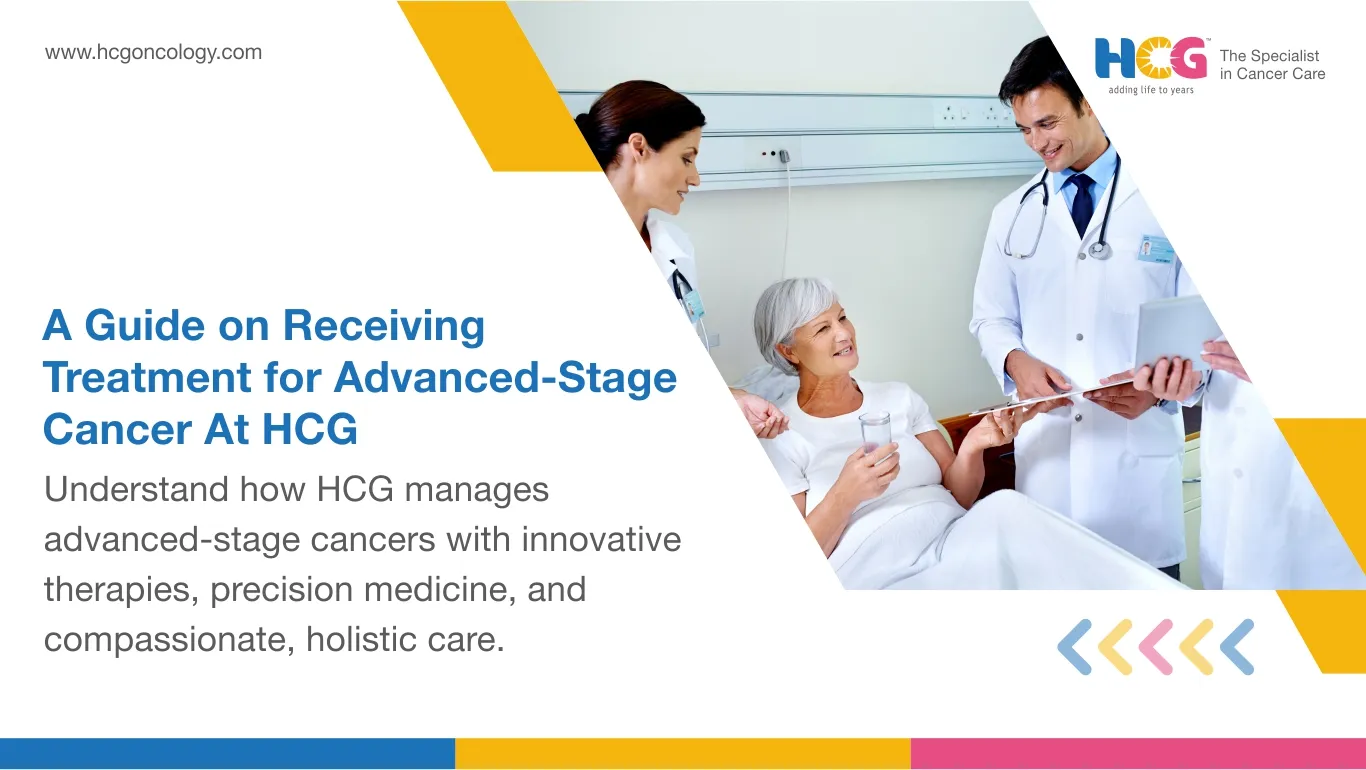
HCG uses an integrative paradigm that combines medicinal, surgical, and supportive therapy to treat advanced-stage cancer. The goal is to make the patient live longer, slow the disease's progress, and improve their quality of life.
Surgery is often the first line of treatment for early-stage cancers. In advanced-stage cancer cases, surgery is recommended to:
HCG offers robotic and minimally invasive surgeries, which benefit patients with enhanced accuracy, faster recovery, and fewer problems after surgery.
Chemotherapy is often recommended as the mainline treatment for advanced-stage cancers. It uses strong anti-cancer drugs to kill cancer cells all over the body.
Oncologists make personalized treatment plans based on the type of tumor, the patient's genetic makeup, and their overall health. Patients are closely monitored for side effects like fatigue, nausea, and neuropathy using supportive care measures.
Chemotherapy alone may not cure most stage 4 malignancies, but it can prolong survival and ease symptoms.
Radiation therapy is an important aspect of treating advanced malignancies. HCG houses highly advanced radiotherapy platforms to deliver radiation treatments through modern techniques:
These approaches cause less damage to healthy tissues and fewer side effects by precisely targeting the tumor.
Targeted treatments, like therapy and immunotherapy, are gradually gaining prominence in modern oncology. By specifically identifying the cancer cells and targeting them only, these treatments effectively control cancer growth. These treatments are often combined with other treatment approaches to improve the overall effectiveness of the treatment.
HCG is one of the few cancer institutes in India that offers CAR T-cell therapy, a new treatment that alters the patient’s immune system so that it can identify and launch an attack against cancer cells.
Stem cell transplants are also crucial for treating advanced blood malignancies like leukemia and lymphoma.
HCG implements these innovative therapies with very high safety and quality protocols.
Palliative care and supportive care are important aspects of advanced-stage cancer management.
At HCG, our palliative care approaches focus on:
The goal is to help patients feel comfortable and have a good quality of life while they are getting treatment.
Clinical trials can also be recommended as one of the options for patients with advanced-stage cancers, which provide patients with access to the most advanced treatments. People with advanced-stage malignancies can benefit from:
For more information on enrolling in clinical trials, patients should speak to their doctors.
At HCG, patients who are undergoing treatment for advanced-stage cancers receive prompt care and support every step of the way. They are also provided with helpful patient resources and necessary guidance, which will help them navigate their journey with more clarity and confidence:
With this holistic approach, we uphold HCG's conviction that we treat the patient as a whole, not just the illness.
HCG's integrated model combines diagnosis, treatment, research, and rehabilitation all in one place, making sure that patients get the best care possible.
Through modern technologies and innovative treatment approaches, HCG strives to deliver the best quality treatments with enhanced precision.
We have dedicated specialists for specific types of cancer, like breast, lung, gastrointestinal, brain, or gynecologic oncology. An organ-specific care approach ensures that you receive individualized care from professionals who have specialized expertise in managing these cancers.
The hospital's interdisciplinary teams offer both palliative and survivorship care programs to help with symptoms, stop them from coming back, and support mental health.
At HCG, every treatment plan is made with the patient's needs, goals, and quality of life in mind. Along with focusing on the patient's safety, we also focus on ensuring that the patient is comfortable throughout their treatment journey.
At HCG, patients with advanced cancers receive personalized care designed to extend life and enhance quality of life through accurate tests, teamwork in planning, and innovative treatments like immunotherapy and CAR T-cell therapy.
To know more about treatment options for advanced-stage cancers or get a second opinion on your current diagnosis, get in touch with HCG's cancer experts.
Dr. S. Bhattacharjee
Senior Consultant - Radiation Oncology MBBS, MD (Radiation Oncology)
Dr. S. Bhattacharjee is a senior radiation oncologist at HCG Cancer Centre, Bengaluru, with expertise in advanced radiotherapy techniques including IMRT, IGRT, CyberKnife, TomoTherapy, brachytherapy, and chemotherapy. With over two decades of experience, he has treated thousands of cancer patients across India and abroad. He discovered the immunomodifier Immuvac, approved by the USFDA. His work is widely published in international journals, and he actively contributes to research, education, and cancer awareness initiatives.
Appointment Link: Book an Appointment with Dr. S. Bhattacharjee.