30 Jul, 2026
30 Jul, 2026
Radiation therapy is a life-saving cancer treatment option. What it sometimes leaves behind, though, is tissue that quietly stops working, which is sometimes referred to as a vessel scar.
Oxygen supply drops below the threshold needed for repair. Wounds that should resolve within weeks instead persist for months, sometimes years. HBOT for radiation damage intervenes at this biological root, pushing pressurized pure oxygen into tissue that radiation has left oxygen-deprived. At HCG, this therapy is embedded within a structured pathway for oncology wound care, applied where clinical evidence supports it, and monitored across every session.
Ionizing radiation does not selectively damage only cancer cells. Microscopic blood vessels feeding the surrounding tissue absorb significant injury, too. Those vessels gradually scar, stiffen and narrow through a process called "obliterative endarteritis." The tissue beyond them becomes chronically deprived of oxygen. Firm, sometimes tender, resistant to every healing signal the body sends.
Dressings and antibiotics treat what is visible on the surface. Neither addresses what is happening underneath: a vascular system too damaged to deliver the oxygen repair actually needed.
Some radiation-injured areas will not close without restoring blood vessel function first. Surface treatments alone are insufficient to fill that gap.
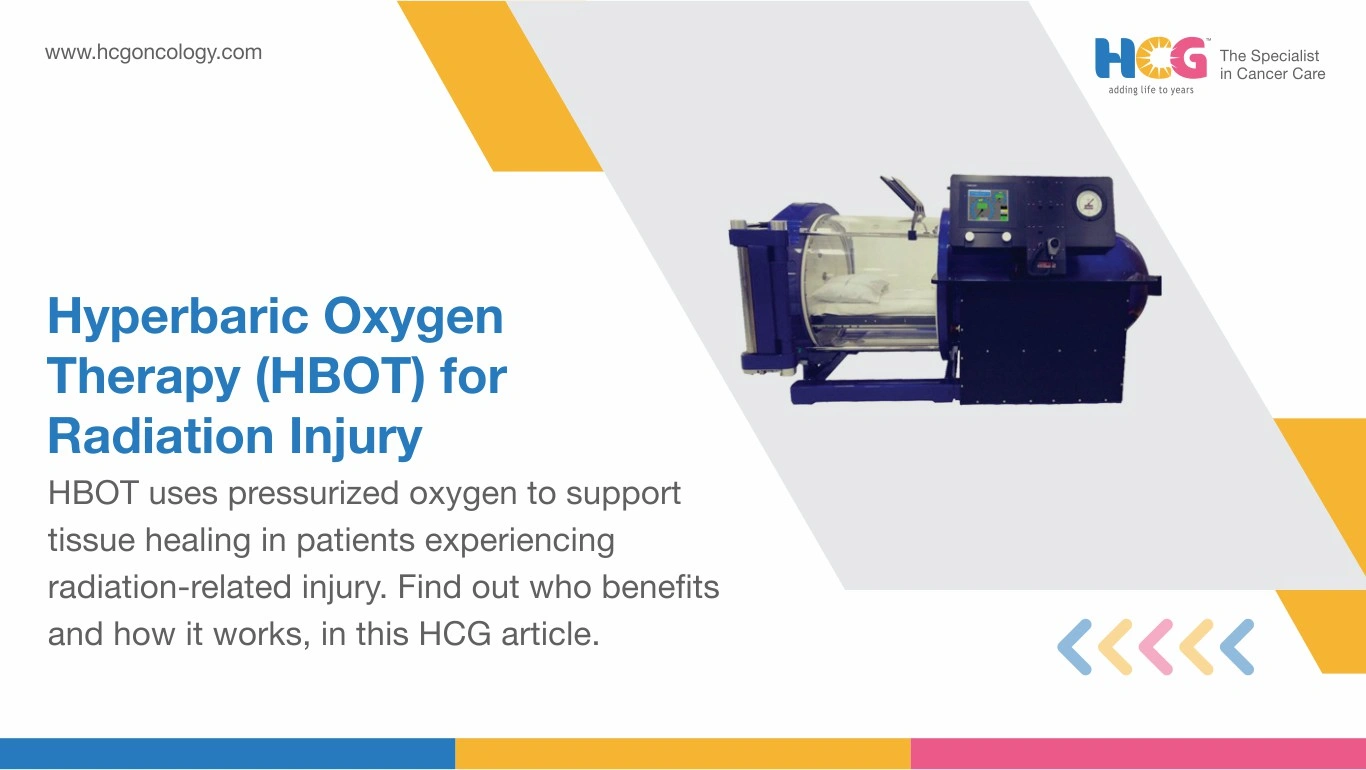
Inside a hyperbaric chamber, pressure changes how oxygen behaves in blood. Normally, plasma carries almost no oxygen independently. Under 2 to 3 atmospheres of pressure, plasma absorbs dissolved oxygen directly, effectively becoming a secondary delivery system. As a result, oxygen can diffuse into areas with compromised blood supply, improving tissue oxygenation even when damaged vessels are unable to deliver it effectively.
The benefits of HBOT improve with repeated sessions. With more sessions, oxygen delivery improves, which in turn supports collagen formation, growth of new blood vessels, and tissue repair. This helps in the healing of chronic wounds. In selected cases, this progress may also be visible on follow-up imaging or clinical evaluation.
The below table sheds light on the different benefits offered by hyperbaric oxygen therapy:
| Benefit | How HBOT Offers that Benefit |
|---|---|
| Tissue Healing | Pressurized oxygen increases oxygen delivery to damaged tissues, activating fibroblasts, boosting collagen production, and stimulating new blood vessel growth (neovascularization). |
| Infection Control | Improved oxygen levels strengthen the immune response and support wound closure in damaged tissue. |
| Pain Reduction | Restoring oxygen supply and repairing damaged tissue reduces inflammation and improves structural healing in affected areas. |
The clinical standard sits between 15 and 40+ sessions. Bone injuries, osteoradionecrosis of the jaw in particular, demand longer courses than soft tissue wounds. Each session runs roughly 90 minutes. Every 10 sessions, the treating team reassesses wound status using measurement, imaging, or symptom review to confirm the course remains clinically justified.
Tissue repair through HBOT will take time. Stopping a course partway through interrupts vascular rebuilding at precisely the point where new vessel networks are still consolidating.
HBOT is generally well-tolerated. The most reported sensation during pressurization is mild ear fullness, comparable to descent in an airplane. Simple swallowing or jaw movements clear it within minutes.
Per session costs in India range between Rs. 3,000 and Rs. 6,000. Full courses, spanning 15 to 40 sessions, fall roughly between Rs. 50,000 and Rs. 320,000, varying by facility type, city, and clinical complexity. Bangalore, Mumbai, and Ahmedabad typically carry higher per-session rates than smaller centers.
Costs vary by hospital and patient profile. To plan your care better, secure an itemized written estimate before starting. Confirm whether your oncologist's referral letter is required for insurance processing, and obtain written pre-authorization from your insurer before the first session.
Radiation injury is not a permanent, unchangeable outcome for every patient. HBOT for radiation damage targets the vascular deficit that radiation created, not the surface presentation alone. HCG Cancer Hospital delivers this therapy through a coordinated clinical team spanning radiation oncologists, wound care specialists, and rehabilitation coordinators, giving patients structured, documented support from the first pressurized session through confirmed recovery.
Disclaimer:This information is intended to educate patients and caregivers. It does not replace professional medical advice. All treatment decisions should be made in consultation with a qualified doctor.
Feel free to reach out to us.