30 Jul, 2026
30 Jul, 2026
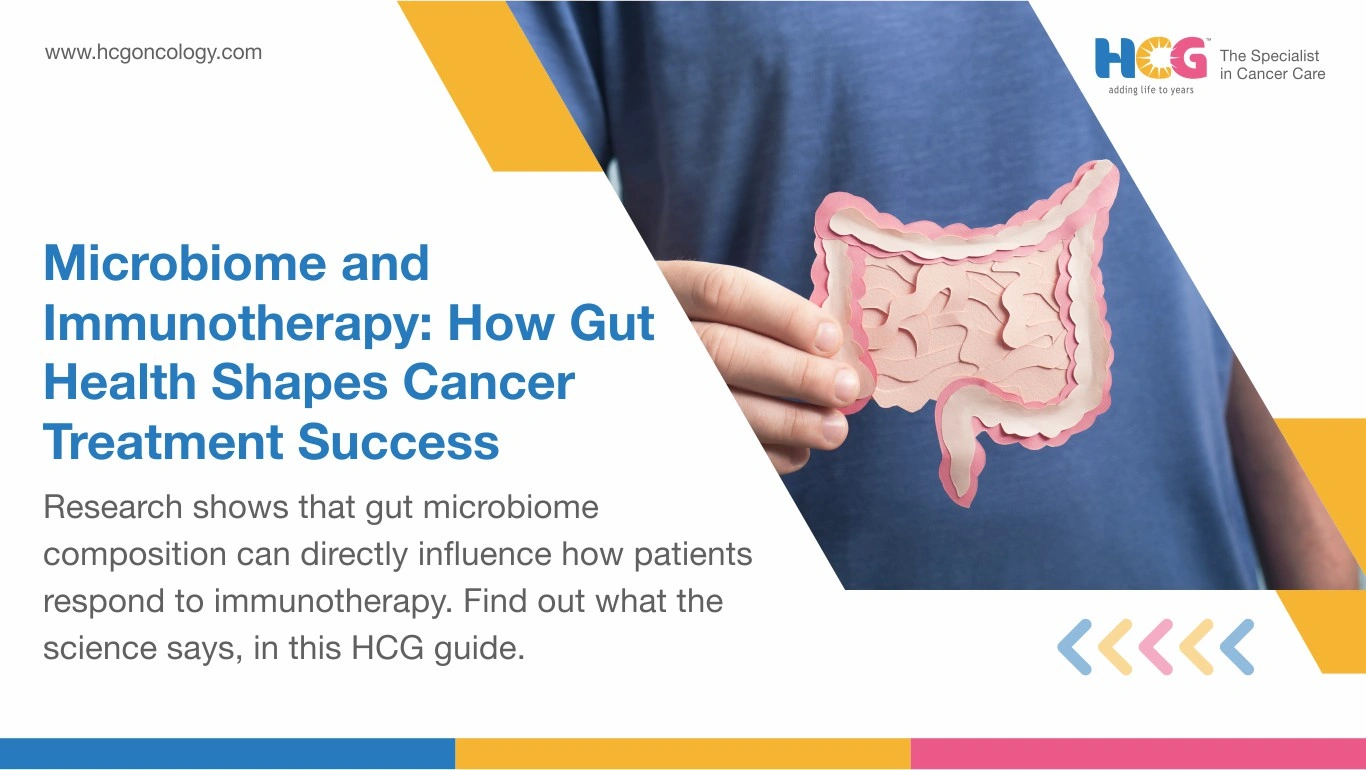
Your gut holds trillions of bacteria. That microbial community, called the gut microbiome, does far more than aid digestion. Published research confirms that microbiome and immunotherapy outcomes are directly linked: patients with a richer, more diverse gut microbiome respond significantly better to immune checkpoint inhibitors such as PD-1 blockers. A disrupted microbiome, clinically termed dysbiosis, can blunt treatment before it even starts. Paying attention to gut health for cancer treatment is not optional care. It is core oncology.
Commensal bacteria govern the immune system's ability to detect and destroy malignant cells. When microbial balance collapses, so does immune surveillance. Dysbiosis elevates pro-inflammatory cytokines while suppressing the anti-tumor signals that checkpoint drugs depend on. Think of it this way: immunotherapy is the accelerator, but a disrupted microbiome cuts the fuel line.
Research published in Cancers (Basel) (PMC10093606) identifies that patients with high microbial diversity demonstrate significantly stronger systemic T-cell activation during anti-PD-1 therapy. The gut-immune axis is not peripheral to cancer biology. It sits at the center of it.
Yes. Dietary fiber feeds commensal bacteria. Patients on high-fiber diets consistently show richer microbial ecosystems, which multiple published studies associate with improved progression-free survival during PD-1 inhibitor therapy. Low-fiber, processed-food patterns accelerate dysbiosis and have been linked to attenuated immune checkpoint response.
In practice, diet is the most accessible lever a patient can pull between appointments.
| Category | Examples | What It Does |
|---|---|---|
| Fiber-Rich | Oats, lentils, whole grains, and vegetables | Feeds beneficial commensal bacteria |
| Fermented | Yogurt, kefir, idlis, and kimchi | Introduces live microbial cultures |
| Prebiotics | Garlic, onion, banana, asparagus | Selectively stimulates Bifidobacterium growth |
| Probiotics | Physician-guided Lactobacillus supplements | Supports microbial restoration post-antibiotic use |
Not without oncologist approval. Immunocompromised patients face a real risk of bacterial translocation from unsupervised probiotic use. The evidence base is still not uniform enough to recommend universal supplementation across all chemotherapy regimens.
What is established: patients who have received broad-spectrum antibiotics, which can wipe out beneficial gut populations almost entirely, may benefit from targeted microbial reintroduction. Timing matters. Dose matters. Your immune status at that moment matters even more.
FMT is the transfer of a curated microbial population from a healthy donor directly into a patient's gastrointestinal tract. The goal is to repopulate a severely depleted or dysbiotic gut. Research documented in PMC10093606 reports early clinical trials where FMT from immunotherapy responders was administered to non-responders, with some patients shifting from treatment-resistant to treatment-sensitive status.
The implication is significant: gut microbial composition is not just a passive biomarker. It is a modifiable determinant of whether immunotherapy works at all.
FMT in oncology is investigational. Patients should pursue this only within a properly structured clinical trial, and eligibility varies by cancer type and clinical context.
Melanoma is where the gut-immunotherapy link was first rigorously established. Patients with Ruminococcaceae-dominant microbial profiles show stronger and more durable anti-PD-1 responses. The connection has since extended to lung cancer and renal cell carcinoma, though melanoma remains the most data-dense model. The consistent thread across cancer types: microbial diversity at baseline predicts treatment durability at follow-up.
Chemotherapy, antibiotics, and significant dietary disruption all erode microbial diversity across the treatment course. Recovery requires structured nutritional rehabilitation, not just general dietary advice.
Practical rehabilitation steps:
HCG's clinical dietitians co-design these protocols around each patient's specific treatment regimen, digestive tolerance, and microbial restoration targets.
HCG Cancer Hospital approaches this by embedding clinical nutrition directly within the oncology care pathway, rather than treating gut health as supplementary. Oncologists, clinical dietitians, and supportive care specialists work in coordination to assess and support microbial health before, during, and after immunotherapy. The science linking the microbiome and immunotherapy outcomes has moved decisively beyond hypotheses. For patients receiving checkpoint inhibitor therapy, gut health is a clinical variable worth actively managing.
Disclaimer: This information is intended to educate patients and caregivers. It does not replace professional medical advice. All treatment decisions should be made in consultation with a qualified doctor.
Feel free to reach out to us.