01 Apr, 2026
Feel free to reach out to us.
01 Apr, 2026
A mouth ulcer is a shallow, painful sore on the inner lining of the mouth that heals on its own, usually within one to two weeks. Oral cancer is a malignant growth in the oral cavity that does not resolve without medical treatment. The two can look similar early on, which is why knowing what separates them matters. Healing time is the single most useful clue. A sore that clears up within a couple of weeks is almost certainly benign. One that lingers beyond three weeks or arrives with other symptoms like difficulty swallowing deserves a professional look.
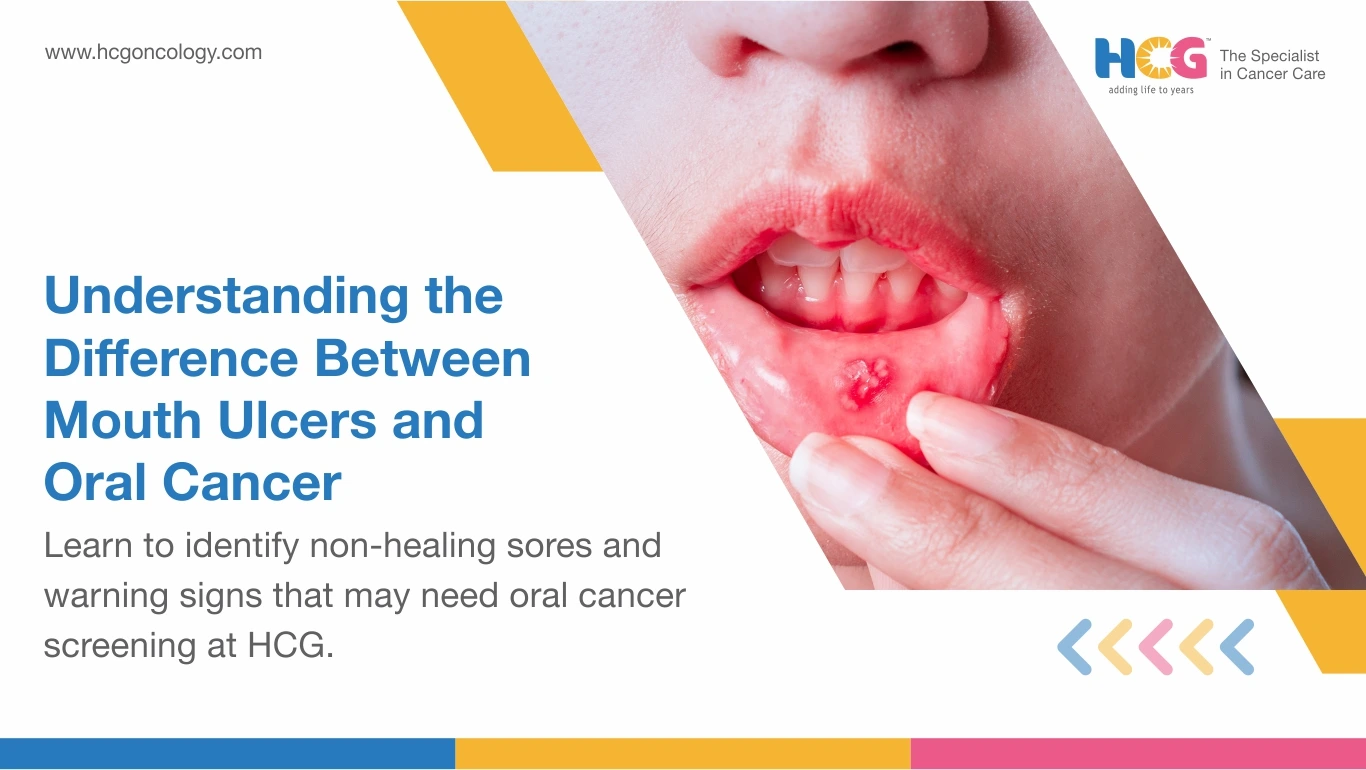
Mouth ulcers, medically called aphthous ulcers, are small oval or round sores that form on the cheeks, tongue, gums, or inner lips. They are not contagious. Common triggers include biting the cheek, stress, acidic foods, and nutritional gaps like low vitamin B12 or iron. They usually start as red bumps that turn into painful open sores with a white or yellow center. The pain can make eating and talking uncomfortable, but the good news is that they typically heal on their own within 7 to 14 days without scarring. If you get them frequently or they last longer than two weeks, it’s worth checking in with a healthcare provider to rule out underlying issues.
Good to know: Roughly one in five people will get at least one canker sore in their lifetime.
A typical ulcer has a white or yellowish center ringed by a red border. Pain peaks in the first few days and fades as healing progresses. Most clear up within seven to fourteen days without scarring.
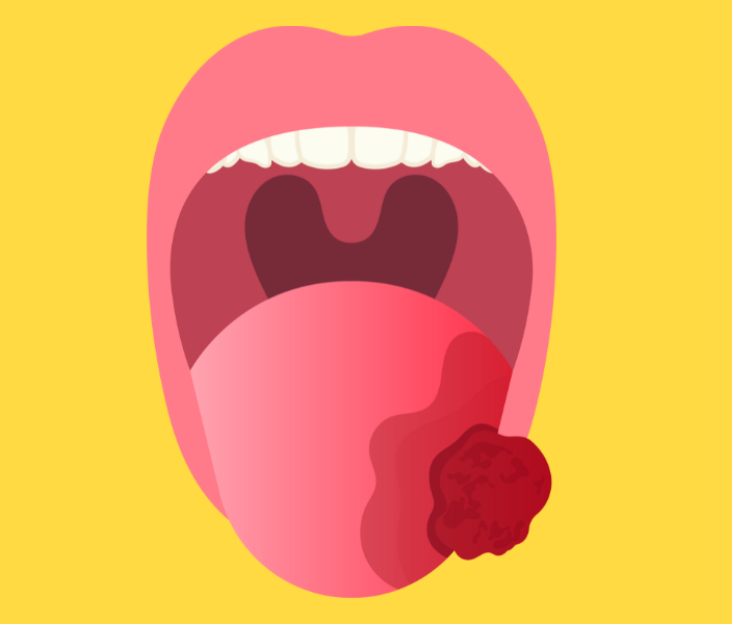
Oral cancer, most commonly oral squamous cell carcinoma, develops from the flat cells lining the mouth, tongue, gums, lips, or floor of the mouth.
A detail that catches many people off guard: early oral cancer is frequently painless. That absence of pain can lead to delays.
| Healing time | Mouth Ulcer | Oral Cancer Lesion |
|---|---|---|
| Healing time | Resolves in 1-2 weeks | Does not heal without treatment |
| Pain | Usually painful from the start | Often painless in early stages |
| Appearance | White/yellow center, red border | Red or white patch, irregular sore |
| Borders | Smooth, round or oval | Irregular, raised, or firm |
| Texture | Soft, flat | May feel hard or rough |
| Associated symptoms | Typically none | Neck lump, swallowing difficulty, numbness |
Mouth ulcers can affect anyone. Oral cancer has specific established risk factors:
Certain features in a mouth sore should prompt clinical evaluation:
A standard aphthous ulcer does not transform into cancer. That is a common concern, and the short answer is reassuring. However, precancerous changes like leukoplakia and erythroplakia can resemble an ordinary sore early on and carry a recognized risk of progressing over time if left unmonitored.
A dentist or doctor begins with a visual examination and palpation, checking for texture changes, lumps, or unusual patches. If anything looks suspicious, a biopsy is the standard next step: a small tissue sample is removed and examined under a microscope by a pathologist.
Good to know: Routine dental check-ups can catch suspicious changes early, even before symptoms become obvious.
The difference between a mouth ulcer and oral cancer often comes down to behavior over time. Ulcers heal. Cancer does not. If a sore persists beyond three weeks or arrives alongside warning symptoms, the appropriate step is clinical evaluation.
A few practical steps if you have noticed an unusual oral sore. Note when the sore appeared and whether it is changing. Avoid continued self-treatment if no improvement after two to three weeks. Mention tobacco or alcohol use at your appointment. Ask your clinician about next steps if the cause is not immediately clear.
At HCG, head and neck cancer care focuses on accurate early assessment and carefully coordinated planning across specialties, ensuring each patient receives a clear evaluation from the start.
If a persistent oral sore has raised questions for you, scheduling a specialist consultation is a practical step forward.
Disclaimer: This information is intended to educate patients and caregivers. It does not replace professional medical advice. All treatment decisions should be made in consultation with a qualified doctor.
- Mayo Clinic | Mouth Cancer - Symptoms and Causes | https://www.mayoclinic.org/diseases-conditions/mouth-cancer/symptoms-causes/syc-20350997
- NHS UK | Mouth Ulcers | https://www.nhs.uk/conditions/mouth-ulcers/
- NIDCR (NIH) | Oral Cancer | https://www.nidcr.nih.gov/health-info/oral-cancer
- Cleveland Clinic | Canker Sore vs Cancer: Is Your Mouth Sore Serious? | https://health.clevelandclinic.org/dont-ignore-that-painful-mouth-sore
- MD Anderson Cancer Center | Canker Sore vs Oral Cancer: How Can You Tell the Difference? | https://www.mdanderson.org/cancerwise/canker-sore-vs--oral-cancer--how-can-you-tell-the-difference.h00-159542901.html
- American Cancer Society | Signs and Symptoms of Oral Cavity and Oropharyngeal Cancer | https://www.cancer.org/cancer/types/oral-cavity-and-oropharyngeal-cancer/detection-diagnosis-staging/signs-symptoms.html
- NCI (cancer.gov) | Head and Neck Cancers Fact Sheet | https://www.cancer.gov/types/head-and-neck/head-neck-fact-sheet
- Cancer Research UK | Mouth Cancer | https://www.cancerresearchuk.org/about-cancer/mouth-cancer