05 May, 2026
05 May, 2026
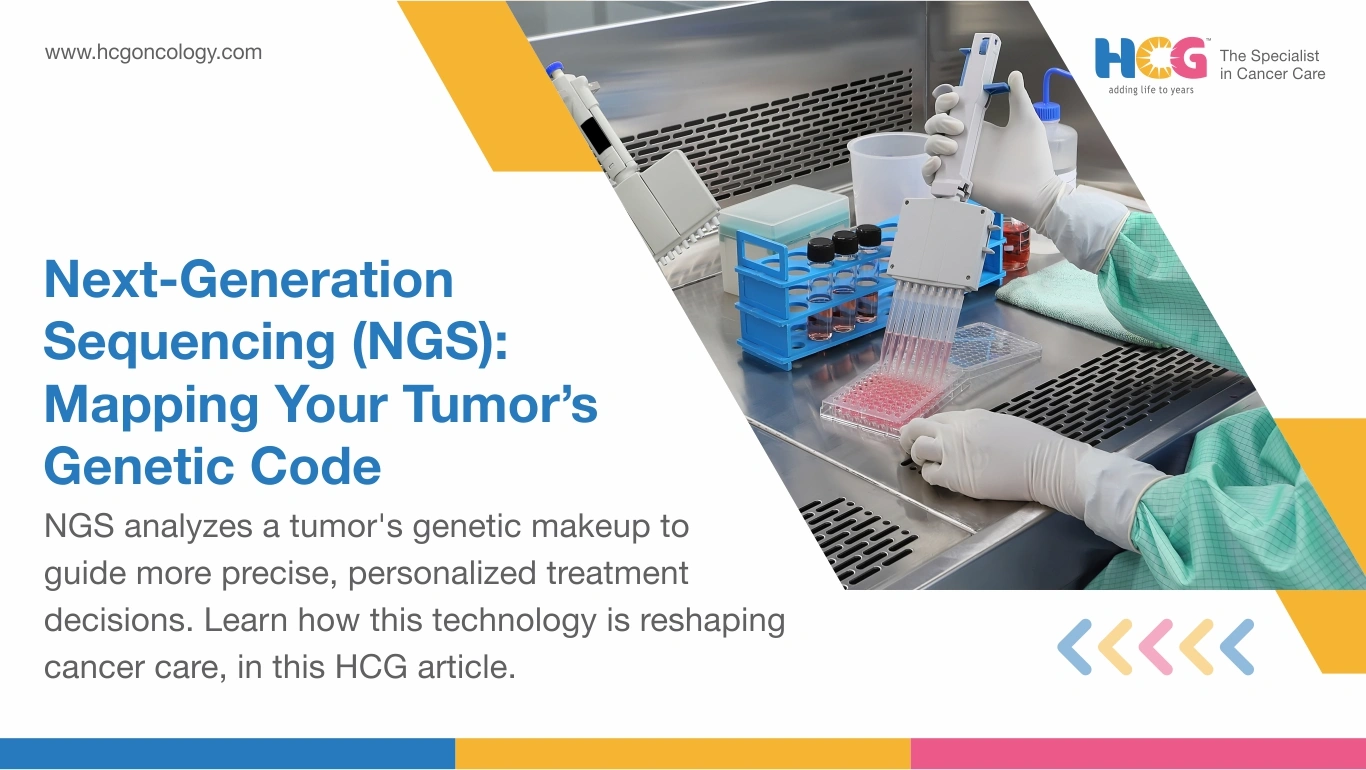
NGS cancer testing reads a tumor's complete genetic blueprint in a single laboratory workflow. Instead of examining one gene at a time, this precision oncology test scans hundreds of genes simultaneously to locate the exact driver mutations fueling cancer growth. Think of it as the difference between checking one lock and remapping an entire building's security system.
Your tumor has a genetic story. NGS cancer testing reads that story in full in a single laboratory run, rather than chapter by chapter.
Instead of testing one gene at a time, this precision oncology test scans hundreds of genes simultaneously. The goal is identifying the exact driver mutations pushing a cancer forward so that oncologists can respond with a drug that targets that specific error, not just the organ where the tumor happens to sit.
NGS cancer testing is a molecular mapping technique. Millions of DNA fragments extracted from a tumor are sequenced simultaneously, then computationally reassembled to expose every detectable genetic alteration driving that cancer's behavior.
A standard biopsy answers one question: what kind of cancer is this? An NGS, on the other hand, answers a harder one: what is making it grow, and which drug is most likely to stop it?
| Parameter | Standard Biopsy | NGS Genomic Profiling |
|---|---|---|
| Information Depth | Cell type, tissue appearance | Driver mutations, gene fusions, TMB, MSI |
| Treatment Precision | Cancer type-based | Mutation-specific drug matching |
| Time to Results | 5 to 7 days | 10 to 21 days |
| Gene Coverage | Single markers | 56 to 500 gene panels |
An NGS report is a structured inventory of every genetic alteration detectable within the tumor: single-nucleotide variants (SNVs), copy number variations (CNVs), gene fusions, TMB score, and MSI status. Each entry carries a clinical implication.
An MSI-high finding, for example, signals strong candidacy for immunotherapy, per NCCN biomarker testing guidelines. A BRCA2 mutation in pancreatic cancer may open access to PARP inhibitor therapy. The report does not prescribe treatment. A qualified oncologist reads it alongside your full clinical history and makes the call.
Biomarker testing through NGS carries the strongest clinical impact where approved targeted drugs already exist for identified mutations. Lung cancer is the clearest example: routine screening for EGFR, ALK, and ROS1 mutations is now standard practice because matched therapies exist for each. Breast cancer profiling checks HER2 amplification and BRCA1/2 variants. Colorectal cancer assessment examines KRAS, BRAF, and MSI status to determine eligibility for anti-EGFR agents and immunotherapy.
Comprehensive NGS panel results typically return within 10 to 21 days from sample receipt. Smaller targeted panels covering 50 to 100 genes may report closer to 10 days. Ask your oncology team for the specific turnaround window expected before treatment planning begins, so scheduling is not held up unnecessarily.
Triesta Sciences, HCG's dedicated genomics arm, runs panels from a 56-gene hotspot screen to the comprehensive TSO 500 panel, which evaluates SNVs, CNVs, gene fusions, TMB, and MSI simultaneously from one tissue sample.
The feature that distinguishes precision oncology at HCG is what happens after the sequencing report lands. The Multidisciplinary Tumor Board brings oncologists, bioinformatics specialists, and pathologists into one structured session to interpret complex findings and build a personalized treatment plan. This is particularly consequential for patients with rare mutations or cancers that have stopped responding to standard regimens, where guidelines alone offer no clear next step.
Treatment guided by NGS findings requires structured follow-up, not just a starting prescription. Interval CT or PET-CT imaging at 8 to 12 weeks measures whether the targeted therapy or immunotherapy is working. Repeat liquid biopsy detects emerging resistance mutations well before they become visible on scans, giving oncologists time to adjust the approach.
Nutritional counseling addresses the fatigue and appetite changes that frequently accompany targeted therapies. Oral targeted therapy side effect monitoring, covering skin reactions, GI changes, and liver enzyme shifts, is built into scheduled reviews. Medication adherence monitoring matters more than many patients expect: oral targeted agents taken inconsistently produce inconsistent results. Psychological support and caregiver resources, including peer programs run through the HCG Foundation, help patients and families process the weight of a molecularly complex diagnosis.
For many patients, the next helpful step is recognizing that an NGS cancer testing report is not the end of a diagnostic process. It is the opening of a genuinely personalized clinical conversation, one that names the molecular drivers chemotherapy alone cannot target and connects patients to precision oncology drugs, immunotherapy protocols, and clinical trials that would otherwise remain inaccessible.
HCG Cancer Hospital operationalizes this through Triesta Sciences' comprehensive gene panels and the deliberate, multidisciplinary rigor of its molecular tumor boards, converting raw sequencing data into treatment decisions grounded in each patient's specific tumor biology.
Next Steps for Your Doctor Visit:
Disclaimer: This information is intended to educate patients and caregivers. It does not replace professional medical advice. All treatment decisions should be made in consultation with a qualified doctor.
Feel free to reach out to us.