01 Apr, 2026
Feel free to reach out to us.
01 Apr, 2026
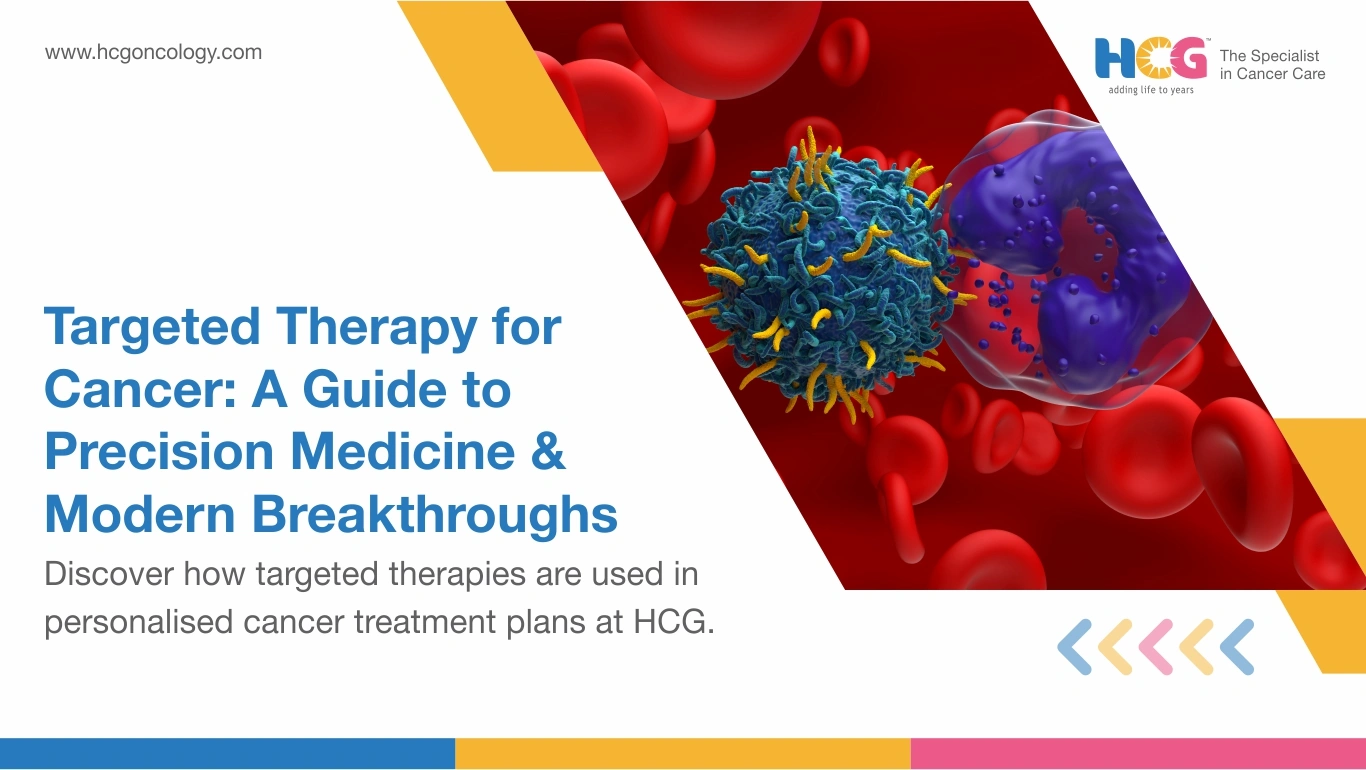
Targeted therapy is a type of precise cancer treatment that employs medications that are tailored to attack specific genes, proteins, or biological pathways that trigger the growth of cancer cells.
Traditional chemotherapy harms both healthy and malignant cells. Targeted therapy, on the other hand, concentrates on biological traits that are specific to cancer cells. This helps protect normal tissues and frequently makes the treatment easier to handle.
Targeted therapy is today a key part of disease management for breast cancer, lung cancer, colorectal cancer, leukemia, and prostate cancer. It is also becoming more common in multidisciplinary cancer care programs across India, including advanced centers like HCG Cancer Hospital.
Targeted therapy is a type of cancer treatment that uses medications that interfere with molecular targets that help tumors grow, spread, or survive.
These molecular targets could be:
Since this therapy is based on the biology of each tumor, it is referred to as customized or precision cancer therapy.
Targeted treatment stops cancer growth on a molecular level. Depending on the medicine, it may work in one or more of the following ways:
Before therapy, biomarker testing is done on tumor tissue or blood samples to find genetic alterations or protein markers that can be targeted.
Some targeted medications block the chemical signals that tell cancer cells to proliferate and divide uncontrollably.
Certain targeted therapy drugs stop tumors from sending signals that help them grow new blood vessels, which cuts off the flow of oxygen and nutrients.
A type of targeted therapy drug that is combined with powerful chemotherapy or radioactive compounds to precisely target and kill cancer cells while sparing healthy tissues.
Some targeted agents label cancer cells so that the immune system can find and kill them more easily.
There are different types of targeted therapy based on how they work and what they target:
These are laboratory-engineered proteins that bind to certain markers on cancer cells. They may either work by blocking the growth signals or flagging cancer cells for destruction by the immune system.
Examples of monoclonal antibodies:
Small-molecule inhibitors are a type of targeted drug that weighs 500 daltons or under and penetrates cancer cells to target enzymes or pathways that drive tumor growth. Small-molecule inhibitors are often administered orally.
Small-molecule inhibitors commonly target tyrosine kinases, DNA repair pathways, and cell cycle regulators.
Antibody-drug conjugates are a combination of monoclonal antibodies with powerful chemotherapy or radioactive compounds.
ADCs help deliver chemo drugs or radioactive compounds into the cancer cells to kill them and control tumor growth. This helps reduce systemic exposure to harsh chemotherapy drugs and protects healthy cells.
Tumor-agnostic targeted therapy works by targeting specific mutations and biomarkers, irrespective of the site of cancer origin. The same drug can be used for different types of cancer if they carry the same mutations or biomarkers.
Targeted therapy is available for different types of cancer with different treatment goals/applications:
| Cancer Type | Common Molecular Targets | Treatment Applications |
|---|---|---|
| Breast Cancer | HER2 and BRCA | Adjuvant and metastatic settings |
| Lung Cancer | EGFR, ALK, and ROS1 | First-line or sequential treatment |
| Colorectal Cancer | EGFR and BRAF | Selected patients based on biomarkers |
| Leukemia | BCR-ABL | Long-term disease control |
| Prostate Cancer | PARP and PSMA | Advanced disease stages |
The following table elucidates the differences between targeted therapy, chemotherapy, and immunotherapy.
| Parameter | Targeted Therapy | Chemotherapy | Immunotherapy |
|---|---|---|---|
| Approach | Precision-based treatment | Systemic exposure | Immune system activation |
| Target | Specific molecules and pathways associated with cancer cells | All fast-dividing cells | Immune checkpoints |
| Side Effects | Often selective | More systemic (throughout the body) | Immune-related |
| Degree of Personalization to Patients’ Needs | Very High | Limited | Moderate to High |
Not all cancer patients can undergo targeted therapy. The following factors are considered to check if a patient is eligible for targeted therapy:
Before recommending targeted therapy, doctors recommend biomarker testing, namely sequencing and immunohistochemistry, to check the eligibility.
Targeted therapy can be administered through multiple routes:
Targeted therapy may or may not be administered in combination with other treatments like chemotherapy, radiation therapy, etc., as per the personalized treatment strategy.
Targeted cancer therapy benefits patients in multiple ways:
Targeted therapy is relatively well-tolerated when compared to chemotherapy. However, patients may still experience the following side effects when they undergo targeted therapy:
Targeted therapy side effects may vary from one drug to another. Therefore, patients undergoing targeted therapy should keep an eye on side effects and stay in touch with the care team for immediate interventions.
Targeted treatment medications are usually more expensive than regular chemotherapy drugs due to advanced drug development and biologics. Targeted therapy costs can vary depending on the type of drug, duration of the treatment, type and stage of cancer treated, and insurance coverage.
At comprehensive cancer hospitals like HCG, specialists recommend targeted therapy as part of multimodal cancer treatments to improve the overall effectiveness of the treatment given.
Targeted therapy will make cancer treatments more personalized, which will eventually help improve survival rates, reduce side effects, and promote overall well-being.
Researchers continue to look for various strategies to expand the role of targeted therapy:
At HCG Cancer Hospital, targeted therapy is recommended as part of comprehensive medical oncology services. We specialize in personalized cancer care that combines precise systemic therapies with surgery and radiation. With the help of molecular diagnostics, our doctors identify the right targeted therapy agents that improve treatment responses while reducing the overall side effects. We provide supportive care and real-time monitoring to manage side effects and determine the optimal dosage for each tumor based on its molecular profile.
Disclaimer Disclaimer: This information is intended to educate patients and caregivers. It does not replace professional medical advice. All treatment decisions should be made in consultation with a qualified doctor.