18 Feb, 2026
Feel free to reach out to us.
18 Feb, 2026

This article is medically reviewed by Dr. S. Bhattacharjee, Senior Consultant - Radiation Oncology, HCG Cancer Hospital, Bangalore.
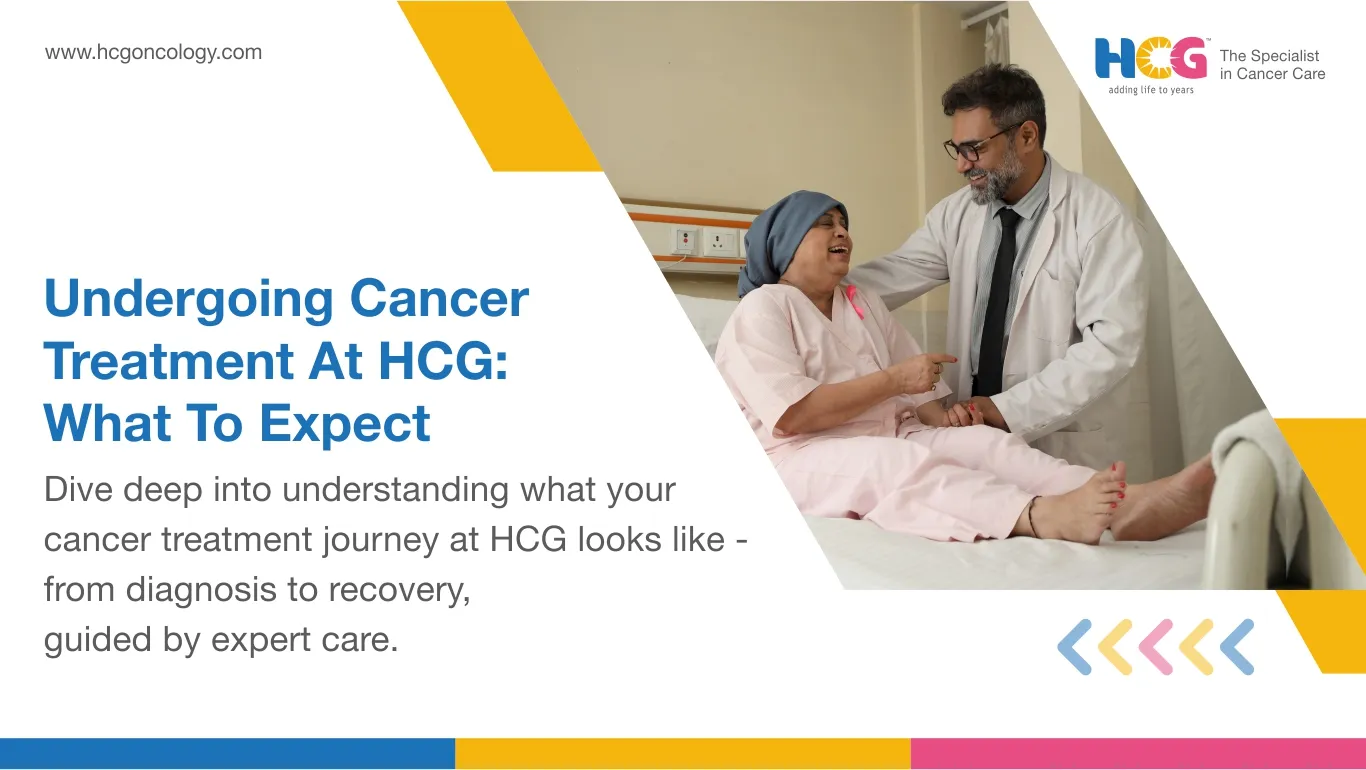
Beginning your cancer treatment is a huge decision.
From the time of diagnosis to treatment and recovery, patients and their families have a million questions: What will the treatment be like? What will it mean for daily life? What side effects should I watch out for? What can I do to get ready, both physically and mentally?
There are no simple answers for these questions, and at HCG, we understand their complexity better.
A well-coordinated and personalized treatment experience brings together oncology specialists, nursing teams, rehabilitation, home health options, and mental health support, all of which help patients have a seamless and comfortable cancer treatment journey.
This article serves as a comprehensive guide that covers every aspect that is associated with undergoing cancer treatment at HCG. You’ll find useful checklists, important questions to ask your doctors, step-by-step guides to different cancer treatments, and more.
You'll also learn how HCG helps improve quality of life through nutrition, physiotherapy, home care, and psycho-oncology services.
This guide is meant to help you understand the process and feel confident and make informed decisions throughout your treatment journey.
Once your diagnosis is confirmed and a personalized treatment plan is shared with you, there are two options in front of you.
If you decide to start your treatment as recommended by your doctor, it means that you will be undergoing all medical procedures recommended, along with necessary supportive care, to remove or get rid of cancer cells, control their growth, ease symptoms, and maintain a good quality of life.
It is not just about the surgery or a few cycles of chemotherapy you undergo. It is a carefully planned journey that will include all elements that are required for you to return to the best state of health possible.
The following are the key aspects of your cancer treatment:
This comprehensive approach supports holistic healing and recovery for you and helps you lead a fulfilling life after your treatment.
Initial Consultation and History: A thorough clinical evaluation, including medical history, symptoms, and issues.
Diagnostics and Staging: Imaging (CT, MRI, PET-CT), biopsy and pathology, blood tests, organ-function tests, and, if necessary, molecular/genomic profiling to help with targeted therapy.
Multidisciplinary Tumor Board (MDT):At HCG, our multidisciplinary tumor board looks at rare and complicated cases to come up with the best possible treatment plans for them.
We obtain and discuss the treatment plan with the patient, while their family and doctor address all concerns and queries. They also talk about the expected timeline, possible side effects, and recovery after the treatment.
Prehabilitation and Optimization:This step involves preparing the body and mind for cancer treatment through nutrition, gentle exercises, and psychological counseling.
It will also involve managing comorbidities like hypertension, diabetes, and heart conditions, bringing them to a stable state before treatment begins.
Active Treatment:Surgery, radiation therapy, chemotherapy, targeted therapy, etc., administered through unimodal (only one treatment) or multimodal (more than one treatment) approaches.
Immediate Recovery & Inpatient Care (if needed):Care after surgery, managing wounds, and starting rehabilitation care, which may include physiotherapy, speech and swallowing therapy, etc.
Follow-up and Survivorship:Regular check-ups, rehabilitation, lifestyle counseling, and psychosocial support.
Request a clear pathological report from the hospital or clinic. Please make sure to gather all reports related to your cancer diagnosis and staging.
You may also be asked to undergo molecular testing (for genes EGFR, ALK, HER2, BRCA, etc.) if your type of cancer can be treated with targeted therapy. Make sure to collect your molecular testing reports as well.
If you are not confident about the diagnosis or treatment recommendations received the first time, you can consider getting a second opinion. It can either confirm the diagnosis and support the recommendations or give you new, evidence-based options.
If you are looking for the best cancer hospital in India for a second opinion, connect with HCG today.
When choosing the best cancer hospital, consider important things like treatment success rates and specialized services such as robotic surgery, HIPEC/PIPAC, targeted therapy, immunotherapy, and bone marrow transplants, as well as the medical team, rehabilitation options, and overall support during and after treatment.
Your doctor will explain your treatment plan to you and your family. You are encouraged to ask as many questions as you have. You can also voice if you have specific concerns about your treatment. Also, learn about the possible side effects you may experience because of your treatment.
This discussion is crucial for you to understand what to expect and how to prepare for what is to come.
As India’s leading cancer care provider with 35+ years of experience, HCG Cancer Centre is known for its comprehensive and organ-specific cancer care approaches. For the highest quality of cancer care, choose HCG.
Transparent communication is crucial throughout your cancer journey. The following are some questions that you should ask your doctor for your better understanding.
We strongly recommend that patients prepare a list of all questions and concerns they have before they meet the doctor, as this will help them not miss anything and play a giant role in them confidently proceeding with the treatment.
Accept your feelings: shock, anger, fear, and hope can all be present at the same time. Seeking psycho-oncology counseling can help you manage your emotions better and help you stay mentally balanced throughout your treatment and after. Psycho-oncology counseling is recommended for both patients and their families to help them navigate better.
HCG has a dedicated psycho-oncology department, which offers counseling and support services for patients to help them get ready emotionally.
Before you begin your treatment, carefully plan your time off and your finances. Most insurances cover cancer treatments; if you have one, verify if it covers your treatment. If you need help in planning finances for your treatment, you may get in touch with our financial counselors.
If your hospital is in a different city, you may need to book a hotel. In such cases, we’d recommend you have a caregiver travel with you.
Cancer treatments can be physically and mentally demanding. One of the best ways to counter the debilitating effects of cancer treatment is to prepare your body to withstand them through various measures, including eating healthy, doing gentle exercises, and practicing mindfulness.
Also, be mindful to follow the pre-procedure instructions, which could be related to eating, taking medications, or certain lifestyle habits, given by your care team before every procedure.
Some cancer patients continue to carry on with their day-to-day activities during their treatment. However, in most cases, cancer can put a temporary pause in one’s life, affecting their daily routine. In most cases, these changes are temporary, and patients gradually return to their routine activities after completing the treatment.
The best way to adjust to these daily-life changes is to focus only on what is important, seek help from your family and friends, and follow your care team’s advice.
Moral support from your family, friends, and people who have had a similar journey to yours goes a long way.
Your friends and family will always want to be there for you but may not know how. In such cases, being honest about your feelings can help; seek help and be specific about your requests so that your people can help you the way you want.
Consider joining support groups and utilizing hospital resources that can help you manage your emotions and stay strong and practical throughout your journey.
Your care team will create a customized treatment plan for you once they confirm the diagnosis.
Once the plan is ready, you will have a detailed discussion with the doctor and their team. During this discussion, the doctor will explain your treatment plan in detail, the expected outcome of the treatment, possible side effects, and what to expect after the treatment.
This discussion will help you prepare yourself for the treatment.
Some treatments can be taken as an outpatient, and for some, you will need to get admitted to the hospital. Your doctor will make recommendations based on your specific treatment plan.
If surgery is needed, the patient must undergo a pre-op workup and provide their consent. If not, they should have baseline blood work and cardiac clearance.
If your condition is stable, you may receive other treatments, such as chemotherapy and radiation therapy, as an outpatient. For major surgery or complex procedures like HIPEC, hospitalization is necessary. For other systemic therapies,
Bone marrow transplants will also require hospitalization.
Recovery involves managing pain, getting up and moving around, checking wounds, and planning for discharge.
Immediate follow-up care involves taking care of wounds, managing symptoms, and starting rehabilitation.
On the other hand, long-term follow-up involves monitoring for recurrences, managing late effects, and implementing necessary lifestyle modifications to promote a healthy and fulfilling life.
Routine imaging, blood tests, tracking symptoms, and regular checkups are all ways to see how well the treatment is working.
Cancer treatments can cause both long-term and short-term side effects. Often, these side effects wear off with time. Mild to moderate side effects can be managed without interventions.
However, if the side effects are severe, patients may need to speak to the care team for necessary interventions.
Here’s what you can expect during the three most common cancer treatments:
Preparation for surgery begins with evaluation, consent, fasting, and prehab before surgery. If it's relevant, talk about reconstruction options, like breast reconstruction.
There are many different types of procedures, from laparoscopic or robot-assisted resections that are not very invasive when compared to open complex surgeries. Depending on the severity of the case, the doctor may recommend open or minimally invasive approaches.
At HCG, we employ a wide range of minimally invasive approaches for cancer surgeries. Our high-end surgical robots provide doctors with high-definition 3D vision and accuracy, which can speed up recovery and reduce blood loss and pain.
After surgery, you may expect your care team to help you with managing pain, caring for wounds, getting up and moving around early, and doing physiotherapy.
Discharge time depends on how complicated the procedure is; many minimally invasive surgeries shorten hospital stays.
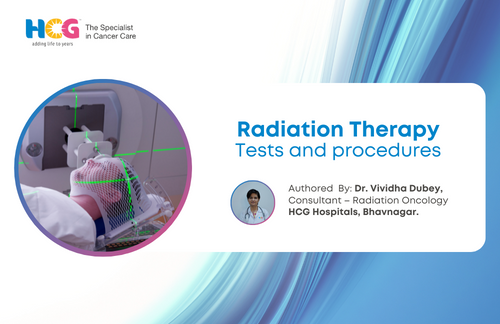
Radiation therapy begins with planning the CT simulation, immobilization tools, and treatment mapping.
Radiation therapy is administered as an outpatient procedure (usually 1–6 weeks, depending on the protocol). High-end technologies, such as the adaptive radiotherapy platform, robotic radiotherapy platform, TomoTherapy, etc., are used to deliver radiation to the target area while minimizing damage to healthy tissue.
Skin reactions, tiredness, and side effects that only happen at the treatment site; regular checkups are done to look for and manage late side effects.
Before chemotherapy, tests to examine the functioning of the heart, kidneys, and liver, as well as blood counts, are done. For long-term access, central lines or ports may be put in.
Patients can also expect a detailed discussion on the possible side effects and how to prepare for them.
Chemotherapy infusions can be received as an outpatient at the hospital or clinic.
Patients may be monitored for immediate reactions or allergies, and chemo infusions may be changed if necessary.
Possible side effects of chemotherapy include nausea, hair loss, tiredness, a higher risk of infection, and neuropathy. Most of these side effects get better after the treatment is complete
Patients will have time to recover between cycles. Doctors recommend supportive medications (growth factors, antiemetics) and follow-up blood tests to confirm safe continuation. Care includes a lot of helpful services, such as nutrition, physiotherapy, and symptom control.
HCG has a lot of advanced oncology services that give patients more treatment options and better outcomes:
Robot-Assisted Cancer Surgery: Robotic cancer surgery with the da Vinci surgical system is more precise, makes smaller cuts, and speeds up recovery. It can be used on many types of tumors.
Adaptive Radiation Therapy:Adaptive radiation therapy is a unique approach where the radiotherapy platform adjusts its radiation therapy based on the changes in the tumor location during every sitting. This enhances treatment precision while protecting healthy tissue.
Targeted Therapy and Immunotherapy:These are treatments that are guided by molecules (targeted agents, immune checkpoint inhibitors) for cancers with biomarkers that can be acted on. These treatments are prescribed by experienced medical oncologists at HCG.
HIPEC and PIPAC: These are advanced intraperitoneal chemotherapy procedures for certain types of abdominal cancer. HCG runs specialized HIPEC and PIPAC programs with highly trained surgical teams.
Dietitians make individualized meal plans to help people lose weight, deal with cachexia, or meet their dietary needs while they are getting treatment.
Physiotherapy and Rehabilitation:Early mobilization programs, lymphedema management, and personalized exercise plans can all help restore function.
Pain and Symptom Control: Palliative medicine teams use drugs, nerve blocks, or integrative therapies to help with pain, sleep problems, and tiredness.
Psychological Support:Psycho-oncology services, counseling, peer groups, and mindfulness programs all help people deal with their emotions.
HCG combines home health services like in-home nursing, physiotherapy visits, and medication delivery to help people recover at home and stay comfortable while they do it.
Follow-up care after cancer treatment involves undergoing different tests to monitor the patient’s health, look for signs of recurrence, and manage short-term and long-term side effects.
Follow-up visits are important to catch any return of the disease early, manage long-term side effects, check for new cancers, and continue rehabilitation.
Survivorship care plans list past treatments and set up times for follow-up visits, which helps patients get through the time after treatment.
Always be able to talk to your nurse navigator or care coordinator. Tell them about any new symptoms right away. At HCG, our patient care teams and the HCG Care app work together to create a seamless experience with appointment booking, medicine ordering, online test sample collection, and report delivery, which is especially beneficial for patients who live at a farther distance from the hospital.
If you have new or worsening pain, a fever that doesn't make sense, sudden weight loss, bleeding, a cough or shortness of breath that won't go away, or changes in your nervous system, you need to see a doctor right away.
Nurse navigators and care coordinators help with making appointments, getting financial advice, and planning for discharge.
Social workers help with housing, transportation, and finding government or NGO support.
When it's right, clinical research teams can talk about open trials.
Hearing stories from cancer survivors and joining support groups can help people feel less alone and give them hope.
National and local cancer support groups can help you with money and other things. If you need help, the hospital's social work office can point you in the direction of trustworthy NGOs and state programs.
Getting cancer treatment is a complicated and very personal process. At HCG, the approach combines medical excellence with practical, emotional, and logistical support. This includes advanced surgical and radiation technologies, targeted and immunotherapies, strong supportive care, home health services, and planning for survivorship.
Patients are encouraged to ask questions, get second opinions, and be involved in decisions about their treatment.
To stay in touch with your care team and follow the survivorship plan your oncologist made for you, use the HCG Care app or the hospital's patient services. Many patients complete their treatment and return to leading fulfilling lives when they have a coordinated team, access to modern therapies, and supportive services.
Dr. S. Bhattacharjee
Senior Consultant - Radiation Oncology MBBS, MD (Radiation Oncology)
Dr. S. Bhattacharjee is a senior radiation oncologist at HCG Cancer Centre, Bengaluru, with expertise in advanced radiotherapy techniques including IMRT, IGRT, CyberKnife, TomoTherapy, brachytherapy, and chemotherapy. With over two decades of experience, he has treated thousands of cancer patients across India and abroad. He discovered the immunomodifier Immuvac, approved by the USFDA. His work is widely published in international journals, and he actively contributes to research, education, and cancer awareness initiatives.
Appointment Link: Book an Appointment with Dr. S. Bhattacharjee.