02 May, 2026
02 May, 2026
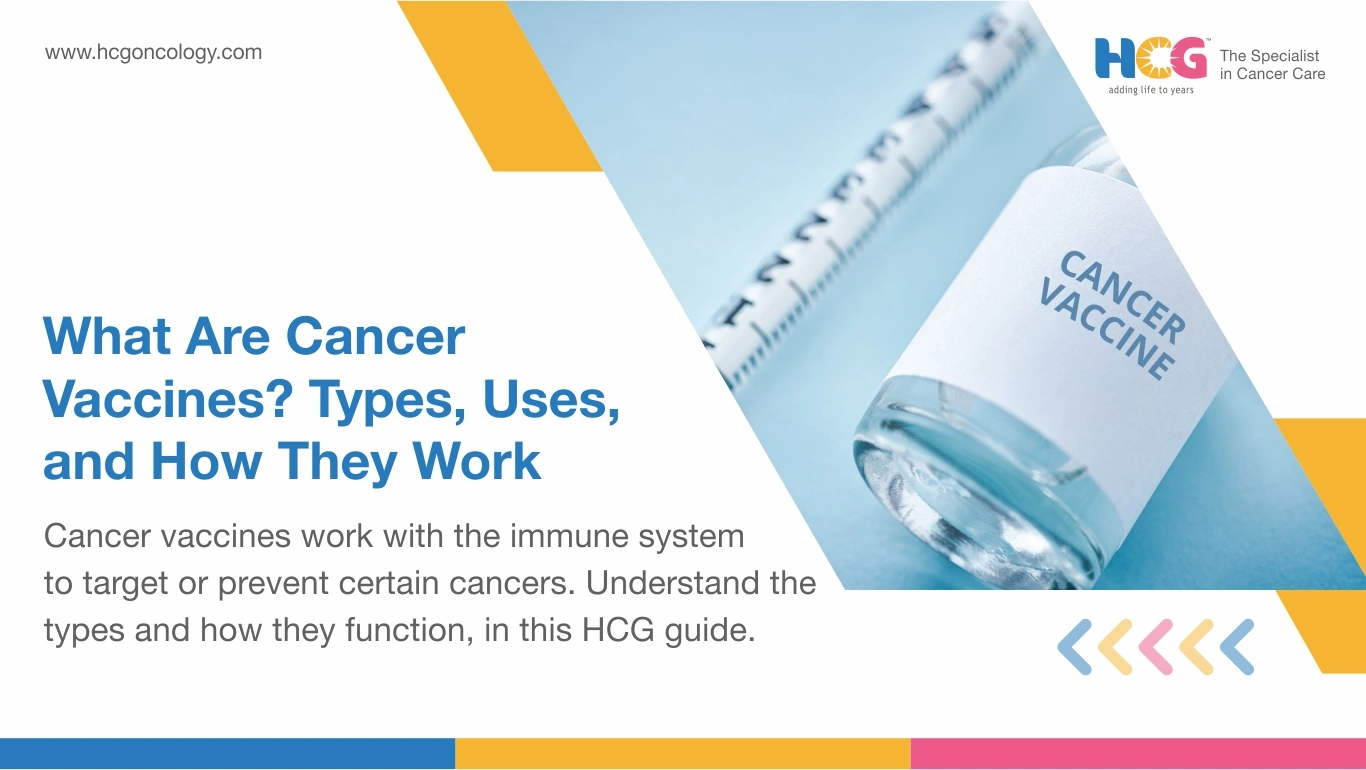
Cancer vaccines train your immune system to recognize and respond to cancer-specific proteins. Some block infections that drive cancer. Others direct immune cells to attack tumors already in the body. The biology is more targeted than a standard flu shot.
At HCG Cancer Hospital, our immunotherapy oncologists integrate vaccine-based strategies into individually designed cancer immunotherapy plans.
Cancer vaccines are immune-training tools. They introduce cancer-related proteins, called tumor antigens, into the body so immune cells learn to detect and destroy anything carrying those markers.
Every tumor carries a molecular identity. Vaccines brief your immune system on what to look for, building cellular memory that identifies threats faster over time. The mechanism draws on T-cell activation and antibody production, creating layered immune surveillance. Early mRNA cancer vaccine research extends this to personalized tumor targets built from a patient's neoantigen profile.
For those wondering, “Are there vaccines that actually prevent cancer?” The answer is yes. There are two established cancer prevention vaccines that are widely recommended.
Both vaccines carry endorsements from the WHO, CDC, and ICMR as core cancer prevention tools.
Therapeutic cancer vaccines fight tumors that are already present. Their purpose is to trigger a precise immune assault on malignant cells.
Sipuleucel-T, known as Provenge, was the first FDA-approved therapeutic cancer vaccine, per NCI. A patient's immune cells are isolated, modified outside the body to recognize prostate-specific antigens, and then reintroduced to attack prostate cancer cells.
Other formats include dendritic cell vaccines that train antigen-presenting cells to flag tumor markers, peptide-based vaccines that use synthetic antigen fragments, and whole-tumor-cell vaccines that use irradiated cancer cells as an antigen source.
In addition to this, the FDA has approved the BCG vaccine for bladder cancer (early-stage) and T-VEC to treat advanced melanoma.
At HCG, our immunotherapy teams assess each patient's tumor antigen profile to determine whether vaccine-based therapy fits their overall plan.
| Feature | Preventive | Therapeutic |
|---|---|---|
| Primary Goal | Block cancer-causing infections | Treat existing tumors |
| Target | Viral antigens (HPV, HBV) | Tumor antigens |
| Examples | HPV vaccine, Hepatitis B vaccine | Sipuleucel-T, dendritic cell vaccines, BCG vaccines, etc. |
| Patient Profile | Healthy, uninfected individuals | Active cancer patients |
| Stage of Use | Before cancer develops | After diagnosis |
Cancer vaccines introduce antigens into the body. The immune system activates T cells and B cells and builds immunological memory, enabling faster, precise responses when those antigens reappear.
The sequence in practice:
Cancer vaccines take weeks to show action. Therapeutic vaccines work best alongside checkpoint inhibitors such as PD-1 or CTLA-4 blockade, chemotherapy, or radiation, which reduce immune suppression within the tumor microenvironment and expose more antigens for targeting.
For dendritic cell vaccines like Sipuleucel-T, treatment begins with leukapheresis, a three- to four-hour procedure to collect white blood cells. These are primed with tumor-associated antigens and reintroduced intravenously across three sessions, roughly two weeks apart. The full cycle runs approximately one month.
Peptide-based vaccines are simpler: subcutaneous or intradermal injections combined with immunological adjuvants. Cycle count depends on tumor staging, cancer type, and immune function.
Who Qualifies for Therapeutic Cancer Vaccines: Adequate immune function, an antigen-positive tumor type, and suitable performance status are the core criteria. An oncologist confirms eligibility after a full clinical assessment.
Preventive vaccines carry mild, brief side effects, namely injection-site soreness, low fever, or fatigue lasting a day or two.
Therapeutic vaccines can produce stronger immune activation. Mild flu-like symptoms, fatigue, and local inflammation at the injection site are common. These often signal the immune system is responding. At HCG Cancer Hospital, there are specialized onconurses who monitor patients receiving dendritic cell protocols with regular immune biomarker assessments to check if the patients are showing the desired treatment response and are safe.
Know This: Feeling tired or achy after a therapeutic vaccine infusion is not necessarily a bad sign. It may indicate your immune system is engaging.
Concurrent nutritional support, adequate hydration, and psychological care are built into HCG's multidisciplinary model for patients receiving vaccine therapy alongside other cancer treatments.
Follow-up imaging (CT or PET scan) and blood panels are scheduled at defined intervals. Report any unusual rashes, joint pain, or persistent fatigue to your oncologist promptly.
The HPV vaccine costs approximately Rs. 2,000 to Rs. 4,000 per dose. Metro cities like Mumbai and Delhi typically run higher than Tier-2 centers. A complete schedule requires multiple doses. Government programs may subsidize costs for eligible recipients. The hepatitis B vaccine is free through India's national immunization schedule.
Therapeutic cancer vaccines range from approximately Rs. 1.5 lakh to Rs. 8 lakh or more, depending on the agent, cycle count, and center. Participation in cancer vaccine clinical trials in India may provide access at no direct cost. Costs largely vary by hospital and patient profile.
HCG's billing team works with all major insurers and government schemes to identify coverage before treatment begins.
Therapeutic cancer vaccines and immunotherapy drugs both target the immune system of the patient; however, they have different purpses and work differently.
| Aspect | Cancer Vaccines | Immunotherapy Drugs |
|---|---|---|
| Purpose | Train the immune system to recognize and respond to cancer-related proteins | Reduce immune suppression so the immune system can attack tumors |
| Target | Tumor antigens or viral antigens (HPV, HBV) | Immune checkpoints such as PD-1 or CTLA-4 |
| Role in treatment | Can prevent cancer (HPV, Hepatitis B) or treat existing tumors | Often used alongside treatments to enhance immune response |
| Examples mentioned | HPV vaccine, Hepatitis B vaccine, Sipuleucel-T | Checkpoint inhibitors (PD-1 or CTLA-4 blockade) |
In cancer care, HCG focuses on matching each patient to the right intervention at the right stage. Preventive vaccines like HPV and hepatitis B deliver proven, population-level risk reduction. Therapeutic vaccines extend immunotherapy into personalized, antigen-targeted territory. HCG Cancer Hospital, accredited to NABH standards, builds multidisciplinary plans around each patient's diagnosis, immune profile, and goals, spanning prevention, treatment, and survivorship.
Disclaimer:This information is intended to educate patients and caregivers. It does not replace professional medical advice. All treatment decisions should be made in consultation with a qualified doctor.
Feel free to reach out to us.