01 Apr, 2026
Feel free to reach out to us.
01 Apr, 2026
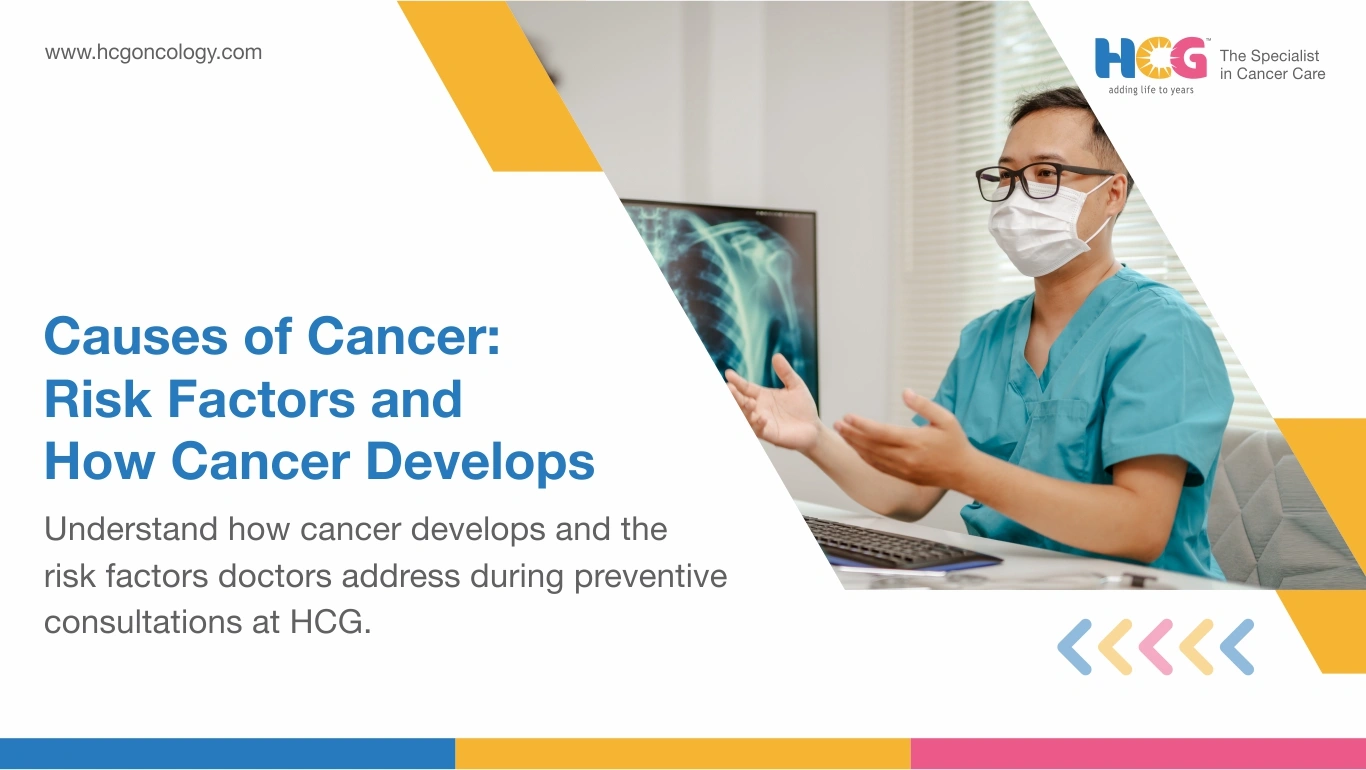
Cancer develops when cells accumulate mutations, changes in their DNA that disrupt the signals governing growth, division, and cell death. These mutations can stem from inherited predispositions, lifestyle habits, environmental exposures, or chronic infections. Not every mutation leads to cancer, and not every person with a risk factor will develop the disease. Understanding the causes of cancer means separating the biology of how it begins from the factors that raise or lower that probability. According to a 2026 WHO analysis, roughly four in ten cancer cases globally are linked to preventable risk factors (WHO, 2026). Knowing which factors are modifiable gives individuals and clinicians a practical foundation for screening and prevention.
Every cell contains DNA, a chemical instruction set that determines when the cell should grow, divide, or stop. Mutations are errors in this sequence. Most get repaired automatically. Some cause the cell to self-destruct before replicating. The problem starts when neither safeguard works.
Two gene types play central roles. Oncogenes promote cell division; when mutations make them overactive, cells multiply without checks. Tumor suppressor genes normally slow or stop division; mutations that disable them remove a critical brake.
Quick note: Cancer typically requires several accumulated mutations, not just one. This is why it usually develops over years or decades.
These terms are often used interchangeably, but they describe different things. A cause directly triggers a biological event, such as a specific DNA change. A risk factor increases the chance of that event happening.
A carcinogen, any substance capable of damaging DNA, is a risk factor. Tobacco smoke contains dozens of carcinogenic compounds. Still, not everyone who smokes develops cancer, and not every lung cancer occurs in a smoker.
Some risk factors exist regardless of the choices a person makes.
Several of the most studied cancer risk factors relate to everyday habits.
Tobacco is among the most extensively documented risk factors for cancer. Cigarette smoke introduces carcinogenic chemicals that damage DNA in the lungs, mouth, throat, esophagus, and bladder. Risk increases with duration and intensity. Passive exposure carries measurable risk as well.
Alcohol is associated with cancers of the liver, esophagus, mouth, breast, and colon. It can impair DNA repair and alter substance metabolism. Risk generally rises with the amount consumed over time.
Excess body weight and physical inactivity are independently linked to higher risk for colorectal, post-menopausal breast, uterine, and kidney cancers, among others. Excess fat tissue alters hormone levels and promotes chronic inflammation. Regular physical activity may help reduce this risk.
What this means in practice: No single food directly causes cancer. Dietary risk is best understood in terms of long-term patterns, not individual items.
The table below groups the main risk categories and their examples.
| Risk Category | Examples |
|---|---|
| Non-modifiable | Age, biological sex, inherited gene variants, family history |
| Lifestyle-related (modifiable) | Tobacco use, alcohol, obesity, physical inactivity, dietary patterns |
| Environmental (partially modifiable) | UV radiation, radon, air pollution, occupational carcinogens |
| Infection-related (preventable in some cases) | HPV, Hepatitis B and C, H. pylori, EBV |
UV radiation from sunlight is a direct risk factor for skin cancers, including melanoma. Repeated sunburn and cumulative unprotected exposure cause DNA damage in skin cells.
Ionizing radiation from X-rays, radiotherapy, and radon gas can damage DNA at sufficient doses. Routine imaging generally carries low risk; repeated high-dose exposure is the concern.
Industrial carcinogens such as asbestos (linked to mesothelioma) and benzene (linked to leukemia) have well-documented associations with specific cancers. Individuals with historical occupational exposure may carry elevated risk decades later.
Certain infections are recognized contributors to cancer risk, though they do not cause cancer in every person affected. Instead, they create conditions like chronic inflammation or disrupted cell regulation that raise the probability of malignant change developing over time.
What this means in practice: Vaccination against HPV and Hepatitis B represents a concrete preventive step against infection-related cancer risk.
Age remains the strongest single predictor. As cells divide over a lifetime, DNA copying errors accumulate.
Cancer arises from a layered interaction of genetic, lifestyle, environmental, and infectious factors. No single exposure guarantees cancer will develop. What the evidence consistently shows is that many significant risk factors, including tobacco, alcohol, excess body weight, and preventable infections, can be meaningfully addressed.
HCG Cancer Hospital approaches cancer risk through evidence-based assessment and personalized guidance, helping patients and their families understand individual risk profiles through multidisciplinary clinical teams across its network of Comprehensive Cancer Centers.
If you are thinking about your own risk, a conversation with a qualified specialist can put the information into proper context. Sharing your family history, reviewing age-appropriate screening, discussing lifestyle factors, and asking about relevant vaccinations are all reasonable starting points.
Disclaimer This information is intended to educate patients and caregivers. It does not replace professional medical advice. All treatment decisions should be made in consultation with a qualified doctor.