27 Apr, 2026
27 Apr, 2026
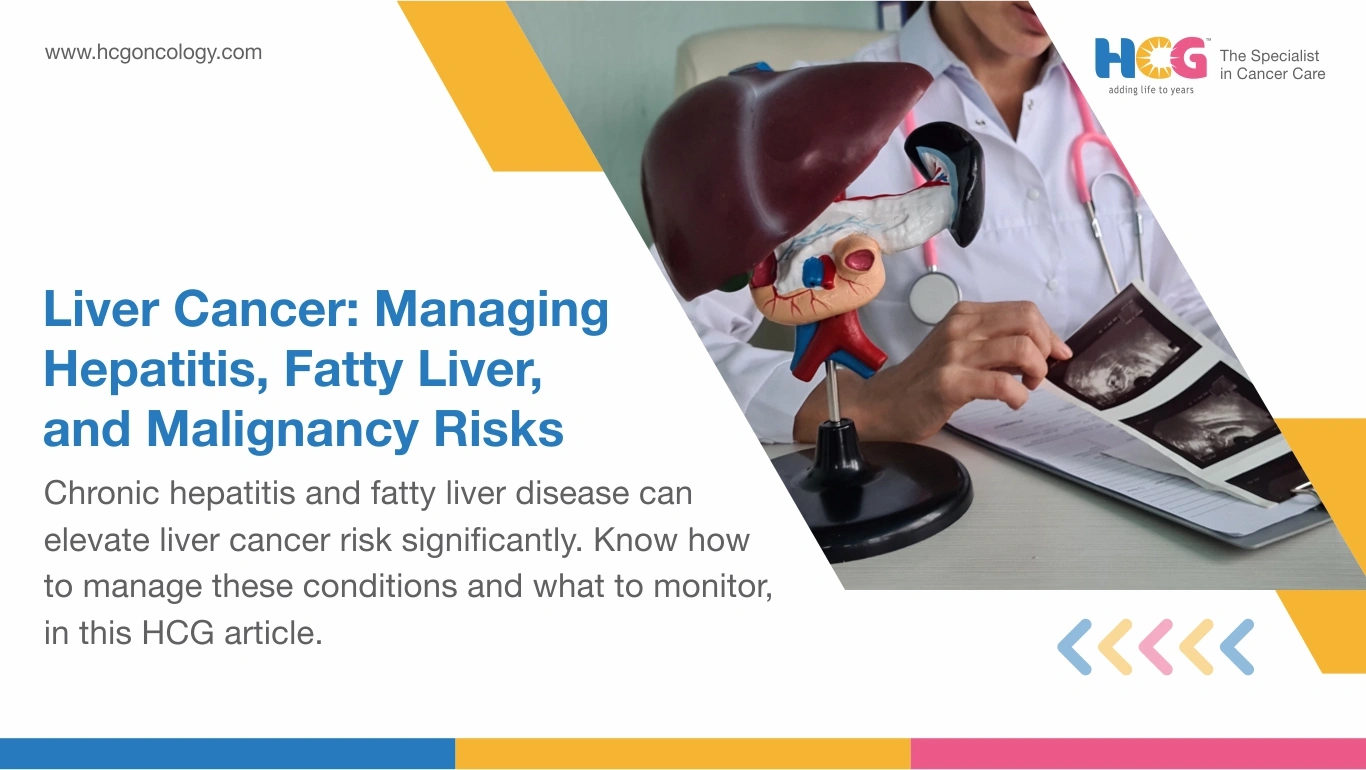
Liver cancer symptoms are frequently absent until the disease reaches an advanced stage. The liver has few internal pain receptors, meaning hepatocellular carcinoma (HCC) grows silently in patients with pre-existing cirrhosis caused by hepatitis B, hepatitis C, or NAFLD . Early detection through ultrasound and AFP blood testing every six months remains the single most effective intervention for high-risk patients.
Liver cancer symptoms in early-stage HCC are typically absent or non-specific. The earliest signals include unexplained weight loss exceeding five percent of body weight over one to two months; persistent upper right abdominal discomfort (a dull, pressure-like sensation rather than sharp pain); progressive fatigue not improving with rest; and loss of appetite (NHS).
As HCC advances, symptoms become more distinct. Jaundice, the yellowing of skin and eyes caused by bilirubin accumulation, is a pivotal late-stage marker. Ascites, abnormal fluid accumulation producing visible abdominal swelling, develops when portal hypertension compounds the tumor burden. Dark urine, pale stools, and generalized itching accompany biliary obstruction in advanced disease, according to the MD Anderson Cancer Center.
Abdominal swelling in a patient with known hepatitis B, C, or fatty liver disease warrants urgent imaging rather than empirical diuretic therapy.
Fatty liver disease is a direct HCC risk pathway. NAFLD progresses to nonalcoholic steatohepatitis (NASH) in a subset of patients, driving chronic hepatic inflammation that accelerates fibrosis and, ultimately, cirrhosis. Once cirrhosis is established, annual HCC incidence ranges from one to eight percent per year. NAFLD is particularly dangerous because it develops asymptomatically in patients without alcohol use, often with no identifiable risk factors beyond obesity, type 2 diabetes, or metabolic syndrome.
Common confusion: Fatty liver alone does not cause liver cancer. Cancer risk increases when fatty liver progresses to NASH and then cirrhosis. Early fatty liver is reversible through dietary modification before fibrosis develops.
Chronic HBV integrates viral DNA directly into hepatocyte nuclei, triggering oncogenic mutations independently of cirrhosis. HBV-positive patients can develop HCC even without advanced fibrosis, making surveillance critical regardless of viral load. HCV drives HCC through sustained hepatic inflammation, causing progressive fibrosis and cirrhosis over 20 to 30 years. Direct-acting antiviral (DAA) therapy achieves a sustained virological response in over 95% of treated patients, as per the NHS's reports, substantially reducing residual HCC risk post-cure in patients with established cirrhosis.
| Risk Category | Underlying Condition | Recommended Surveillance |
|---|---|---|
| High Risk | Cirrhosis (any cause) | Ultrasound + AFP every 6 months |
| High Risk | Chronic Hepatitis B (without cirrhosis) | Ultrasound + AFP every 6 months |
| Moderate Risk | NAFLD with early fibrosis | Annual ultrasound and liver function tests |
| Moderate Risk | Hepatitis C post-SVR with cirrhosis | Ultrasound + AFP every 6 months |
| Lower Risk | NAFLD without fibrosis | Lifestyle modification + annual review |
Early HCC diagnosis at HCG combines blood biomarker analysis with cross-sectional imaging before histopathological confirmation is required. The diagnostic pathway follows four steps:
Liver cancer is curable when detected at an early localized stage. Surgical resection achieves five-year survival rates of 50–70% for optimal candidates, as per Mayo Clinic’s findings. Liver transplantation under the Milan criteria removes both the tumor and the underlying cirrhotic liver. HCG's Liver Care Transplant Program evaluates candidacy through a multidisciplinary team combining hepatology, transplant surgery, and oncology. Thermal ablation achieves outcomes comparable to resection for tumors below three centimeters, highlights the NHS. For intermediate-stage HCC, HCG's Interventional Radiology unit delivers TACE and TARE using yttrium-90 microspheres. Sorafenib remains the systemic therapy standard for advanced HCC.
Patients need to understand that liver cancer caught during routine surveillance is a fundamentally different clinical situation from liver cancer found after symptoms appear. HCG Cancer Hospital's Liver Care Transplant Program brings hepatology, transplant surgery, interventional radiology, and medical oncology together to evaluate each patient's treatment eligibility. Early AFP and ultrasound surveillance in high-risk individuals remains the most evidence-based strategy for converting liver cancer from a late-stage diagnosis into a curable one.
Things to keep in mind to put yourself a step ahead of liver cancer:
Disclaimer: This information is intended to educate patients and caregivers. It does not replace professional medical advice. All treatment decisions should be made in consultation with a qualified doctor.
Feel free to reach out to us.