02 May, 2026
02 May, 2026
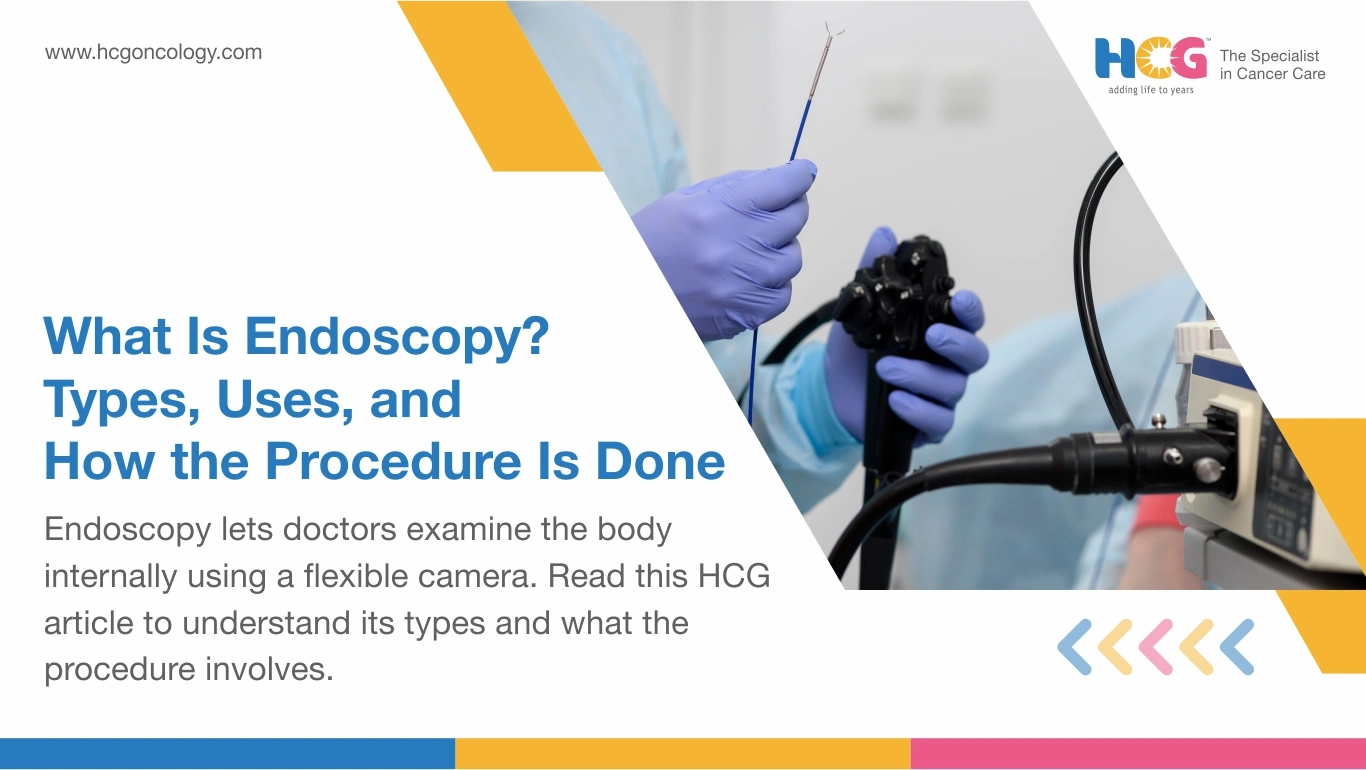
Endoscopy is a live internal examination using a thin, flexible tube called an "endoscope," fitted with a camera and light source, guided through a natural body opening. No surgical incisions are needed. Clinicians use the endoscopy test to inspect the digestive tract, airways, or urinary tract in real time. Diagnosis and treatment can occur in one endoscopic procedure. Most sessions are completed the same day under sedation, and patients go home within hours.
Endoscopy serves two roles: investigative and corrective.
Clinicians recommend an endoscopy test for persistent abdominal pain, unexplained gastrointestinal bleeding, chronic acid reflux (GERD), dysphagia (difficulty swallowing), suspected peptic ulcer disease, or H. pylori detection. The endoscopic procedure delivers a magnified view of the mucosal lining that imaging scans cannot replicate.
Therapeutically, the same session can remove polyps via snare polypectomy, control bleeding through endoscopic hemostasis, place biliary stents via ERCP, or dilate a narrowed esophagus.
The type selected depends on which organ requires examination and what clinical question needs answering.
| Type | Area Examined | Access Route |
|---|---|---|
| Upper GI Endoscopy (EGD) | Esophagus, stomach, duodenum | Through the mouth |
| Colonoscopy | Entire colon and rectum | Through the rectum |
| Sigmoidoscopy | Lower colon and rectum | Shorter scope via rectum |
| Bronchoscopy | Airways and trachea | Through the nose or mouth |
| Capsule Endoscopy | Small intestine | Swallowed wireless camera pill |
| ERCP (Endoscopic Retrograde Cholangiopancreatography) | Bile duct and pancreatic duct | Through the mouth with contrast dye |
| Endoscopic Ultrasound (EUS) | GI tract and adjacent structures | Scope with ultrasound probe |
| Cystoscopy | Bladder and urethra | Through the urethra |
Endoscopic ultrasound (EUS) combines scope imaging with high-frequency sound waves to evaluate structures such as the pancreas and lymph nodes adjacent to the GI wall. For colorectal cancer screening, chromoendoscopy using dye-spray enhancement may also be used alongside standard colonoscopy.
Endoscopy is the broad clinical category; colonoscopy is one specific type. Upper GI endoscopy, also called EGD (esophagogastroduodenoscopy), examines the esophagus, stomach, and duodenum via the mouth. A colonoscopy enters through the rectum and maps the entire colon. Both use flexible endoscope technology but require different preparation protocols and target different anatomy entirely.
Preparation directly determines image quality. Follow your physician's written instructions precisely; incomplete bowel cleansing can require rescheduling.
Step 1: IV placement. A cannula is inserted for sedation delivery. A local anesthetic spray numbs the throat for upper GI procedures.
Step 2: Sedation. Most patients receive moderate sedation, staying relaxed while breathing independently. General anesthesia is reserved for select cases.
Step 3: Scope insertion. The endoscope advances through the designated opening. A mouthguard protects the teeth. CO₂ insufflation gently expands the cavity for a clearer view.
Step 4: Examination. Video feeds to a monitor. The physician inspects the mucosal lining for redness, indicating inflammation, irregular tissue, bleeding points, or abnormal growths.
Step 5: Therapeutic action. Biopsy forceps harvest tissue samples. Endoscopic hemostasis seals bleeding vessels using electrocautery. Snare polypectomy removes polyps in the same session.
Step 6: Recovery. The scope is removed. Patients rest in a monitored area for 30 to 60 minutes while sedation clears.
Endoscopy is not typically painful. Sedation handles most discomfort. After upper GI endoscopy, some patients notice a raw, scratchy throat sensation and mild bloating. Both resolve within a few hours. Rinsing with warm saline can soothe mild throat discomfort post-procedure.
No. Endoscopy requires no incisions. The endoscope enters exclusively through natural body openings. Steps such as snare polypectomy or stent placement involve tissue manipulation, but the procedure remains minimally invasive, not surgical.
| Aspect | Endoscopy | Imaging Tests |
|---|---|---|
| Method | Uses a flexible tube with a camera to view internal organs in real time | Imaging scans used to view internal structures |
| What it shows | Direct examination of the mucosal lining | Cannot replicate the magnified mucosal view |
| Additional capability | Can perform biopsy, remove polyps, or control bleeding in the same session | No treatment is mentioned in the provided content |
Endoscopy carries a low overall risk profile. Per NIDDK clinical guidelines, perforation during diagnostic upper GI endoscopy occurs in fewer than 1 in 10,000 procedures. Potential complications include the following:
Patients with advanced age or multiple comorbidities may carry a modestly elevated risk. A pre-procedure assessment at HCG Hospitals identifies individual risk factors before every endoscopic procedure.
Resume light fluids once throat numbness fades, typically 1 to 2 hours post-procedure. Eat soft foods for the rest of the day. Patients who had a polypectomy may benefit from a low-fiber diet for 1 to 2 days. Confirm medication resumption, particularly blood thinners and diabetes medicines, with your physician before discharge.
Avoid driving, alcohol, and machinery for 24 hours after sedation. A follow-up consultation is typically scheduled to review biopsy findings and plan next steps.
Warning signs requiring immediate review: Persistent abdominal pain, fever above 38°C, dark or tarry stools, or difficulty swallowing after discharge.
Biopsy results typically return within 5 to 10 working days.
Hospitals such as HCG Cancer Hospital offer the following cost estimates:
| Endoscopy Type | What It Examines | Cost Range (₹) |
|---|---|---|
| Upper GI Endoscopy | Oesophagus, stomach, upper small intestine | ₹4,780 – ₹12,590 |
| Gastroscopy | Stomach and duodenum | ₹4,780 – ₹12,590 |
| Colonoscopy | Large intestine and rectum | ₹6,500 – ₹16,890 |
| Sigmoidoscopy | Lower colon and rectum | ₹7,280 – ₹15,390 |
| Cystoscopy | Bladder and urethra | ₹6,480 – ₹57,320 |
| Bronchoscopy | Airways and lungs | ₹11,050 – ₹37,820 |
Sedation type, simultaneous biopsy, and insurance coverage affect the final costs of different types of endoscopy. Patients under Ayushman Bharat or state health schemes should confirm endoscopy coverage with the billing team. For high-cost procedures such as ERCP or capsule endoscopy, inquire about payment plans or insurance pre-authorization.
HCG Cancer Hospital approaches endoscopy care by pairing experienced gastroenterology specialists with high-definition imaging within a pathway that prioritizes diagnostic accuracy and patient comfort. Endoscopy remains one of the most clinically reliable tools for examining the gastrointestinal tract, detecting conditions early, and delivering targeted treatment without open surgery.
5 Next Steps for Your Doctor Visit:
Ask which endoscopy type is indicated and what it is specifically looking for
Request written preparation and fasting instructions in advance
Discuss sedation preferences and disclose any allergy or prior sedation history
Clarify whether biopsy collection is anticipated and how results will be communicated
Confirm dietary, activity, and medication resumption guidelines before discharge
Disclaimer: This information is intended to educate patients and caregivers. It does not replace professional medical advice. All treatment decisions should be made in consultation with a qualified doctor.
Feel free to reach out to us.