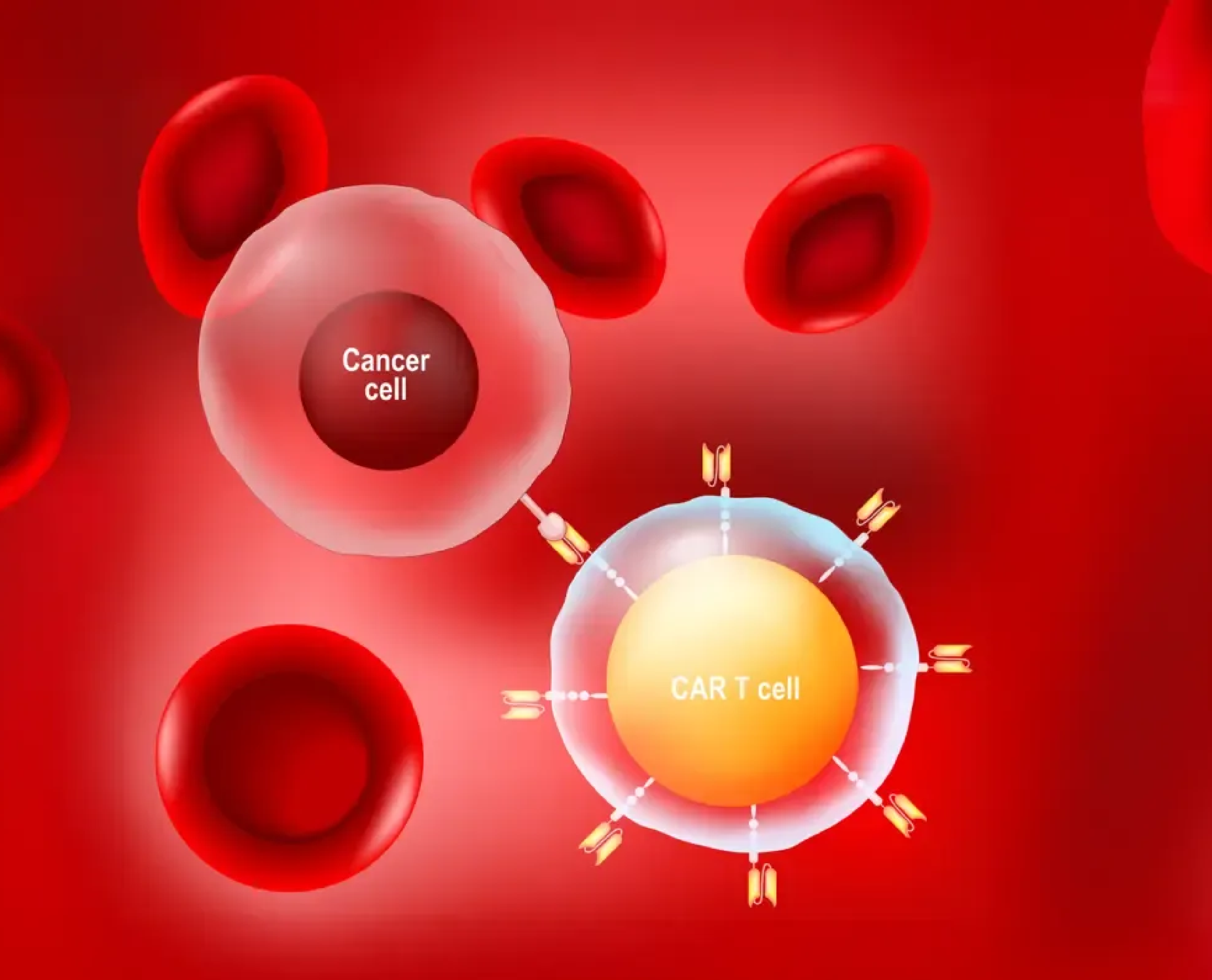
CAR T-cell therapy involves collecting a patient's own T-cells and genetically modifying them in a laboratory setting to express Chimeric Antigen Receptors (CARs). These receptors are specifically designed to identify specific proteins found on cancer cells.
Once infused back into the body of the patient, the altered T-cells identify, bind to, and destroy cancer cells. To effectively target cancer cells, CAR T-cells are designed to persist for months or longer. CAR T-cell therapy is also referred to as a "living drug" because these modified T-cells multiply and are active inside the body for longer periods.
Studies show that CAR T-cell therapy is effective in treating some blood cancers that have relapsed or are resistant to treatment, particularly B-cell malignancies and multiple myeloma.
Antigen-specific CAR T-cell therapy treats cancer in a targeted manner, unlike chemotherapy, which targets both healthy and cancer cells.
HCG has established itself as one of the best hospitals for CAR T-cell therapy in Bangalore by combining clinical experience in India with international hemato-oncology treatment standards. Our specialists place a special emphasis on guaranteeing safe delivery, implementing a systematic monitoring system, and responsibly choosing the right patients who can benefit from this treatment, such as those with relapsed or refractory B-cell malignancies, which are the primary indications for CAR T-cell therapy.

The USFDA has approved CAR T-cell therapy for specific cases of blood cancers. The following are the different types of approved CAR T-cell therapies available at HCG:
These therapies primarily target the CD19 antigen found on B-cells.
These therapies target BCMA, or B-cell maturation antigen.
Each type of CAR T-cell therapy has a different way of working, depending on the targets they identify and bind to, their ability to survive in the body, and various other factors.
Treatment decisions are made based on disease characteristics, prior therapies, and overall health status.
CAR T-cell treatment is not appropriate for all patients. Therefore, doctors recommend a detailed evaluation before recommending CAR T-cell therapy as a treatment option:
A thorough evaluation of the patient's medical history is conducted, including previous therapies, current health status, organ function, and illness history. To undergo this treatment, patients are expected to be medically stable to tolerate potential immune-related complications or side effects.
The case is assessed thoroughly to ensure that the disease expresses the antigen that can be targeted by the CAR product, such as CD19 and BCMA.
Hematologists, medical oncologists, transplant experts, intensivists, and pathologists collaborate at HCG to evaluate each individual patient. This methodical approach ensures that decisions are based on facts and focused on the patient.
The following are the steps involved in CAR T-cell therapy:
T-cells are collected from the patient's blood using a method similar to dialysis. In most situations, it takes several hours and requires no surgical intervention.
The extracted T-cells are sent to a specialist facility and genetically modified to express CARs. This process may take 3-6 weeks.
Patients are treated with chemotherapy (lymphodepleting chemotherapy) for a shorter amount of time prior to reinfusion. This is done to allow CAR T-cells to expand efficiently within the immune system.
The modified cells are administered intravenously. Following the infusion, the patient is closely monitored for several days and weeks.
Stays in hospitals typically last one to three weeks, depending on the patient's response and the severity of any adverse effects.
Some patients may experience mild to moderate side effects, which can be managed effectively with timely interventions.
CAR T-cell treatment requires immunological monitoring and infection control at the transplant level. HCG's specialized BMT facility provides the ideal environment for safe CAR T-cell therapy delivery.
HCG, both as a comprehensive cancer hospital and clinical research center, facilitates personalized CAR T-cell therapy for selected patients, while also aligning with nationally approved and ethically reviewed treatment protocols.
CAR T-cell therapy is a potent treatment option for certain cases of refractory and relapsed blood cancers. Our hemato-oncologists at HCG ensure safe and effective delivery of CAR T-cell therapy through comprehensive case assessment, precise antigen detection, early recognition of side effects, multidisciplinary coordination, and caregiver education.
At HCG, our specialists focus not just on the treatment outcomes but also on improving the treatment experience and preserving the quality of life.
Following the infusion, the majority of patients require hospital monitoring for one to three weeks. The duration will be determined by the individual's response as well as the side effects experienced.
Both medications are specifically targeting CD19-positive B-cell malignancies. Each product is unique in terms of its approved indications, clinical trial data, and manufacturing design. The decision is made based on the disease type and clinical examination.
The availability of clinical trials varies throughout time. During consultations, patients are encouraged to discuss ongoing or upcoming clinical trials that could be suitable for their case.
HCG Cancer Hospital is equipped with infrastructure, skill, multidisciplinary teamwork, and stringent patient selection protocols to deliver better health outcomes for patients, which collectively improve the overall treatment effectiveness and allow patients to receive personalized and comprehensive care throughout their treatment journey.
Feel free to reach out to us.