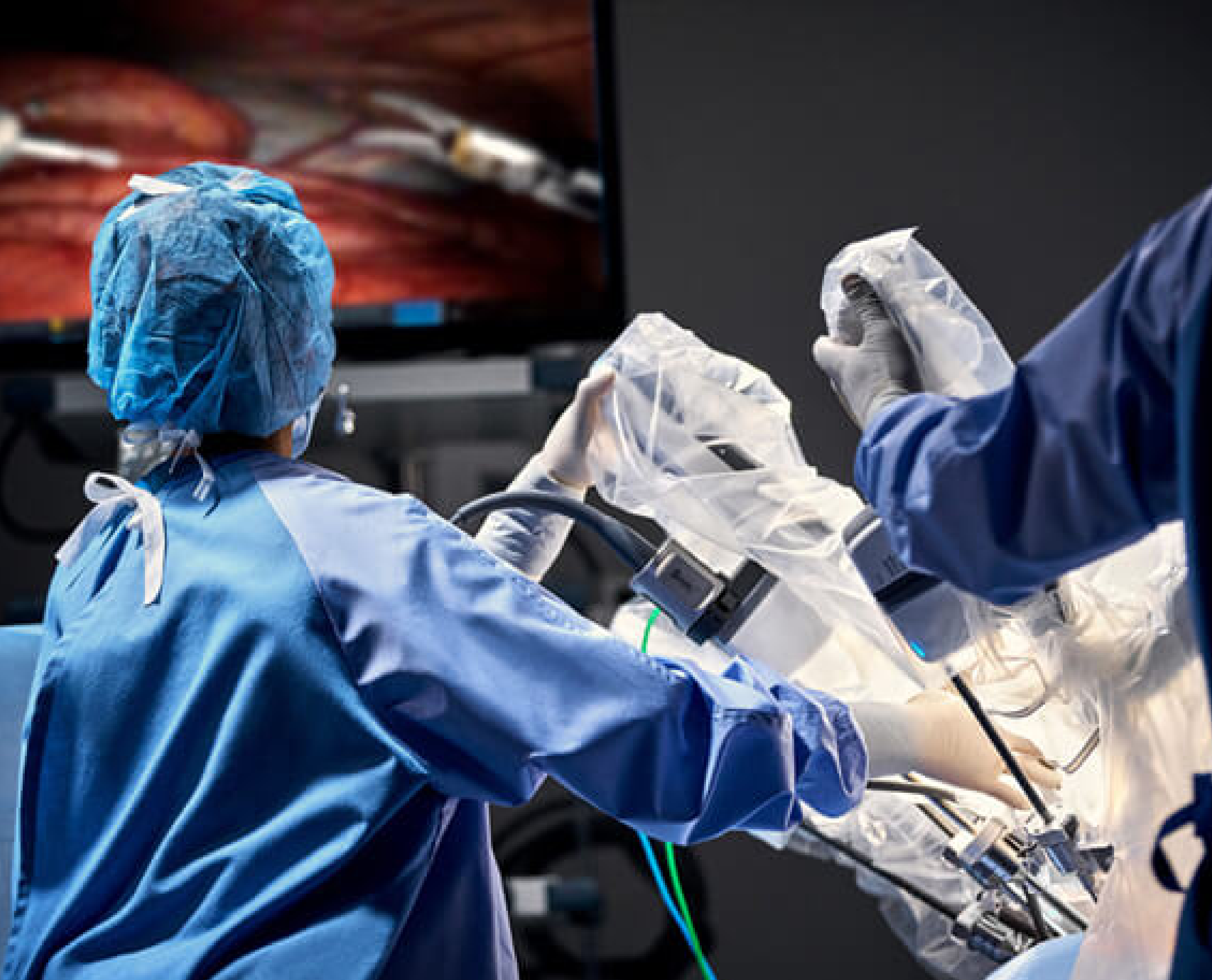
For patients facing cancer surgery, the question isn't just whether surgery is needed; it's how it's done. Robotic surgery in Bangalore at HCG Cancer Hospital offers a meaningful answer to that question.
Powered by the da Vinci Xi Robotic System and performed by HCG's certified surgical oncologists, robot-assisted procedures bring a level of precision, control, and visualization to cancer surgery that conventional approaches simply can't match. The result: smaller incisions, faster recovery, and better preservation of the healthy tissue that matters for life after cancer.

The da Vinci Xi is the most advanced iteration of the da Vinci platform, and understanding what it actually does explains why it changes surgical outcomes.
The surgeon never steps away from control. Seated at an immersive console a few feet from the operating table, the robotic surgeon views a magnified, three-dimensional field and operates using hand and foot controls that translate their movements, in real time, into precise motion at the robotic arms. Tremor is filtered out. Scale is adjustable. Every movement the surgeon makes is intentional, controlled, and exact.
The robotic arms themselves don't initiate anything independently. They respond, with sub-millimeter fidelity, to the surgeon's inputs. That distinction matters: the expertise driving the surgery is entirely human.
The da Vinci Xi system's camera provides 10x magnification with high-definition, three-dimensional imaging. In cancer surgery, that level of clarity is clinically significant.
Identifying the precise boundary between tumor and healthy tissue, the margin, is one of the most consequential decisions a surgeon makes.
Detailed visualization of this degree reduces the risk of leaving cancer cells behind and reduces the chance of unnecessarily removing healthy functional tissue.
Standard laparoscopic instruments are rigid; they move in limited planes. The da Vinci's EndoWrist instruments rotate 360 degrees and bend in ways that human wrists cannot replicate, with seven degrees of freedom.
In anatomically constrained areas like the pelvis, the base of the skull, or the thorax, this dexterity allows the surgeon to work around structures that would be difficult or impossible to reach safely with conventional tools.
For cancer surgery in these regions, that flexibility translates directly into better outcomes.
HCG's robotic surgery program is led by surgeons with formal robotic surgery certification and extensive case experience across uro-oncology, gynec-oncology, head and neck, and thoracic and GI cancers. Certification isn't just a credential here; it reflects a structured training pathway and ongoing case volume that keeps surgical skills sharp.
Every robotic surgery case at HCG is reviewed by a multidisciplinary tumor board before the procedure is confirmed. Medical oncologists, radiation oncologists, and surgical oncologists collectively evaluate whether robotic surgery is the most appropriate path, and if so, what the surgical goals should be.
HCG's cancer treatment approaches are shaped by the principle of "Adding Life to Years." Robotic surgery supports this philosophy directly, wherein the precision and magnification allow surgeons to remove cancer while preserving adjacent nerves, vessels, and healthy tissue that affect continence, fertility, speech, and swallowing. These aren't secondary concerns. They're part of what good cancer surgery means.
HCG recommends robotic radical prostatectomy, partial nephrectomy for kidney tumors, and bladder cancer resections using the da Vinci system. In prostate surgery particularly, the precision around the neurovascular bundles, which affect urinary and sexual function, is where robotic surgery has demonstrated some of its most documented clinical advantages.
Complex hysterectomies and myomectomies for uterine and cervical cancers benefit significantly from robotic assistance, particularly in patients where a minimally invasive approach offers meaningful recovery and functional advantages.
Trans-Oral Robotic Surgery (TORS) allows HCG's surgeons to access oropharyngeal tumors through the mouth, eliminating external incisions. Patients are more likely to preserve normal speech and swallowing, and recovery is far less disruptive than open approaches.
Esophageal, lung, and colorectal cancer resections using robotic assistance offer improved access in the chest and abdomen. For colorectal cases, the narrow pelvic anatomy that makes open surgery technically demanding is precisely where EndoWrist dexterity provides a superior surgical advantage.
The clinical advantages of robotic surgery translate into concrete differences in the patient experience.
And because trauma to surrounding tissue is minimized, long-term functional outcomes, such as continence, mobility, and organ function, are better preserved.
HCG Cancer Hospital remains a leading destination for robotic surgery in Bangalore, with a program built on certified expertise, multidisciplinary planning, and the full capability of the da Vinci Xi Robotic System. If you or someone you care for is facing cancer surgery, speak with HCG's surgical oncology team to understand whether a robotic approach is right for your situation.
Robotic surgeries are performed by surgeons. HCG's certified robotic surgeon controls every movement through the surgeon's console. The robotic system translates those movements with precision; it initiates nothing on its own. The technology extends the surgeon's capability; it doesn't replace their judgment.
Costs vary depending on cancer type, procedure complexity, and hospital stay duration. Many major health insurance policies cover robotic surgery when clinically indicated. HCG's patient services team can provide a procedure-specific estimate and assist with insurance pre-authorization.
HCG performs robotic surgery for prostate, kidney, bladder, uterine, cervical, oropharyngeal, esophageal, lung, and colorectal cancers, among others. Suitability is determined on a case-by-case basis through HCG's multidisciplinary tumor board review.
Robotic surgery and laparoscopy are both minimally invasive, and recovery timelines can be broadly similar. The da Vinci Xi is very helpful in complex cases, where our surgeons have to reach anatomically difficult regions or perform fine tissue dissection. In such cases, the superior visualization and instrument dexterity of robotic surgery can reduce operative time, blood loss, and the risk of conversion to open surgery.
Feel free to reach out to us.