02 May, 2026
02 May, 2026
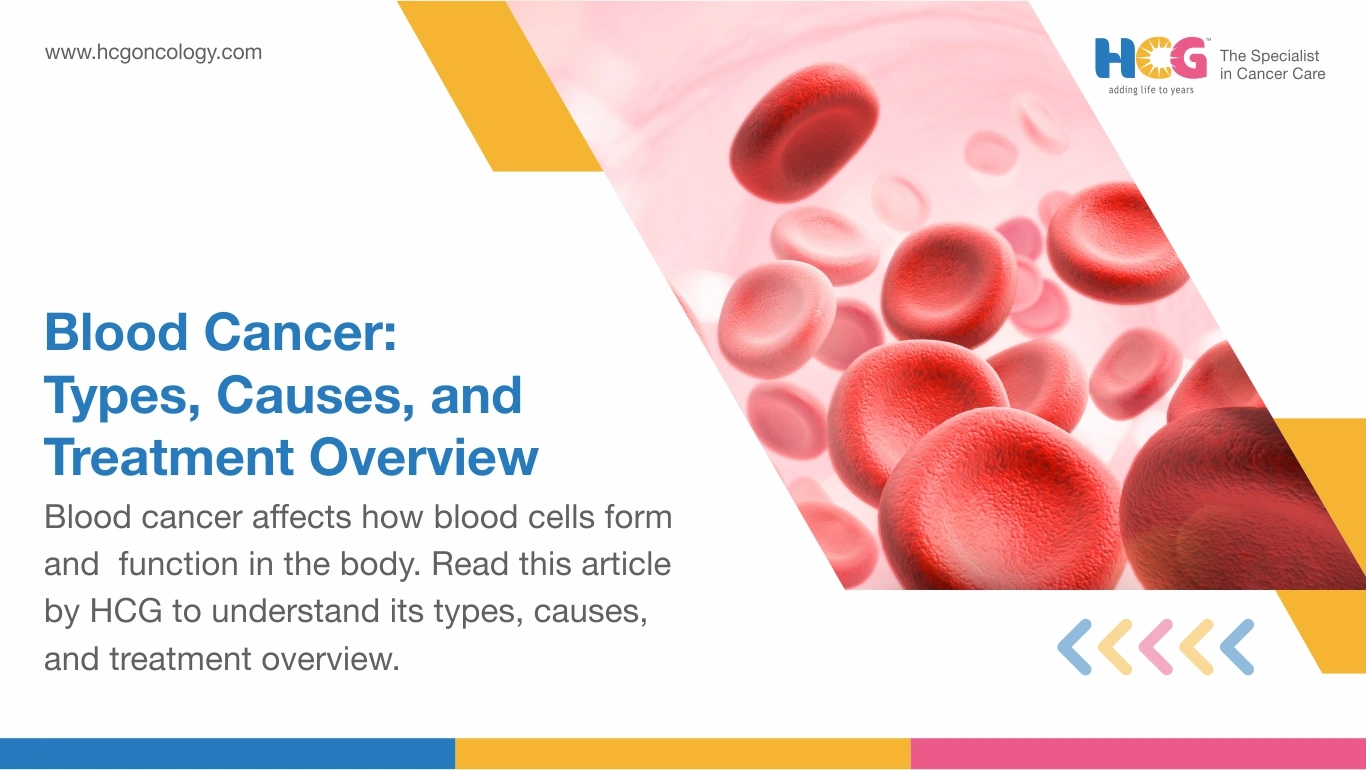
Blood cancer is a malignancy where abnormal blood-forming cells multiply without control, crowding out healthy red cells, white cells, and platelets. It does not behave as one disease. Leukemia, lymphoma, and multiple myeloma each have different origins, different warning signs, and different treatment pathways. What they share is a common starting point: the bone marrow or lymphatic system. Early specialist review makes a measurable difference in outcomes.
Blood cancer begins when a genetic mutation derails the normal maturation of a blood cell, producing a clone that replicates unchecked. These clonal cells accumulate in the bone marrow and blood, physically displacing functional cells. The bone marrow manufactures every major blood cell type, so a malignancy there disrupts immune defense, oxygen transport, and clot formation simultaneously.
Clinicians split blood cancers by cell of origin: myeloid cells give rise to most leukemias and myeloma; lymphoid cells produce lymphomas and certain leukemia subtypes. This distinction directly determines which drug regimens, transplant protocols, or cellular therapies apply.
Leukemia is a bone marrow cancer where malignant progenitor cells flood the bloodstream. The four principal subtypes are acute myeloid leukemia (AML), acute lymphoblastic leukemia (ALL), chronic myeloid leukemia (CML), and chronic lymphocytic leukemia (CLL).
Acute leukemias move fast. ALL and AML require urgent induction chemotherapy, often within days of diagnosis. Chronic leukemias follow a far slower course. CML, in particular, is now managed long-term with oral BCR-ABL inhibitors for most patients.
In practice, patients describe leukemia-related fatigue as a heaviness that does not lift with rest, which is quite different from ordinary tiredness. Easy bruising from trivial contact and infections that linger without an obvious cause are the other hallmark complaints.
Lymphoma originates in lymphocytes, the immune cells concentrated in lymph nodes, the spleen, and the thymus. The two broad categories are Hodgkin lymphoma (HL) and non-Hodgkin lymphoma (NHL).
Hodgkin lymphoma is identified by the presence of Reed-Sternberg cells on biopsy and tends to spread in a predictable, nodal sequence. Non-Hodgkin lymphoma is a heterogeneous family of over 60 subtypes, including diffuse large B-cell lymphoma (DLBCL) and follicular lymphoma, each with its own staging logic and treatment algorithm.
Multiple myeloma begins in the bone marrow, particularly in the plasma cells that typically assist the body in combating infections. When these cells turn cancerous, they multiply uncontrollably, crowding out healthy blood cells and releasing abnormal proteins that can harm your kidneys and weaken your bones over time. It is the second most common blood cancer worldwide and is most often diagnosed in people over 60.
While a complete cure remains difficult, the treatment landscape has changed considerably; newer targeted therapies, immunotherapy, and stem cell transplants are helping patients live longer, better lives than was possible even a decade ago.
| Feature | Leukemia | Lymphoma | Multiple Myeloma |
|---|---|---|---|
| Origin Cell | Bone marrow stem/progenitor cells | Lymphocytes (B-cells or T-cells) | Plasma cells (mature B-cells) |
| Primary Disease Site | Blood and bone marrow | Lymph nodes, spleen, lymphatic system | Bone marrow |
| Main Subtypes | AML, ALL, CML, CLL | Hodgkin Lymphoma, Non-Hodgkin Lymphoma | Smoldering, Active, Relapsed/Refractory |
| Disease Pattern | Acute (fast) or Chronic (slow) | Solid lymph node tumors | Marrow-based systemic disease |
| Typical Symptoms | Fatigue, anemia, infections, easy bleeding | Painless swollen lymph nodes, fever, night sweats | Bone pain, fractures, kidney issues, anemia |
| How It Spreads | Circulates via the bloodstream | Node-to-node lymphatic spread | Bone marrow infiltration, skeletal damage |
| Core Diagnostics | CBC, marrow biopsy, flow cytometry, genetics | Lymph node biopsy, PET-CT, immunophenotyping | Marrow biopsy, M-protein tests, imaging |
| Main Treatments | Chemotherapy, targeted therapy, BMT | Chemotherapy, immunotherapy, radiation | Targeted therapy, immunotherapy, BMT |
| Curability (General) | Many types are curable if treated early | High cure rates in several subtypes | Often controllable long-term; some curable |
Blood cancer does not have a single cause. The reality is that it emerges from a collision of acquired mutations, environmental exposures, and, in some cases, inherited vulnerabilities.
The Philadelphia chromosome, a translocation between chromosomes 9 and 22 creating the BCR-ABL fusion gene, is the defining molecular event in CML. In AML, mutations in FLT3, NPM1, and IDH1/2 carry both diagnostic and prognostic weight. These mutations are almost always acquired during a person's lifetime, not inherited from parents.
Prolonged benzene exposure, found in petrochemical settings and tobacco smoke, is an established trigger for myeloid malignancies. Prior treatment with alkylating chemotherapy agents or ionizing radiation can generate therapy-related myeloid neoplasms years later. Epstein-Barr virus infection is directly linked to Burkitt lymphoma and Hodgkin's lymphoma
Down syndrome, Li-Fraumeni syndrome, and Fanconi anemia each carry a materially elevated leukemia risk. A family history of hematological malignancy does not guarantee disease but justifies periodic monitoring.
Having these symptoms does not mean you have blood cancer. Many benign conditions produce identical presentations. Consult a hematologist if any of the following persist beyond two to three weeks:
At HCG Cancer Hospital, diagnosis follows a four-stage protocol that establishes subtype, assesses disease burden, and informs treatment selection.
Treatment is not a single decision. At HCG, a multidisciplinary tumor board reviews every case, aligning chemotherapy sequencing, transplant timing, and targeted agent selection across specialists before any protocol begins.
For acute leukemias, intensive induction aims for complete remission. The 7+3 protocol (cytarabine plus an anthracycline) is standard for AML; hyper-CVAD is used for ALL. Risk stratification and cytogenetic findings shape which regimen and consolidation strategy to follow.
BCR-ABL inhibitors, including imatinib, dasatinib, and ponatinib, have made CML a manageable chronic disease with near-normal life expectancy for most patients. FLT3 inhibitors (midostaurin and gilteritinib) improve AML remission rates in mutation-positive cases. BTK inhibitors such as ibrutinib provide durable control in CLL and certain NHL subtypes.
CAR T-cell therapy re-engineers a patient's own T-cells to carry chimeric antigen receptors targeting CD19 (for B-cell malignancies) or BCMA (for myeloma). It offers curative potential for patients who have relapsed after standard lines of therapy. CAR T-cell therapy is available in specific hospitals of the HCG network.
Allogeneic transplantation replaces malignant marrow with donor hematopoietic cells, adding a graft-versus-leukemia immune effect alongside cytoreduction. Autologous transplantation, using the patient's own previously harvested cells, is a standard consolidation strategy in myeloma. HCG's BMT program manages complex scenarios, including haploidentical (half-matched donor) transplants.
In early-stage Hodgkin lymphoma, involved-site radiation therapy (ISRT) combined with abbreviated chemotherapy achieves high cure rates with less toxicity than older extended-field approaches. The advanced radiotherapy platforms at HCG precisely target lymphomatous deposits while protecting adjacent cardiac and pulmonary tissue.
Outcomes depend on subtype, stage at diagnosis, molecular profile, and treatment response. Early-stage Hodgkin lymphoma achieves cure rates above 80-90% with current chemoradiation protocols. Childhood ALL reaches remission in over 90% of cases with modern induction regimens. CML, managed with BCR-ABL inhibitors, carries a near-normal life expectancy for most patients, with treatment-free remission possible in selected cases.
For many patients, the next helpful step is a structured specialist consultation that moves from symptom to diagnosis to a personalized treatment plan. HCG Cancer Hospital supports that process through a network of hematology-oncologists, dedicated BMT units, molecular diagnostics via Triesta Sciences, and access to CAR T-cell therapy at select centers. Blood cancer is a complex disease. The choices you need to make are easier when you have a clinical team that regularly handles these cases and has the right technology and teamwork needed for precise hematology.
Disclaimer: This information is intended to educate patients and caregivers. It does not replace professional medical advice. All treatment decisions should be made in consultation with a qualified doctor.
Feel free to reach out to us.