30 Jul, 2026
30 Jul, 2026
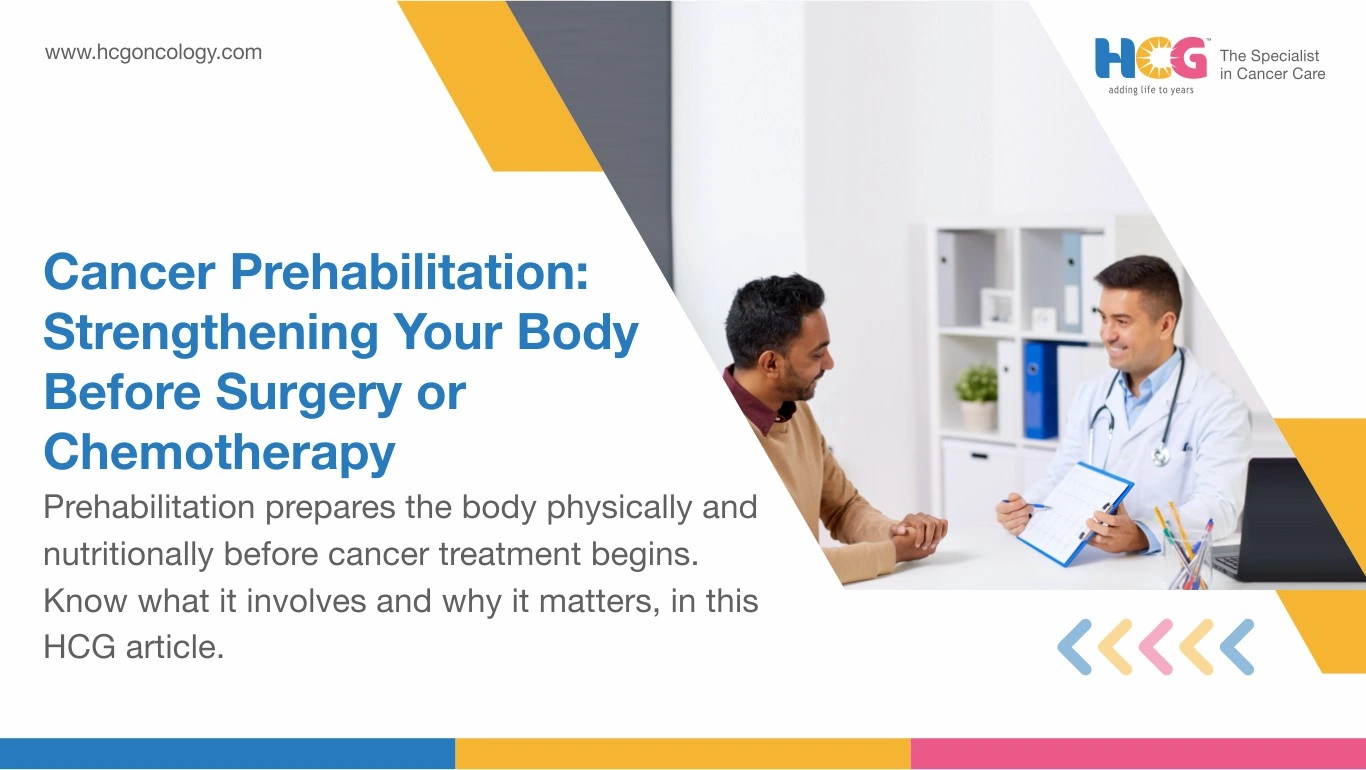
Most patients spend the weeks after a cancer diagnosis waiting. Cancer prehabilitation reframes that window as productive clinical time. A supervised 2- to 4-week program of targeted exercise, nutritional optimization, and psychological preparation builds the physical reserves that surgery or chemotherapy will demand. Patients who complete structured prehab enter treatment from a stronger biological starting point, with measurably better recovery outcomes documented in peer-reviewed oncology research.
Cancer prehabilitation is a clinically supervised preparatory intervention that strengthens physical and metabolic reserves before oncology treatment begins. The World Cancer Research Fund defines prehabilitation as preparing both the body and mind to better absorb the demands of surgery, chemotherapy, or radiotherapy.
Every cancer treatment imposes a physiological burden. Prehabilitation lifts the patient's baseline capacity so that the burden lands on firmer ground rather than a depleted one.
This is not a general wellness recommendation. Prehabilitation is a dosed clinical protocol calibrated by oncology physiotherapists and dietitians against each patient's measured frailty index before a single session begins.
| Parameter | Prehabilitation | Rehabilitation |
|---|---|---|
| Timing | Before surgery or chemotherapy | After surgery or chemotherapy |
| Primary Goal | Build reserves and reduce frailty | Restore function, manage complications |
| Clinical Focus | Metabolic priming, fitness baseline | Wound recovery, strength regain |
| Recovery Impact | Reduces complication risk proactively | Manages complications reactively |
| Duration | 2 to 4 weeks pre-treatment | Weeks to months post-treatment |
A prehab program for cancer runs three coordinated clinical streams in parallel across 2 to 4 weeks.
Each component starts with a clinical assessment. No generic starting points are used.
Yes, and for most patients, exercise before cancer surgery is actively encouraged rather than merely permitted. The variable that matters is not whether to exercise but how intensely. A physiotherapist establishes a personalized threshold based on pre-surgical fitness screening rather than applying a blanket protocol.
Resistance training and aerobic conditioning both produce measurable gains in surgical readiness within short prehab timeframes, per NIH-indexed oncology literature. The goal is not peak athletic performance. The goal is reaching the operating table with enough cardiovascular and muscular reserve to recover efficiently afterward.
Resting completely before major surgery feels intuitive but works against the patient. In practice, guided physical activity is what builds the reserve that determines post-operative rebound speed.
Nutritional status is one of the strongest modifiable predictors of chemotherapy tolerance. Entering treatment already malnourished accelerates toxicity, suppresses immune function, and reduces the body's capacity to sustain full treatment doses.
A structured pre-chemo nutritional optimization plan identifies protein deficits, corrects micronutrient shortfalls, and establishes an anti-inflammatory dietary pattern before the first treatment cycle begins. The World Cancer Research Fund places nutrition at the center of prehabilitation, not at the periphery. At HCG, specialist oncology dietitians build pre-chemo dietary protocols as a non-negotiable component of the full prehab program.
A patient who arrives at chemotherapy nutritionally prepared is a meaningfully different clinical case than one who arrives depleted. That gap is closable in 2 to 4 weeks.
Prehabilitation does not end at the treatment start date. Patients who complete prehab carry established clinical relationships with their physiotherapy and nutrition teams directly into the post-treatment recovery phase, eliminating the lag of building those relationships from zero after surgery.
Post-treatment follow-up typically spans progressive physical rehabilitation, nutritional counseling continuity, wound care monitoring, follow-up imaging, fatigue management, and ongoing psychological support. HCG's integrative oncology team coordinates this continuum from prehab intake through to full functional recovery without handoff gaps.
A structured cancer prehabilitation program in India typically costs between Rs. 5,000 and Rs. 25,000 for a complete 2- to 4-week course. The final figure depends on which clinical disciplines are engaged, how frequently sessions occur, and whether physiotherapy, dietetics, and psychological support are priced as a bundled package or billed as separate consultations.
Comprehensive integrative programs at metro-based centers in Mumbai, Delhi, Bangalore, and Chennai generally sit at the higher end of this range. Tier 2 city facilities offering narrower-scope programs are priced lower.
Costs vary by hospital and patient profile. Insurance coverage for structured prehabilitation programs is not uniformly recognized across Indian providers. Confirm policy inclusions with both your insurer and oncology team before committing to a program.
When decisions need to be made, HCG helps by converting the time between diagnosis and treatment into a medically productive preparation phase rather than an anxious waiting period. Oncology nutritionists, physiotherapists, and clinical specialists collaborate to raise the patient's physical and metabolic baseline before surgery or chemotherapy begins. Prehabilitation is not a cure. It is preparation, and preparation changes outcomes.
During your pre-treatment discussions:
Disclaimer: This information is intended to educate patients and caregivers. It does not replace professional medical advice. All treatment decisions should be made in consultation with a qualified doctor.
Feel free to reach out to us.