07 Apr, 2026
Feel free to reach out to us.
07 Apr, 2026
Every form of tobacco use, whether someone smokes a cigarette, rolls a bidi, tucks gutka into their cheek, or pulls from a vape device, puts the body in contact with chemicals that can damage cells in ways that eventually lead to cancer.
This is not a distant or theoretical risk. Cigarette smoke alone carries more than 7,000 chemical compounds, and at least 69 of them are confirmed carcinogens, per the CDC reports.
Smokeless tobacco products work differently, but they deliver the same class of damage through direct absorption in the mouth and throat.
E-cigarettes entered the conversation as a supposedly safer exit from smoking, but the picture that has emerged from research is more complicated than the marketing suggested.
What the evidence consistently points to is straightforward: keeping tobacco and nicotine out of the body is the most reliable way to lower cancer risk over time.
Cancer does not happen overnight. It usually develops after years of repeated damage to the DNA inside cells, damage that gradually overwhelms the body's ability to repair itself. Tobacco is one of the most effective drivers of that process.
When a cigarette burns, it releases thousands of compounds. A number of these latch onto DNA strands inside cells and scramble the instructions that control how those cells grow, divide, and die. The body has repair mechanisms specifically designed to address this type of damage, and they operate continuously. The problem is that daily tobacco use keeps loading more damage onto the system, year after year, until the repair mechanisms cannot keep up.
Quick Note: One exposure to tobacco smoke is unlikely to cause cancer. It is the cumulative load over months and years that tips the balance.
The chemicals playing a bigger role in this process include polycyclic aromatic hydrocarbons (PAHs), tobacco-specific nitrosamines (TSNAs), benzene, arsenic, and formaldehyde. These do not stay in the lungs. They enter the bloodstream and travel to the bladder, kidneys, pancreas, stomach, liver, and cervix, which is why smoking is connected to cancers throughout the body, not just in the respiratory tract.
Smokeless tobacco reaches the same destination by a different route. Gutka, khaini, and chewing tobacco release TSNAs and other carcinogens directly into the soft tissue of the mouth and throat. Hours of daily contact with those tissues gradually create the conditions in which cancers of the mouth, gums, and esophagus can take hold.
According to the IARC, smoking is a confirmed cause of cancers in the lung, mouth, throat, larynx, esophagus, stomach, pancreas, kidney, bladder, ureter, colon, rectum, liver, and cervix. Certain types of leukemia are on the list, too. That covers a significant portion of the human body.
Lung cancer is the most well-known association, and the evidence for it is the strongest. Smoking is responsible for roughly 85% of lung cancer cases worldwide, per the WHO. A regular smoker may face 15 to 30 times the lung cancer risk of someone who has never smoked, depending on how much and how long they have smoked.
Common Confusion:Cigars and pipes tend to get treated as less dangerous than cigarettes. They are not. Even without deep inhalation, cigars carry a meaningful risk for oral, laryngeal, esophageal, and lung cancers. The smoke is still toxic
For smokeless tobacco, the cancer risk concentrates in the oral cavity, gums, inner cheek, esophagus, and pancreas. In India and across South Asia, the habit of combining areca nut with tobacco creates an additional layer of risk. The IARC has placed this combination in Group 1, its highest category, meaning there is sufficient evidence to call it a definite human carcinogen.
| Tobacco Product | Primary Cancer Sites | Key Carcinogens |
|---|---|---|
| Cigarettes | Lung, oral cavity, throat, esophagus, bladder, kidney, pancreas, stomach, liver, cervix, colon | PAHs, nitrosamines, benzene, formaldehyde, arsenic |
| Smokeless tobacco (gutka, khaini, chewing tobacco) | Mouth, gums, inner cheek, esophagus, pancreas | Tobacco-specific nitrosamines (TSNAs), polonium-210 |
| Bidi | Lung, oral cavity, throat, esophagus, stomach | Higher tar and CO per stick than manufactured cigarettes |
| Cigars and pipes | Oral cavity, throat, esophagus, lung | High-concentration TSNAs, PAHs |
| Hookah | Lung, oral cavity, esophagus, bladder | Charcoal combustion byproducts, heavy metals, and CO |
Cancer associations vary by duration of use, quantity, and individual health factors. Based on IARC and CDC evidence.
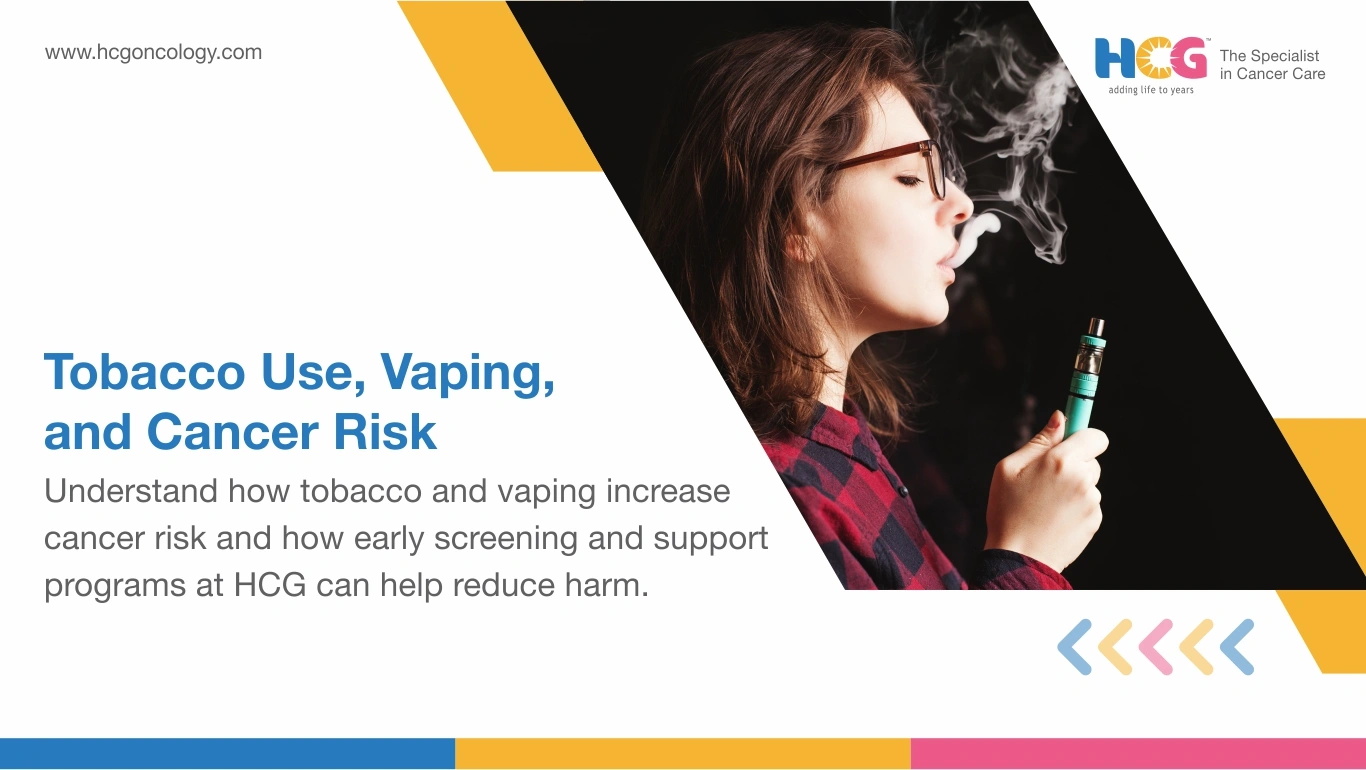
E-cigarettes do not produce combustion, but the aerosol they generate still contains confirmed carcinogens, including formaldehyde and acrolein. Vaping exposes the lungs to fewer toxic compounds than cigarette smoke, but it does not eliminate carcinogen exposure.
The long-term cancer risk from vaping is still being studied, but laboratory evidence consistently shows that vape aerosol causes oxidative stress and DNA damage in cells.
A 2024 study showed that people who both smoked cigarettes and vaped were found to have approximately four times the lung cancer risk of those who only smoked. For someone who picked up vaping as a way to cut back on cigarettes while still smoking both, that finding matters a great deal.
The current guidance from both the CDC and the American Cancer Society is consistent: if you do not smoke, do not start vaping. Young people and pregnant women should avoid e-cigarettes entirely. For people who smoke and are considering vaping as a path to quitting, that conversation belongs with a doctor, not a vaping store.
When e-liquid heats up, it does not simply evaporate cleanly. The chemical transformation creates new compounds that were not in the liquid to begin with.
Among the chemicals formed during vaping, formaldehyde is one of the most studied in cancer research. The IARC classifies it as a Group 1 carcinogen. It forms when propylene glycol or vegetable glycerin, the base ingredients in most e-liquids, break down under heat. The hotter the device runs, and dry puffs can push temperatures significantly higher, the more formaldehyde is produced.
Acrolein is another byproduct that researchers have flagged. It damages DNA in patterns similar to the mutations found in smoking-related lung cancers. Whether those lab findings translate to clinical cancer risk in long-term vapers is still being studied.
Good to Know: Trace amounts of nickel, lead, and chromium from the heating coil have shown up in vape aerosol across multiple studies. The quantities are generally smaller than in cigarette smoke, but the long-term effect of daily exposure over decades is unknown.
Most tobacco-related articles that you see on the internet are about smoking tobacco. But in Indian context, speaking about the dangers of smoking alone is not enough
India has one of the most varied tobacco use profiles in the world. Bidis, hand-rolled in tendu or temburni leaves, are smoked by tens of millions of people. Gutka, khaini, zarda, and pan masala with tobacco are chewed daily by millions more. The areca nut and tobacco combination is so culturally embedded in many communities that people who use it regularly do not think of themselves as tobacco users at all.
The numbers that come out of this picture are significant. Tobacco-associated cancers represented approximately 48.7% of all male cancer registrations and 16.5% of female registrations in hospital-based data across India. Oral, lung, tongue, esophageal, and stomach cancers lead the list for men. Cervical and lung cancers are the primary tobacco-linked cancers for women.
Quick Note: Oral cancer is the second most common cancer in India. The areca nut-tobacco combination, classified as a definite human carcinogen by the IARC, is the single biggest driver.
Bidis are often assumed to be gentler because they are smaller and hand-rolled. The reality is the opposite. The tendu leaf wrapping does not burn as cleanly as cigarette paper, so a bidi requires deeper, more frequent draws to stay lit. Research indicates bidi smokers may actually inhale more tar and carbon monoxide per stick than cigarette smokers do. The size is deceiving.
Secondhand smoke is not just an inconvenience for the people nearby. It is a cause of cancer in people who have never smoked a single cigarette.
Cancer research bodies like the IARC, the National Cancer Institute, and Cancer Research UK have all independently reached the same conclusion: secondhand tobacco smoke is a known human carcinogen.
The smoke that drifts off a burning cigarette and the smoke exhaled by a smoker both contain the same toxic chemicals, including more than 69 confirmed carcinogens, according to NCI data. Non-smokers who are regularly exposed to this smoke carry a measurably elevated risk of lung cancer.
Children are at particular risk. They breathe faster, their lungs are still developing, and they cannot remove themselves from the environments adults create around them. Homes and cars where adults smoke are the two biggest exposure sources for young children.
Once someone stops using tobacco, the body gets to work repairing DNA damage faster than most people expect. Circulation picks up within weeks. Heart disease risk drops to about half after a year off cigarettes. Lung cancer risk starts falling around the five-year mark and keeps improving. By ten to fifteen years, it may sit at roughly half of what a continuing smoker would face.
HCG Cancer Hospital brings together surgical oncologists, radiation specialists, and medical oncologists to evaluate each case as a team. The priority is getting the right treatment the first time while keeping quality of life front and center.
NCI research shows quitting before 50 cuts the risk of dying over the next fifteen years by about half. But stopping at 60 or 70 still makes a real difference. Even people diagnosed with cancer tend to respond better to treatment when they quit.
| Factor | Cigarette Smoking | E-Cigarettes / Vaping | Smokeless Tobacco |
|---|---|---|---|
| Combustion | Yes, burns at 600-900°C | No, heats liquid at 200-300°C | No combustion |
| Known carcinogens | 70+ confirmed | Formaldehyde, acrolein, trace metals at lower levels | 28+ including TSNAs |
| Cancer evidence | Strong causal evidence for 20+ types (IARC) | Biomarker evidence; long-term human data still emerging | Established for oral, esophageal, and pancreatic cancers |
| Lung cancer risk | 15-30x higher than non-smokers | Under investigation; dual use may increase risk fourfold | Lower lung risk; elevated oral cancer risk |
| Secondhand exposure | Known human carcinogen (IARC) | Not harmless; contains nicotine and chemicals | No secondhand smoke produced |
Individual risk depends on frequency, duration, and product type. This table is for educational reference. Please speak with a doctor for guidance on your specific situation.
Tobacco in every form carries a cancer risk confirmed across decades of research. Cigarettes sit at the top, but gutka, khaini, and areca nut-tobacco combinations used across India carry well-documented links to oral and esophageal cancers. Vaping is relatively less toxic than cigarettes in some respects, but it is not clean, and long-term data are still missing.
Quitting tobacco not only reduces one’s cancer risk but also improves overall health.
Talk to a doctor about a quit plan, ask about cancer screening if tobacco use has been long-term, and keep your home smoke-free, especially around children.
HCG Cancer Hospital approaches tobacco-related cancer care through a multidisciplinary team that prioritizes getting the diagnosis right before recommending any treatment pathway. Decisions are grounded in individual circumstances, not assumptions.
For anyone with questions about personal cancer risk connected to tobacco, a conversation with the care team at HCG Cancer Hospital is a reasonable place to start.
Disclaimer: This information is intended to educate patients and caregivers. It does not replace professional medical advice. All treatment decisions should be made in consultation with a qualified doctor.
NCI | Harms of Cigarette Smoking and Health Benefits of Quitting | https://www.cancer.gov/about-cancer/causes-prevention/risk/tobacco/cessation-fact-sheet
NCI | Secondhand Smoke and Cancer | https://www.cancer.gov/about-cancer/causes-prevention/risk/tobacco/second-hand-smoke-fact-sheet
CDC | Health Effects of Cigarettes: Cancer | https://www.cdc.gov/tobacco/about/cigarettes-and-cancer.html
American Cancer Society | E-Cigarettes and Vaping | https://www.cancer.org/cancer/risk-prevention/tobacco/e-cigarettes-vaping.html
IARC/WHO | Tobacco and Cancer | https://www.iarc.who.int/risk-factor/tobacco/
PubMed/NCRP | Tobacco-Related Cancer Burden in India | https://pubmed.ncbi.nlm.nih.gov/36134614/
American Cancer Society | Harmful Chemicals in Tobacco Products | https://www.cancer.org/cancer/risk-prevention/tobacco/carcinogens-found-in-tobacco-products.html
CDC | Health Effects of E-Cigarettes | https://www.cdc.gov/tobacco/e-cigarettes/health-effects.html
CDC | Smoking and Tobacco Use | https://www.cdc.gov/tobacco/about/cigarettes-and-cancer.html