02 May, 2026
02 May, 2026
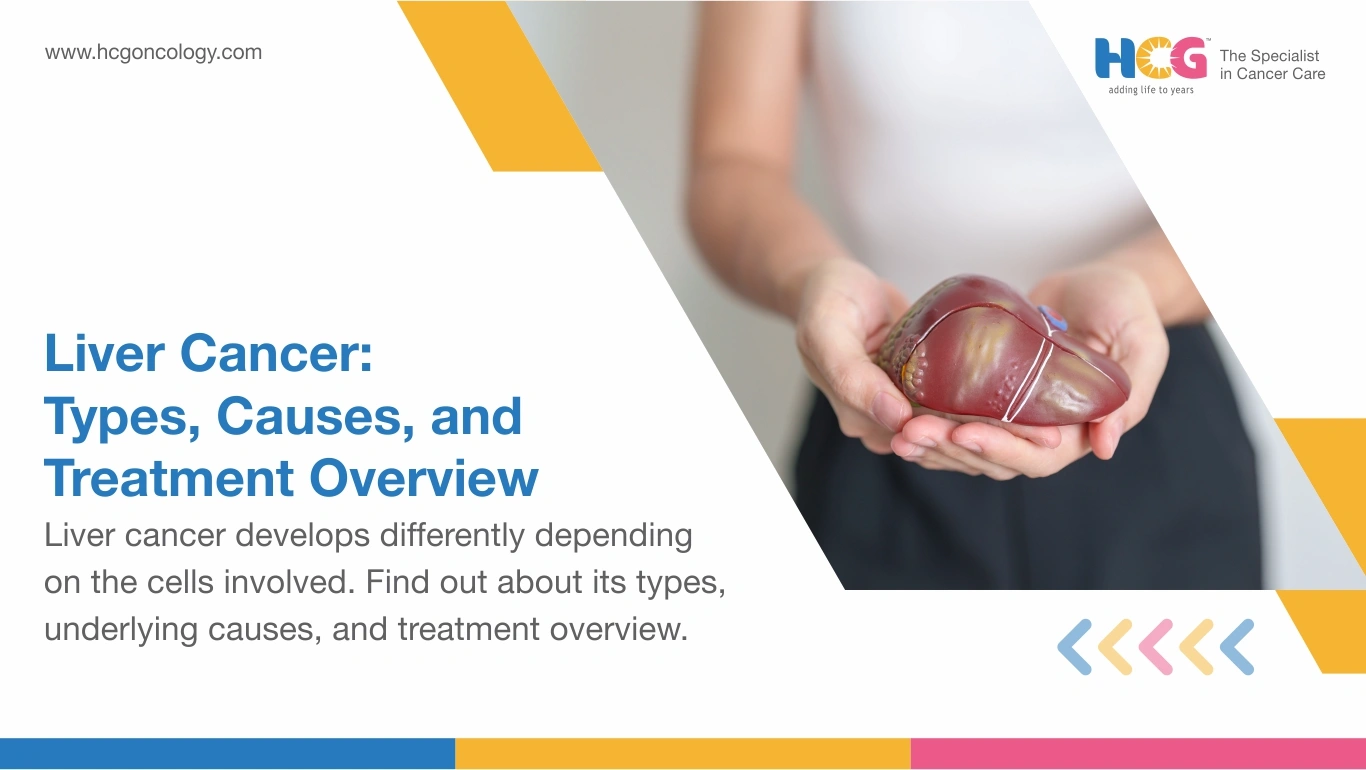
Liver cancer develops when liver cells multiply without control, forming malignant tumors that disrupt normal organ function. Two categories exist: primary liver cancer, originating in the liver itself, and secondary liver cancer, arriving after spreading from another organ. The most common primary form is hepatocellular carcinoma (HCC), the third leading cause of cancer death worldwide. Early liver cancer produces no symptoms at all. By the time something feels wrong, the disease has often already progressed. That gap makes knowing your risk profile as important as knowing the symptoms.
Three types of primary liver cancer exist, each from a different cell group.
Hepatocellular carcinoma (HCC) grows from hepatocytes, the liver's main working cells. HCC accounts for the majority of all primary liver cancer diagnoses globally.
Intrahepatic cholangiocarcinoma develops from the bile duct network inside the liver. It represents 10 to 20 percent of primary liver cancer cases.
Hepatic angiosarcoma begins in the blood vessel lining within the liver. It is rare, found in roughly 1 percent of cases, and tends to behave aggressively.
Secondary liver cancer, also called liver metastases, is not a liver disease in origin. Cancer cells from the colon, breast, or lung travel through the bloodstream and form new tumors in the liver. Treating secondary liver cancer means targeting the source.
| Type | Origin | Frequency |
|---|---|---|
| Hepatocellular carcinoma | Liver hepatocytes | Most common primary type |
| Intrahepatic cholangiocarcinoma | Bile ducts within the liver | 10–20% of cases |
| Hepatic angiosarcoma | Blood vessel lining in the liver | About 1% of cases |
| Secondary liver cancer | Spreads from another organ | More common overall than primary |
Good to know: In India, HCC linked to hepatitis B and hepatitis C-related cirrhosis is the dominant pattern seen across oncology centers.
Liver cancer begins with DNA damage inside liver cells. When genetic instructions for normal cell growth break down, cells replicate without regulation, and tumors form.
Chronic hepatitis B (HBV) and hepatitis C (HCV) are the most significant causes globally. Both viruses drive persistent liver inflammation. Over the years, that inflammation converts healthy tissue into dense scar tissue, a condition called cirrhosis. Cirrhotic liver tissue is far more prone to malignant change.
The CDC identifies additional risk factors: obesity, metabolic dysfunction-associated steatotic liver disease (MASLD), type 2 diabetes, heavy alcohol use, cigarette smoking, and aflatoxin exposure from poorly stored grains and nuts. Hemochromatosis, a genetic condition causing excess iron accumulation, also raises risk.
Common Confusion: Fatty liver disease without any alcohol history is now a confirmed liver cancer risk factor. Many patients assume only heavy drinkers face this risk. That assumption is clinically outdated.
| Feature | Primary Liver Cancer | Secondary Liver Cancer |
|---|---|---|
| Definition | Cancer that starts in the liver cells themselves. | Cancer that spreads to the liver from another organ. |
| Common Types | Hepatocellular carcinoma (HCC), intrahepatic cholangiocarcinoma, hepatic angiosarcoma. | Metastatic tumors originating from the colon, breast, lung, or other organs. |
| Origin of Cancer Cells | Develops from liver tissues such as hepatocytes, bile ducts, or blood vessels. | Cancer cells travel to the liver through the bloodstream from the original tumor site. |
| Frequency | Less common overall compared to metastases. | More common than primary liver cancer because many cancers spread to the liver. |
| Treatment Approach | Treatments focus on the liver tumor itself (surgery, transplantation, ablation, and targeted therapy). | Treatment focuses on both the liver tumors and the original cancer source. |
Early liver cancer is completely silent. No pain, no visible lump, no change in daily function. Symptoms appear only once the tumor grows large enough to impair liver output or press against nearby organs.
When symptoms do emerge, they may include a firm lump below the right rib cage, a swollen abdomen, jaundice (yellowing of the skin and eye whites caused by bile backing into the bloodstream), unexplained weight loss, persistent fatigue, nausea, and dark urine.
These symptoms overlap with many non-cancerous liver conditions. Clinical evaluation is always required.
Diagnosis follows a structured sequence:
The Barcelona Clinic Liver Cancer (BCLC) staging system is the internationally accepted classification framework used at HCG and oncology centers worldwide.
Stage I: One tumor under 2 cm, normal liver function. Stage II: One tumor up to 5 cm, or multiple tumors all under 3 cm. Stage III: Multiple tumors or any tumor over 5 cm, with possible vascular involvement. Stage IV: Cancer has spread to lymph nodes or distant organs.
The five-year survival rate for Stage I to II liver cancer is 37 percent. Stage III drops to 13 percent. Stage IV carries a 3 percent five-year survival rate (Cleveland Clinic, 2025). Earlier detection changes these numbers meaningfully.
Yes. Liver cancer is treatable, and in select cases, curable. The right approach depends on tumor stage, remaining liver function, and overall patient fitness.
Surgical hepatectomy removes the tumor-bearing liver segment. Preferred when healthy tissue remains, and cancer has not spread.
Liver transplantation replaces both the tumor and the diseased liver simultaneously. For eligible HCC patients, transplantation offers the strongest long-term disease control.
Ablation therapy destroys small tumors using extreme heat (radiofrequency ablation) or cold (cryoablation) via image-guided needles. No open surgery is needed.
TACE and radioembolization deliver treatment directly into the hepatic artery feeding the tumor. Systemic side effects are minimized because the therapy acts locally.
Targeted therapy and immunotherapy address advanced or recurrent HCC. Targeted agents block specific molecular growth signals. Immunotherapy reactivates the body's T-cells to identify and attack cancer cells. At HCG, tumor molecular profiling through Triesta Sciences guides systemic therapy selection for each patient's specific disease biology.
In summary, stage, liver function reserve, and tumor biology together determine the treatment plan. No single approach fits every liver cancer patient.
Recovery is structured and long-term from the very first day after treatment.
Nutritional rehabilitation begins immediately after hepatectomy or transplantation. The regenerating liver demands high protein intake and careful micronutrient support. A specialist dietitian manages phased dietary reintroduction.
Surveillance imaging with CT or MRI runs at 3 to 6-month intervals for the first two years. AFP blood tests accompany each imaging cycle to catch recurrence early.
Transplant patients require lifelong immunosuppression. Without consistent medication, the body will reject the donor liver. Regular blood panels become a permanent part of post-transplant life.
Psycho-oncology support matters. HCG provides integrated survivorship programs covering mental health counseling, nutritional support, and rehabilitation as standard care, not optional extras.
Surgical hepatectomy ranges from ₹25,000 to ₹8 lakh. Hospitals like HCG Cancer Hospital offer liver transplanttaion packages whose costs can range from ₹22,50,000 to ₹28,50,000 or more, factoring in donor matching and extended post-operative care. TACE and radiofrequency ablation typically cost ₹13,000 to ₹2,00,000 per session, depending on the individual case factors. Targeted therapy and immunotherapy costs vary by drug regimen and cycles required.
Costs vary by hospital and patient profile. Bengaluru, Mumbai, Delhi, and Hyderabad carry higher facility charges than Tier 2 cities. Ayushman Bharat and government schemes cover eligible patients. HCG's patient navigation team helps identify financial support before treatment begins.
When decisions need to be made, HCG Cancer Hospital helps by assembling a dedicated tumor board of surgical oncologists, hepatologists, medical oncologists, and radiologists before any treatment begins. Liver cancer is serious. Outcomes improve most when patients reach an experienced oncology team early, before advancing disease reduces available options.
Next Steps for Your Doctor Visit:
Disclaimer: This information is intended to educate patients and caregivers. It does not replace professional medical advice. All treatment decisions should be made in consultation with a qualified doctor.
Feel free to reach out to us.