30 Jul, 2026
30 Jul, 2026
A Pap smear is a cervical cancer screening test used to detect abnormal cervical cells before they become cancerous. Few medical tests have quietly changed women’s health as much as the Pap smear. It may take only a few minutes, but over the years, it has helped reduce cervical cancer rates worldwide. Pap smear screening plays a key role in preventive care by detecting early cell changes in the cervix before they turn serious. When combined with HPV testing, it becomes even more effective. Nearly all cervical cancer cases are linked to persistent HPV infection, making regular screening critical.
Screening for cervical cancer involves testing for the presence of any early indicators in the cervix. The two available tests are the Pap smear and the HPV test.
The Pap smear is where cells from the cervix are collected in order to be tested in the laboratory for any abnormalities. These abnormalities do not show any symptoms, but they are prone to developing into cancer if not addressed.
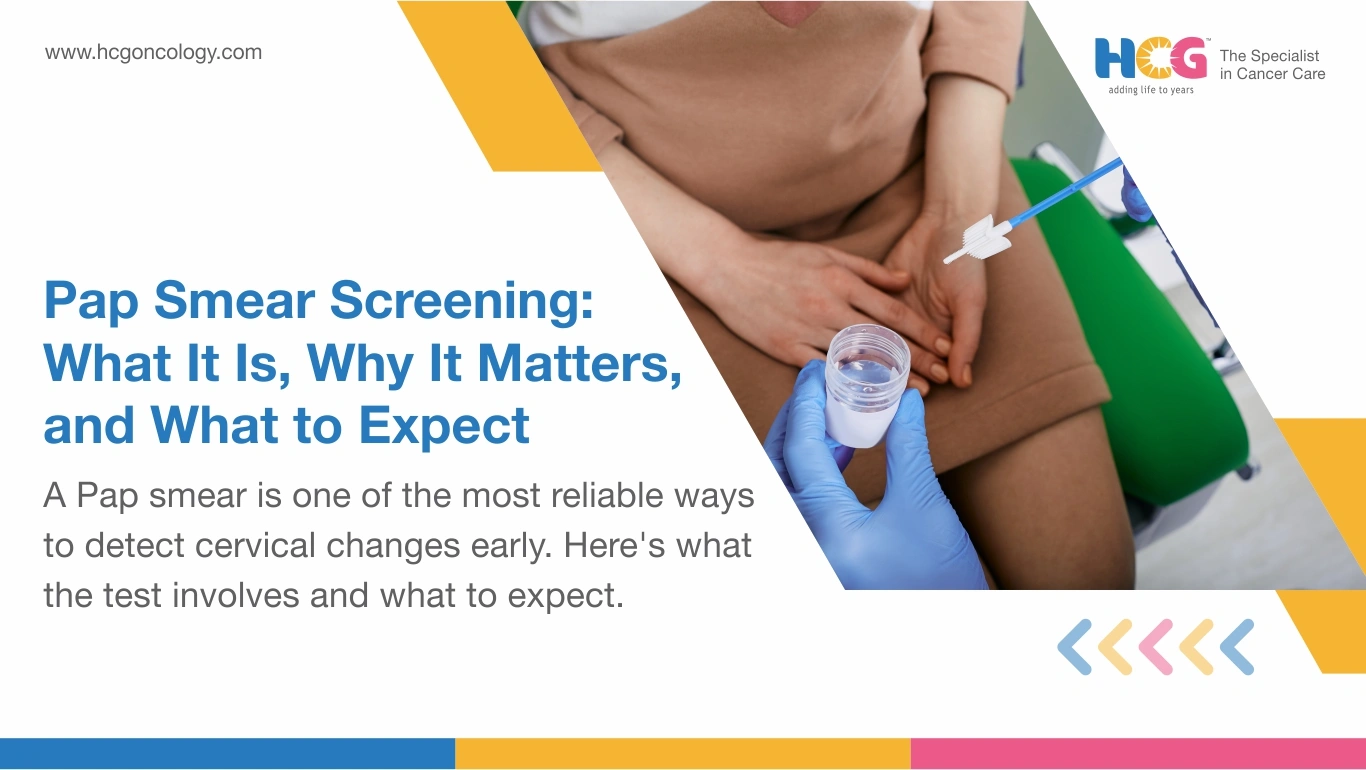
A Pap smear test, sometimes just called a Pap test, is a short gynecological screening procedure where a clinician collects cells from the surface of the cervix. The sample then heads to a lab, where technicians look for precancerous cervical cells or unusual growth patterns.
Cervical cancer develops silently over time, often due to persistent HPV infection. A Pap smear helps detect these changes early, before symptoms appear.
Early detection allows enough time for the problem to be treated before it becomes cancer. This is why Pap smear screening is crucial for reducing the risk of advanced cervical cancer.
Cervical cancer is one of those diseases that can often be prevented when cell changes are detected and managed early. That’s why regular screening is so important.
New studies have provided a better understanding of how HPV causes changes in cervical cells.
Most health practitioners advise that the screening should begin at age 21 for women who have high-risk factors such as a poor immune system, family history, or previous abnormalities.
A Pap test every three years from ages 21 to 29, and co-testing with an HPV test every five years between 30 and 65. After 65, doctors reassess based on past results.
| Age Group | Recommended Screening |
|---|---|
| 21 to 29 | Pap test every 3 years |
| 30 to 65 | Pap + HPV test every 5 years, or Pap alone every 3 years |
| 65 and above | May stop based on previous results |
The Pap and the HPV test are usually paired for a good reason. One looks at the cells; the other looks at the virus that often causes those cells to change.
A Pap smear scans for cervical abnormalities. HPV screening hunts for the high-risk strains of human papillomavirus behind most cervical cancers. Done together, they make the cervical screening test far more informative.
| Feature | Pap Smear | HPV Test |
|---|---|---|
| What it checks | Cervical cell changes | Presence of HPV virus |
| Purpose | Detect precancerous cells | Identify cancer-causing virus |
| When used | Routine screening | Often combined after age 30 |
A Pap test checks for abnormal cervical cells, while an HPV test checks for the virus that causes those changes.
In case you test positive for HPV, there is no need to undergo any treatment since most infections tend to go away on their own. However, the vaccine will still help in such cases.
Regular Pap smear screening helps detect abnormal cells early, allowing for simpler, less invasive treatment and better long-term health outcomes.
By the time symptoms appear, cervical cancer has usually been developing for years. That is exactly why cervical cancer detection through screening matters more than waiting on how you feel. In later stages, symptoms may include unusual vaginal bleeding, pelvic pain, or abnormal discharge, but early stages often show no symptoms.
The actual Pap test takes longer to describe than to perform.
Most women describe a Pap smear as mildly uncomfortable rather than painful. You may feel slight pressure or a brief scraping sensation when the sample is collected, but the procedure usually takes only a few minutes. Any discomfort fades quickly once the test is over. The actual sample collection takes less than a minute, does not require anesthesia, and you can return to your normal activities immediately after the test.
For accuracy, avoid sex, tampons, douches, and vaginal medications for about two days before the appointment. Schedule the test for a day when you are not on your period. It is best to schedule your test a few days after your period ends for the most accurate results.
An abnormal result may sound worrying, but in most cases, it is not as serious as it seems.
Most abnormal results point to mild inflammation, an infection, or low-grade cellular changes that often resolve without intervention.
Based on the results, your doctor may suggest a repeat Pap in a few months, an HPV test, or a colposcopy to examine the cervix more closely. A biopsy is reserved for cases that need a deeper look.
| Myth | Fact |
|---|---|
| Only sexually active women need Pap smears | All women aged 21+ should be screened |
| A Pap smear tests for every STI | It focuses on cervical cell changes |
| One normal result means lifelong safety | Regular screening is still needed |
| The test is painful | Most women feel only mild pressure |
| HPV vaccination means I no longer need Pap smears | The vaccine does not cover all high-risk HPV strains. Regular Pap screening is still needed even after vaccination. |
Cervical cancer is one of the most preventable cancers, and regular screening plays a crucial role in early detection. At HCG Cancer Hospital, cervical cancer prevention begins with early detection. Regular Pap smear and HPV screening can identify changes long before they become serious, giving you more control over your health. Our gynecologic oncology experts provide accurate screening, timely follow-up, and personalized guidance at every step. Schedule your screening today and take a proactive step toward protecting your long-term health.
Disclaimer: This article is for general informational purposes only and is not a substitute for professional medical advice, diagnosis, or treatment. Please consult a qualified healthcare provider for any questions regarding a medical condition.
Feel free to reach out to us.