30 Jul, 2026
30 Jul, 2026

This article is medically reviewed by Dr. Shruthi Shivdas, Consultant in Gynecologic Oncology, HCG Hospital, Hebbal
The cervical cancer survival rate is shaped by FIGO staging, tumor type, age, overall health, and how the cancer responds to treatment. The good news is that cervical cancer treatment outcomes have improved steadily, thanks to better screening, surgery, radiation therapy, chemotherapy, and newer options like immunotherapy and targeted therapy.
Cervical cancer starts in the cervix, which is the lower, narrow part of the uterus that connects the womb to the vagina. It usually develops slowly over time, often beginning with early cell changes called dysplasia, where abnormal cells start appearing in the cervical tissue before turning into cancer.
This guide explains what the 5-year cervical cancer survival rate really tells you, how cervical cancer prognosis varies by stage, and what affects the long-term outlook for women diagnosed today.
Cervical cancer is the second most common cancer among women, particularly in India and across South Asia. Cervical cancer statistics from the National Cancer Institute's SEER database show a 5-year relative survival rate of approximately 67% across all stages combined.
The 5-year relative survival rate for cervical cancer is around 67% across all stages, with localized disease at 91% and distant spread at 19%.
A relative survival rate compares people diagnosed with cancer to the general population over a fixed window, usually five years. It is a population-level estimate, not a personal forecast.
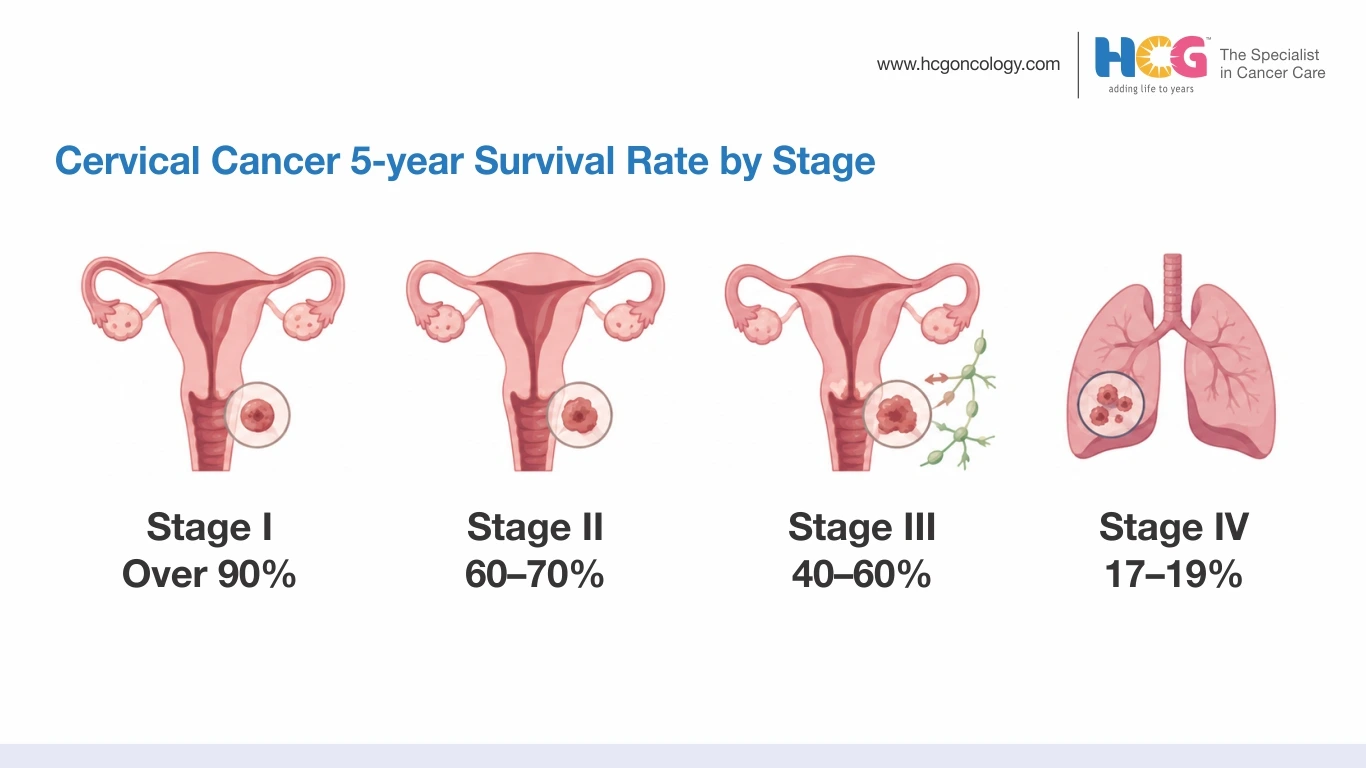
Cervical cancer is classified into four FIGO stages (I to IV), with substages (A-C) that describe how far the disease has spread. Stage I is limited to the cervix, while Stage II extends beyond the cervix and uterus but not to the pelvic walls. Stage III involves spread to the pelvic walls, lower vagina, or nearby lymph nodes, and Stage IV indicates advanced disease that has spread to distant organs (metastatic cancer).
The stage at which cervical cancer is diagnosed plays the most important role in determining prognosis and treatment outcomes. In general, earlier stages have significantly better survival rates and higher chances of long-term remission.
| Stage | 5-Year Survival Rate | Prognosis and Treatment Outlook |
|---|---|---|
| Stage I | Over 90% | Cancer is confined to the cervix and is highly treatable with surgery or radiation. Most women achieve long-term remission and can live full lives. |
| Stage II | 60–70% | Cancer has spread beyond the cervix but remains potentially curable. Radiation therapy with chemotherapy is commonly used, and some patients may benefit from surgery. |
| Stage III | 40–60% | Cancer has spread to the pelvic wall, lower vagina, or nearby lymph nodes. Combined radiation and chemotherapy remain the standard treatment. |
| Stage IV | 17–19% | Cancer has spread to distant organs. Modern treatments such as chemotherapy, immunotherapy, and targeted therapy can improve survival and quality of life in selected patients. |
Cervical cancer treatment outcomes depend on stage, tumor biology, and the speed of intervention. A gynecologic oncology team usually plans care across surgery, radiation therapy ,chemotherapy , and newer options like immunotherapy and targeted therapy.
For localized cervical cancer, the survival rate after surgery is often at or above 90% at five years. Surgical options range from cone biopsy and trachelectomy to simple or radical hysterectomy. Clear surgical margins and lymph node assessment shape the long-term outlook.
Yes, in some cases. A combination of chemotherapy, immunotherapy, and targeted therapy can bring stage 4 cervical cancer into remission. The likelihood depends on tumor type, extent of spread, and how the cancer responds to first-line treatment.
Advanced cervical cancer refers to cancer that has spread beyond the pelvis, while recurrent cervical cancer is cancer that returns after initial treatment. Survival in recurrent cases depends on the location of recurrence, prior treatments, and the patient’s overall health.
Pelvic recurrences may be treated with surgery or radiation, whereas distant recurrences are usually managed with systemic therapies such as chemotherapy, targeted therapy, or immunotherapy. Overall, newer treatment options have helped improve outcomes in selected patients.
The stage at diagnosis is the most important factor influencing prognosis in cervical cancer. Other key factors include tumor size and grade, the type of cervical cancer (such as squamous cell carcinoma or adenocarcinoma), and whether lymph nodes are involved.
A patient’s age, overall health, and response to initial treatment also play an important role in outcomes. Access to specialized cancer care and prior HPV vaccination status before diagnosis may further influence the overall outlook.
Life expectancy for cervical cancer varies widely depending on how early it is diagnosed. Early-stage disease often has a good prognosis, while advanced cases differ, though newer treatments are improving outcomes in many patients.
Survival statistics tell part of the story. Early detection, a personalized treatment plan, and consistent follow-up are what truly make the difference.
At HCG Cancer Hospital, our gynecologic oncology teams bring together specialists, modern imaging, and a full range of treatment options under one roof. Consult a gynecologic oncology specialist at HCG today and take the next step in your cervical health.
Disclaimer: This article is for general informational purposes only and is not a substitute for professional medical advice, diagnosis, or treatment. Please consult a qualified healthcare provider for any questions regarding a medical condition.
Dr. Shruthi Shivdas
Gynecologic Oncology
Dr. Shruthi Shivdas is a Consultant in Gynecologic Oncology whose clinical career has been shaped by a consistent interest in two things: surgical precision and the long-term quality of life of women with gynecological cancers. She completed her MBBS, DGO, and MS (Obstetrics and Gynecology) at Government Medical College, Thiruvananthapuram, where she secured the First Rank and Gold Medal in her MS examinations.
Appointment Link: Book an Appointment with Dr. Shruthi Shivdas.
Feel free to reach out to us.