×

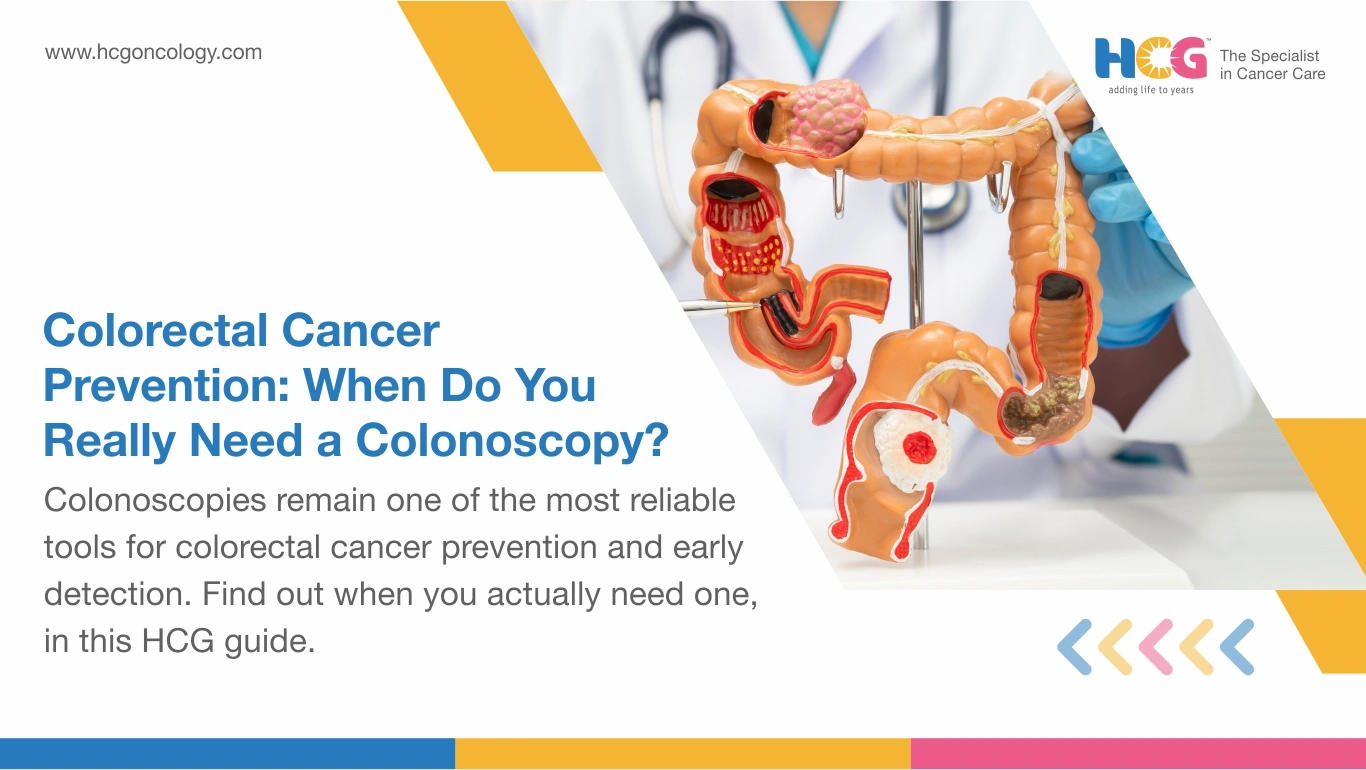
Colorectal Cancer Prevention: When Do You Really Need a Colonoscopy?

05 May, 2026

Table of Contents

Overview

Colorectal cancer screening is the most clinically actionable step you can take against a cancer that grows slowly and, in most cases, predictably. Nearly every case begins as a small mucosal growth called an adenomatous polyp, which takes 10 to 15 years to become invasive. Its slow growth rate aids in early detection. When caught in a polyp stage, this cancer type is highly treatable with excellent health outcomes.

Current guidelines set the average-risk start age at 45 years. Rectal bleeding or a lasting change in bowel habits warrants evaluation at any age.

Key Highlights

  • Most colorectal cancers develop from adenomatous polyps that are fully removable before malignancy begins.
  • The American Cancer Society updated its screening start age to 45 in 2021, down from 50.
  • A colonoscopy is the only test that both detects and removes polyps in a single procedure.
  • Individuals with Lynch syndrome or a first-degree relative diagnosed before age 60 should begin screening at 40 or 10 years before that relative's age at diagnosis, whichever comes first.
  • Specialists at HCG's Gastrointestinal Oncology department recommend colonoscopy to improve adenoma detection rates beyond what standard endoscopy achieves.

What is Colorectal Cancer?

Colorectal cancer is a malignancy of the colon or rectal lining. Nearly all cases follow the adenoma-to-carcinoma sequence: healthy tissue develops a polyp, the polyp acquires mutations over the years, and development of cancer happens. Remove the polyp early, and the cancer does not develop.

In summary, colorectal cancer is one of the few malignancies where active intervention at the precancerous stage prevents the disease outright, not merely catches it earlier.

Early Signs of Colon Cancer: What to Watch For

Early-stage colorectal cancer often produces no symptoms at all, and when they do appear, they include the following:

  • Bloody stools (which may look dark and tarry, not just bright red)
  • A dull, persistent ache low in the abdomen
  • Unexplained fatigue from slow blood loss
  • Stool that has become consistently narrow or ribbon-thin

Rectal bleeding is routinely blamed on hemorrhoids and ignored. That is a clinically significant error. Any bleeding lasting more than two to three weeks, especially alongside a sensation of incomplete emptying, needs a gastroenterological assessment.

Polyps vs. Cancer: The Key Difference

Polyps are common, and most of them never cause a problem. But a specific type, when left undetected, follows a predictable path toward malignancy, and understanding that distinction is what makes screening worth taking seriously. For each polyp type, doctors provide specific recommendations, and it is important that individuals follow those recommendations.

Polyp Type Malignant Risk Recommended Action
Hyperplastic Very low Monitor only
Adenomatous (tubular) Moderate Excise during colonoscopy
Adenomatous (villous) High Excise with close surveillance
Sessile serrated Moderate to high Excise and surveil

Who Needs Colorectal Cancer Screening and When?

Average-risk adults should begin colorectal cancer screening at age 45. High-risk individuals must start earlier.

  • Average risk: No personal or family history of colorectal cancer, no inflammatory bowel disease, no known hereditary syndrome.
  • Elevated risk: A first-degree relative diagnosed with colorectal cancer or advanced adenomatous polyps before age 60. Start screening at 40, or 10 years before that relative's diagnosis age, whichever is earlier.
  • High risk: Confirmed Lynch Syndrome, Familial Adenomatous Polyposis (FAP), or personal history of colorectal cancer. These patients require individualized surveillance, typically a colonoscopy every one to two years from early adulthood onward.

Colorectal Cancer Screening Options Compared

There are multiple tests available for colorectal cancer screening. Each has a different purpose, frequency, and follow-up requirement.

Test Frequency Key Limitation
Colonoscopy Every 10 years for average-risk adults from age 45; every 3 to 5 years if polyps are found Requires bowel prep and sedation
Fecal Immunochemical Test (FIT) Annually Detects blood, not polyps directly
Stool DNA (FIT-DNA) Every 1 to 3 years Higher cost; positive result needs a colonoscopy
Flexible sigmoidoscopy Every 5 years Examines the lower colon only
CT colonography Every 5 years Cannot remove polyps; needs follow-up if abnormal

Colonoscopy Procedure Steps: What Actually Happens

A colonoscopy takes 20 to 45 minutes and involves four clinical stages.

  1. Bowel Preparation (the evening before): A laxative solution clears the colon. Most patients find this the most uncomfortable part, not the procedure itself.
  2. Sedation: Intravenous sedation is administered. The majority of patients retain no memory of the scope.
  3. Mucosal Survey: The endoscopist advances a flexible, camera-equipped tube from the rectum to the cecum, inspecting the entire colonic lining during withdrawal.
  4. Polyp Removal: Identified adenomatous polyps are excised using electrocautery snares or biopsy forceps. Tissue is submitted for histopathological review.

Recovery in the clinical suite takes 30 to 60 minutes. Patients cannot drive the same day.

The Gastrointestinal Oncology department at HCG has advanced colonoscopy facilities, which allow specialists to capture even subtle mucosal irregularities that may need further evaluation.

Is a Colonoscopy Painful?

For most patients, a colonoscopy is not painful. Most patients feel little to no discomfort, as this procedure is typically performed under sedation. Post-procedure bloating and mild cramping resolve within a few hours as residual air passes.

The bowel preparation the night before is routinely described as more unpleasant than the scope itself. Modern split-dose protocols have made even this substantially more tolerable than older single-dose regimens.

Preventing Colorectal Cancer with Diet and Lifestyle

Diet, physical activity, and body weight measurably influence colorectal cancer risk. None of these factors replaces formal screening, but together they strengthen your biological defenses.

The following measures can help you reduce your colorectal cancer risk:

  • Eating more vegetables, legumes, and whole grains
  • Reducing the intake of processed and charred red meat
  • Limiting alcohol consumption
  • Staying physically active reduces inflammation and keeps the digestive system healthy
  • Maintaining optimum body weight
  • Quitting tobacco consumption

Cost of Colorectal Cancer Screening in India

Costs vary by test modality, city, and facility type.

  • FIT (stool blood test): Rs. 300 to Rs. 800
  • Colonoscopy with sedation: Rs. 6,500 to Rs. 30,000 in metro centers; lower in Tier-2 cities

Costs vary by hospital, location, and patient profile. For a detailed cost estimate, we recommend that you speak to the hospital team directly.

HCG Cancer Hospital's Recommendations if You Are Planning for Colorectal Cancer Screening

For many patients, the next helpful step is a structured conversation with a gastroenterologist. At HCG Cancer Hospital, we offer comprehensive colorectal cancer screening facilities. Additionally, we also offer cancer screening packages, with which you can screen for multiple cancers, including colorectal cancer screening, at once.

Before your appointment, take these five steps:

  1. Note your family history: any first-degree relative with colorectal cancer or polyps and their age at diagnosis.
  2. If you are 45 or older and unscreened, ask for a colonoscopy referral or discuss which non-invasive test suits your risk profile.
  3. Report any bowel symptoms lasting more than two to three weeks, including rectal bleeding, narrow stools, or unexplained fatigue.
  4. Ask your gastroenterologist about the colorectal cancer screening facilities available and which approach is right for you.
  5. Review your dietary and lifestyle habits and ask for a nutrition referral if structured dietary guidance would help.

Frequently Asked Questions

A clean colonoscopy significantly lowers near-term risk but does not eliminate lifetime risk. New adenomatous polyps can develop over time. Adhering to your recommended surveillance interval is important for early detection and timely management of colorectal cancer.

Lynch syndrome is an inherited mutation in the mismatch repair gene that substantially increases the risk of colorectal cancer and other cancers. If you have Lynch syndrome, your first-degree relatives should consult a genetic counselor about testing.

Yes. Incidence in adults under 50 has risen over recent decades. Persistent rectal bleeding, unexplained weight loss, or lasting abdominal discomfort at any age warrants clinical evaluation without waiting for the standard screening age.

FIT detects blood in stool with reasonable sensitivity for cancer but lower sensitivity for precancerous adenomatous polyps. Annual repetition is required, and any positive FIT result mandates a diagnostic colonoscopy to be clinically meaningful.

Mild cramping and flatulence for a few hours are expected and normal. Significant pain, fever, or heavy rectal bleeding after a polypectomy is uncommon and should be reported to your clinical team promptly.

References

Disclaimer: This information is intended to educate patients and caregivers. It does not replace professional medical advice. All treatment decisions should be made in consultation with a qualified doctor.

Other Blogs

Didn't find what you were looking for?

Feel free to reach out to us.

+91
Or reach us directly
Chat With Us
WhatsApp Icon