30 Jul, 2026
30 Jul, 2026
No single food directly causes cancer. But eating certain foods regularly over many years can gradually create conditions in the body that make cancer more likely to develop. These include chronic inflammation, DNA damage, weight gain, and hormonal shifts.
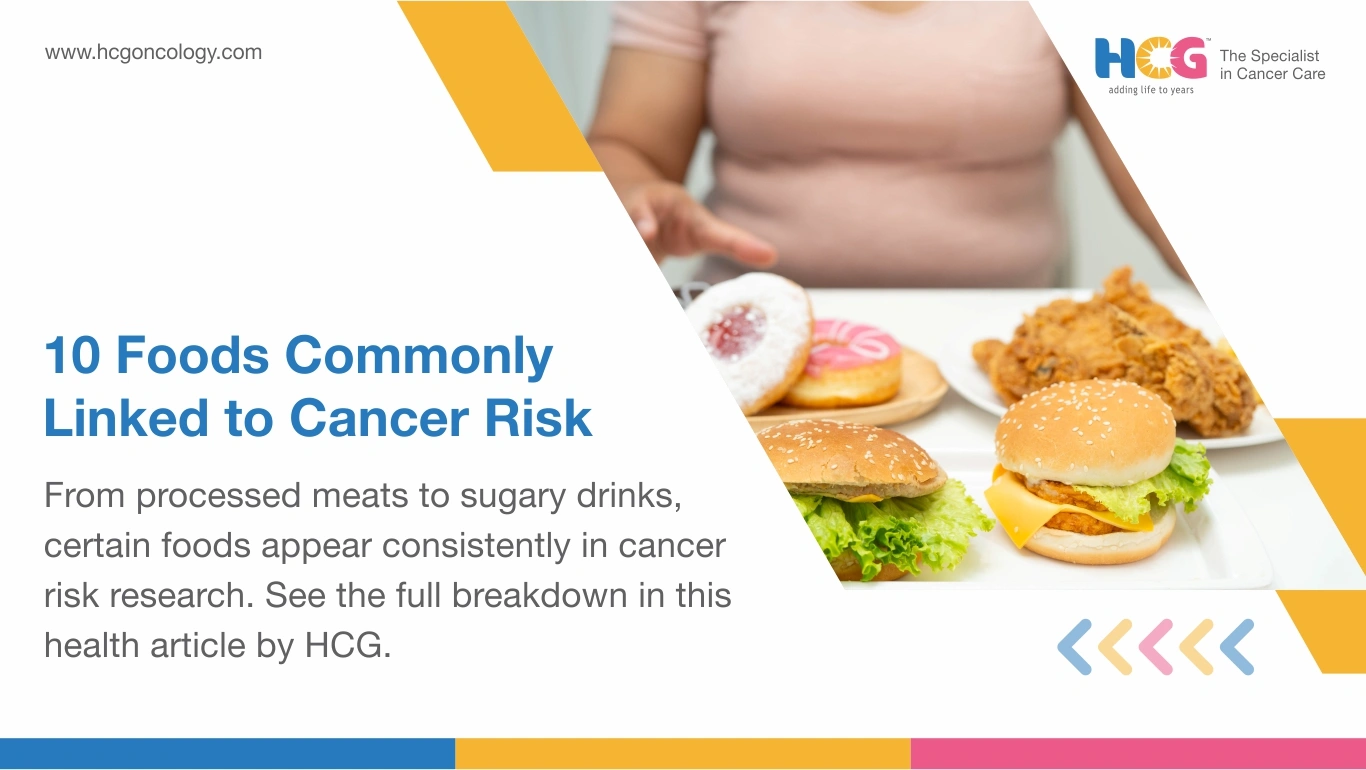
This guide covers 10 foods and food categories that research has consistently linked to a higher cancer risk. None of them needs to be cut out entirely. The point is to recognize which ones are worth limiting, especially when they become part of a daily habit.
These include bacon, sausages, hot dogs, salami, ham, and deli meats.
The International Agency for Research on Cancer (IARC) classifies processed meats as Group 1 carcinogens, the same category as tobacco and alcohol.
The link is strongest for colorectal cancer. Nitrites and nitrates used to cure these meats can form N-nitroso compounds in the body, which may damage the DNA of cells lining the colon.
Try instead: Eggs, legumes, fresh chicken, or grilled fish.
Red meat includes beef, pork, lamb, and mutton.
IARC classifies red meat as Group 2A, meaning it is probably carcinogenic to humans, with the strongest link to colorectal cancer.
The risk goes up when red meat is cooked at very high temperatures or until it is charred. Occasional servings are unlikely to be a major concern. The issue is frequent, with large portions.
Try instead: Lentils, beans, fish, or poultry as your main protein on most days.
Alcohol is one of the most clearly established diet-related cancer risks. The body converts alcohol into acetaldehyde, a compound that can directly damage DNA.
Regular drinking is linked to cancers of the mouth, throat, esophagus, liver, breast, and colon. No amount of alcohol is fully without cancer risk.
Try instead: Sparkling water with lime, herbal teas, or unsweetened mocktails.
Sodas, sweetened juices, energy drinks, and flavored beverages deliver a large amount of sugar quickly, with very little nutritional value.
Regular consumption is associated with weight gain, insulin resistance, and a higher risk of cancers including endometrial, breast, and colorectal.
Excess body fat itself is linked to at least 13 different types of cancer.
Try instead: Plain water, infused water, buttermilk, or unsweetened tea.
These include packaged snacks, instant noodles, sugary cereals, ready meals, and chips. They tend to be high in salt, sugar, and unhealthy fats, with very little fiber.
People who consume large amounts of ultra-processed foods regularly may face a somewhat higher risk of certain cancers, partly through their contribution to obesity and chronic inflammation.
Try instead: Whole grains, fresh fruits, seasonal vegetables, nuts, and home-cooked meals.
When meat is grilled, barbecued, or pan-fried at very high heat until blackened, two harmful compounds can form: heterocyclic amines (HCAs) and polycyclic aromatic hydrocarbons (PAHs). Both can damage DNA, which is considered an early step in cancer development.
Try instead: Marinate meat before cooking, use lower temperatures, and trim away blackened portions before eating.
When starchy foods like potatoes, bread, and cereals are fried or roasted at very high temperatures, they can form a compound called acrylamide.
Common sources include french fries, potato chips, and heavily browned toast. Animal studies have shown acrylamide can cause cancer, and some human studies suggest a possible link to kidney, endometrial, and ovarian cancers.
Try instead: Boiled, steamed, or lightly roasted potatoes and whole-grain toast that is not heavily browned.
Foods preserved with high salt content, such as traditional pickles, salted fish, and certain cured meats, have been linked to a higher risk of stomach cancer. The risk relates to both the preservation method and the resulting damage to the stomach lining over time.
Try instead: Fresh herbs, lemon, garlic, and spices to add flavor instead of relying on salt-heavy preservation.
Foods made from white flour and refined sugar, including white bread, sweet biscuits, pastries, sugary cereals, and most commercial sweets, cause rapid blood sugar spikes and contribute to weight gain over time.
Consistently high insulin levels and elevated IGF-1 can create a hormonal environment that may encourage abnormal cell growth.
Try instead: Whole grains like jowar, bajra, ragi, brown rice, oats, and whole-wheat atta.
Trans fats are found in many commercially baked goods, fried snacks, margarine, and foods cooked in repeatedly reheated oils. They raise inflammation in the body, which is one of the mechanisms linked to long-term cancer risk.
India's Food Safety and Standards Authority (FSSAI) has set limits on the trans-fat content of food products to address this concern.
Try instead: Cold-pressed oils, mustard oil, or olive oil. Avoid using the same oil for repeated frying.
Several of these foods show up in distinctly Indian forms, including salt-heavy pickles, deep-fried snacks, sweets made with refined sugar, packaged namkeen, and reheated frying oils.
Alongside diet, chewable tobacco, betel quid, and areca nut are major contributors to oral and oropharyngeal cancers in India, and are classified by IARC as Group 1 carcinogens.
The ICMR-NIN Dietary Guidelines for Indians (2024) recommend limiting ultra-processed foods, added sugar, and salt, while increasing intake of pulses, vegetables, fruits, and whole grains.
Food choices alone do not determine whether someone develops cancer. Genetics, environment, lifestyle, tobacco use, and access to early detection all play a role. Diet is one of the few risk factors that an individual can actively modify.
At HCG Cancer Hospital, oncology care extends beyond treatment to include early detection, screening, and survivorship support. Through a network of Comprehensive Cancer Centers operating on a Hub and Spoke Model, HCG brings together medical, surgical, and radiation oncology specialists who collaborate through the National Tumor Board to evaluate each patient's clinical profile in detail.
For individuals with a family history of cancer, ongoing dietary or lifestyle concerns, or symptoms that need evaluation, a consultation with a qualified oncologist is the appropriate next step.
To consult an oncologist at the HCG Cancer Hospital nearest to you, visit www.hcgoncology.com or speak with the HCG care team.
Disclaimer: This content is intended for informational purposes only and does not substitute professional medical advice. Treatment decisions should be made in consultation with a qualified oncologist.
Feel free to reach out to us.