25 Aug, 2026
25 Aug, 2026

This article is medically reviewed by Dr Darshana Rane, Consultant Medical Oncology.
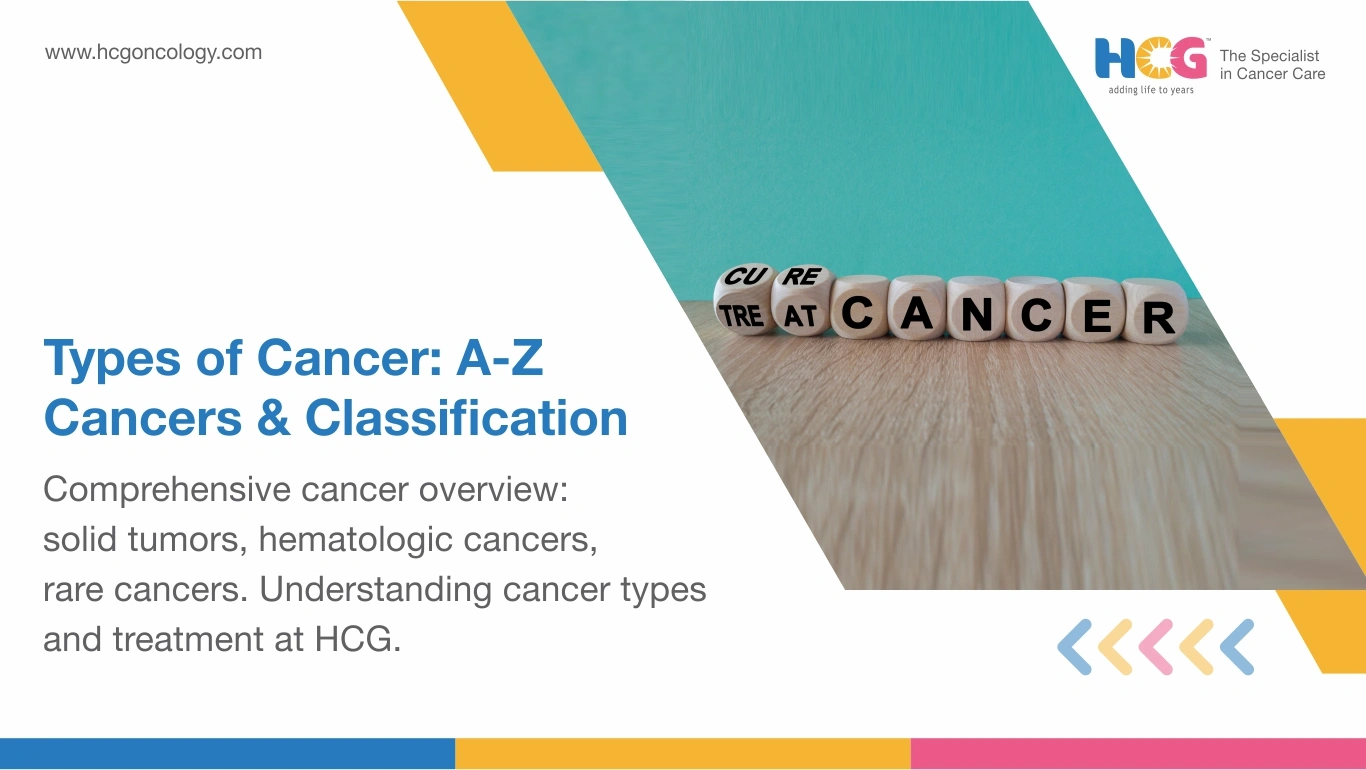
Cancer refers to a large group of diseases that can begin in different parts of the body and behave in very different ways. Some cancers grow slowly, while others spread aggressively. Breast cancer and blood cancers differ significantly in their development, treatment approaches, and clinical outcomes.
According to the National Cancer Institute, more than 100 types of cancer have been identified, usually classified by where they begin and the type of cells involved. Because cancer can develop almost anywhere in the body, diagnosis and treatment are not the same for every patient.
In India, cancers such as breast, lung, and oral cancer account for a significant number of new diagnoses each year. Understanding the different types of cancer can help explain why screening methods, staging, and treatment plans vary widely from one case to another.
There are many types of cancer in the human body, and they are classified based on the organ, tissue, or cell type where the disease begins. The major cancer types are outlined below.
| Category | Origin | Examples |
|---|---|---|
| Carcinoma | Epithelial cells (skin, organ linings) | Breast, lung, colon, prostate |
| Sarcoma | Bone, muscle, fat, connective tissue | Osteosarcoma, soft tissue sarcomas |
| Leukemia | Blood-forming tissue (bone marrow) | ALL, CML, AML |
| Lymphoma | Lymphatic system | Hodgkin's, non-Hodgkin's |
| Myeloma | Plasma cells in bone marrow | Multiple myeloma |
| Melanoma | Pigment-producing skin cells | Cutaneous melanoma |
| Blastomas | Embryonic tissue | Neuroblastoma, retinoblastoma |
The most common by far are carcinomas, accounting for roughly 80 to 90 percent of all cancers.
Globally, breast cancer remains one of the most commonly diagnosed cancers in women. Cervical cancer is also highly prevalent in many developing countries, including India, where screening rates are still lower than recommended. Ovarian and colorectal cancers are also among the major health concerns for women.
Many of these cancers can be detected early through regular screening. Cervical cancer, in particular, is one of the few cancers that can often be prevented through routine Pap smears and HPV testing.
Among men, lung cancer remains one of the most commonly diagnosed cancers, particularly in smokers. Prostate cancer is also common in older men, although many cases grow slowly and may not always require aggressive treatment immediately. Oral cancer ranks unusually high in India due to tobacco and betel nut use.
Colorectal cancer incidence is increasing across multiple age groups. Lung and colorectal cancers remain among the most commonly diagnosed cancers in both men and women. However, risk factors and screening uptake vary considerably based on lifestyle, geography, and healthcare access.
Not every tumor is cancerous. “Benign vs. malignant” is usually the first distinction doctors make when a tumor is detected. A benign tumor stays localized, does not invade nearby tissue, and is usually not life-threatening. A malignant tumor, on the other hand, can invade surrounding tissue and undergo metastasis, meaning it can spread to other parts of the body through the blood or lymphatic system.
A benign mass can still cause problems if it presses against nearby organs, nerves, or blood vessels. Even when a growth is not cancerous, doctors may still recommend monitoring depending on its size, location, and symptoms.
A biopsy is the only way to confirm whether a growth is benign or malignant. If cancer is confirmed, doctors then use cancer staging to determine how far the disease has spread in the body.
Blood cancers don't form solid tumors. Instead, they affect how blood cells are produced and function
Leukemia starts in the bone marrow and floods the bloodstream with abnormal white cells.
Lymphoma attacks the lymphatic system, often showing up as painless, swollen lymph nodes.
Third, myeloma targets plasma cells, weakening bones and immune function over time.
Each has subtypes with very different behavior. A slow-moving chronic leukemia behaves nothing like an aggressive acute form. The term "leukemia" encompasses multiple diseases with distinct biological characteristics and treatment approaches.
Sarcomas make up less than 1% of adult cancers. Blastomas, like neuroblastoma and retinoblastoma, primarily affect children. Rare cancers are often harder to diagnose because most doctors simply don't see them often enough to recognize them quickly. Experience matters, and rare cancers require specialized teams. Genetic mutations play a larger role in rare cancers, which is why oncology teams increasingly rely on molecular testing.
No two cancers present in the same way. First, carcinomas in organs like the lung or colon often show up as a persistent cough, blood in the stool, or unexplained weight loss. Second, blood cancers tend to cause fatigue, recurrent infections, and easy bruising. Third, sarcomas can present as painless lumps that grow over time.
Age also plays a role in the types of cancer people develop. Blastomas are more common in children. Melanoma affects younger adults more often than many other solid tumors. Some of the fastest-growing cancers include pancreatic and certain lung cancers, where symptoms may appear late, and the disease can progress quickly.
Types of cancer in young adults are rising globally, with colorectal and thyroid cancers increasing in people under 40. Symptoms in younger adults are sometimes overlooked because cancer is considered less likely at a younger age, which can delay testing for months. Symptoms that continue for more than two to three weeks without a clear reason should not be ignored, regardless of age.
Oncology teams across HCG Cancer Hospital handle the full range of major cancer types. From carcinomas to sarcomas to blood cancers, treatment plans are built around cancer staging, molecular profiling, and overall patient health. In some cases, a person can develop more than one type of cancer, and multidisciplinary teams at the hospital are equipped to manage complex cases like these.
Treatment is only one part of cancer care. HCG Cancer Hospital also offers preventive screening programs, genetic counseling for patients with hereditary risk factors, and follow-up surveillance after treatment is complete. Early detection paired with accurate classification gives patients the best chance at favorable outcomes.
Knowing the types of cancer and what to watch for won't prevent disease on its own. However, understanding cancer types and early symptoms can encourage earlier screening and evaluation
Book a consultation at your nearest HCG Cancer Hospital center.
Disclaimer: This article is for general informational purposes only and is not a substitute for professional medical advice, diagnosis, or treatment. Please consult a qualified healthcare provider for any questions regarding a medical condition.
Dr Darshana Rane
Consultant Medical Oncology
Appointment Link: Book an Appointment with Dr Darshana Rane
Feel free to reach out to us.