30 Jul, 2026
30 Jul, 2026
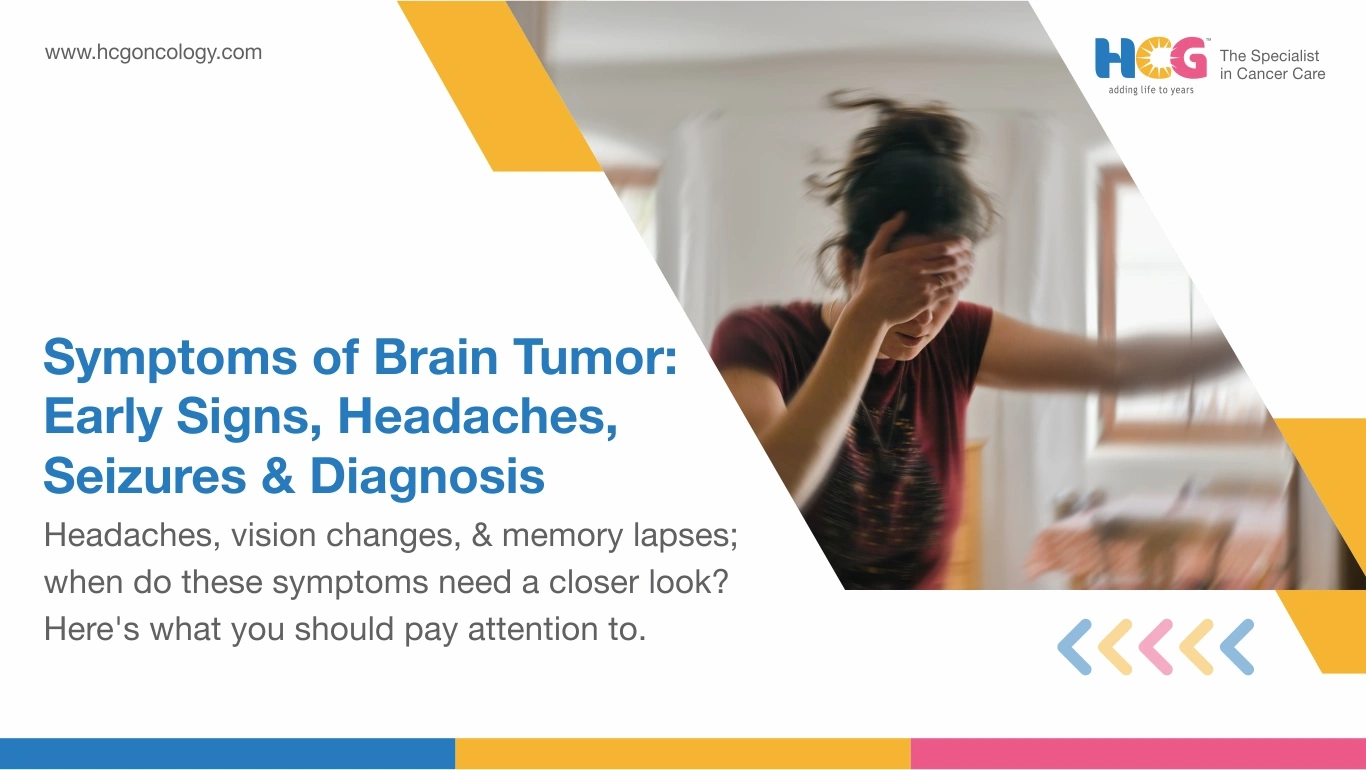
Headaches that won't quit. A seizure out of nowhere. Vision that blurs for no clear reason. Balance that feels off some mornings. A personality shift that the family notices before you do. These are the symptoms people bring up when brain tumors come into the conversation. Most of the time, none of them point to a tumor. But the pattern, the way they stack up, and how long they stick around, those are what matter.
Quick note before we go further. Brain tumors come in two kinds, benign and malignant. A brain tumor refers to any abnormal growth in the brain, whether benign or malignant. Brain cancer specifically refers to malignant tumors that grow aggressively and may spread. The symptoms can look the same in many cases. Treatment, though, depends entirely on what type shows up on the scan.
Brain and Central Nervous System (CNS) tumors aren't the most common cancers, but they aren't as rare as people assume. GLOBOCAN 2022 from the IARC put the global figure at around 321,000 new brain and CNS cancer cases for that year, with wide variation between regions. Back home, ICMR data places CNS tumors at roughly 2 percent of all cancers in India, with incidence going up as people get older and a slight lean toward men.
A common assumption most people carry is that brain tumor warning signs will be obvious. They usually aren't. Early symptoms tend to look like things you've already lived with. A rough headache. A foggy morning. A clumsy moment. The thing that sets them apart is that they don't go away.
Symptoms that keep coming back or slowly get worse over a few weeks are the ones worth paying attention to. Tumor growth inside the skull creates pressure, and the part of the brain it presses on shapes what the person feels. That's why two people with brain tumors can end up with totally different stories.
| Early Brain Tumor Symptom | How It May Appear |
|---|---|
| Headache pattern | Worse in the morning, often eases by the afternoon |
| Cognitive | Small memory slips, trouble concentrating, missing words |
| Motor | Faint weakness or coordination changes on one side |
| Sensory | Blurry or double vision, mild hearing shifts, ringing in the ears |
| Mood and behavior | Irritability, withdrawal, out-of-character reactions |
| Neurological events | First-time seizure in adulthood |
Awareness table, not a self-diagnosis tool. Most of these symptoms have far more common causes than a tumor.
The earliest clues tend to be the following:
None of these on their own means a tumor. When a few show up together, though, or stick around for weeks, that's when seeing a doctor starts to matter.
Slow-growing tumors usually take their time. Symptoms build up over many months. The more aggressive ones, certain glioma types, for instance, can show up with a sudden seizure or a quick neurological event without much warning.
A sudden seizure. One-sided weakness out of nowhere. Vision loss that drops in fast. New confusion in someone otherwise healthy. All of these need urgent medical evaluation. The combination and pattern of symptoms usually says more about what's going on than how fast they appear.
These symptoms rarely arrive as big events. They show up as small disruptions in ordinary routines. Trouble holding focus during a meeting. A small speech hesitation that wasn't there last month. A change in handwriting. Walking that feels just slightly off. Family members often catch the mood changes before the person does.
It's the impact on daily function, more than the symptom itself, that usually drives someone to call a doctor.
In adults, the pattern tends to look like this. Morning headaches that ease through the day. Nausea that doesn't tie to anything you ate. Weakness is creeping in on one side. Focus on issues at work that weren't there a few months ago. Some people find their speech slowing down or notice cognitive changes that weren't there before.
Personality shifts? Almost always picked up first by spouses, close colleagues, or friends. Rarely by the person themselves.
Quiet symptoms get ignored most often. Slight hearing changes. A faint ring in the ear. Feeling a little unsteady. Losing a word mid-conversation. Easy to put down to stress, age, or a bad sleep.
In many cases, those symptoms turn out to have more common explanations. Most people noticing these things do not have a brain tumor. The reassurance, though, comes from getting checked. Not from waiting it out. A short neurological exam can sort the picture quickly and save months of unnecessary worry.
Some symptoms need urgent medical attention, especially when they involve neurological changes that persist or worsen over time. While everyday issues like stress, dehydration, or screen fatigue can cause temporary discomfort, certain patterns should never be ignored.
| Brain Tumor Warning Signs | Common Non-Tumor Causes |
|---|---|
| Morning headaches with nausea or vomiting | Headache from too much screen time |
| First-time seizure in an adult | Lightheadedness from dehydration |
| Gradual personality or behavior changes over weeks | Mood changes tied to stress |
| Persistent one-sided weakness or numbness | Pins and needles from poor posture |
| Persistent double vision or unexplained vision loss | Eye strain that improves with rest |
When to See a Doctor
Seek medical evaluation if symptoms
These warning signs do not always point to a brain tumor, but they should be evaluated promptly by a neurologist or neuro-oncology specialist.
Yes. It can. Tumors sitting in the frontal lobe can slowly affect behavior and how someone manages their emotions. Less impulse control. More irritability. Withdrawal. Reactions that feel out of character. The pattern usually shows up in the family before the person picks it up themselves.
Writing down what's been noticed, even small things, helps the neurologist piece together what's going on.
Yes, but most headaches aren't. Most have ordinary causes: migraine, tension, and sinus stuff. Brain tumor headaches usually share a specific look. They get worse when lying down. They peak in the morning. Regular painkillers don't do much. They build in intensity over a few weeks. And nausea or vision changes often come along for the ride.
A headache that feels different from anything you've had before, especially when other neurological symptoms tag along, that's the one worth a closer look.
Tumors can irritate nearby brain tissue, throwing off the brain's normal electrical patterns. Seizures can show up in lots of ways. A brief staring spell. Odd sensations. A full-body convulsion. A first-time seizure in an adult, especially with no prior neurological history, usually requires urgent medical evaluation. Imaging may be recommended based on the clinical assessment.
Focal or generalized, the type of seizure often points the neurologist toward the brain region that might need closer scanning.
Diagnosis usually moves through a few clear steps:
Triesta Sciences supports diagnostic accuracy through CAP- and NABL-accredited testing, including molecular profiling that informs personalized treatment direction.
It can. Especially when it comes paired with headaches or balance issues. Tumors near the optic pathway, pituitary, or occipital lobe can affect sight in particular ways. Double vision. Holes in peripheral vision. Sudden trouble reading.
Vision symptoms are best looked at together with any accompanying headaches or balance changes. A routine eye exam sometimes picks up the earliest clue, which is one reason regular eye check-ups remain worth doing.
Brain tumors do not have one established cause. The known contributors include certain inherited genetic syndromes, past therapeutic radiation exposure to the head, and getting older. Plenty of brain tumors show up with no clear reason behind them.
While causes are often unclear, symptom progression may differ depending on tumor behavior. Symptoms of malignant brain tumors tend to progress faster than those associated with slower-growing tumors. Intracranial pressure builds, and that can show up as vomiting, drowsiness, worsening headaches, seizures, or rapid neurological decline within a short window.
Lifestyle isn't usually a direct cause of most brain tumors. Staying generally healthy still helps support better outcomes if treatment turns out to be part of the journey.
Care at HCG Cancer Hospital follows a coordinated, multidisciplinary path. The Surgical Oncology Department handles tumor removal where surgery is possible. The Radiation Oncology Department uses precise systems like CyberKnife and Radixact to direct radiation while protecting nearby healthy tissue. The Medical Oncology Department runs chemotherapy and the supporting drug protocols.
Neurosurgery, neuroradiology, and rehabilitation specialists all sit at the same table through the National Tumor Board, with Triesta Sciences supporting diagnostic precision. Across the 25 Comprehensive Cancer Centers operating under the Hub and Spoke Model, patients can reach specialized neuro-oncology care closer to where they live.
After diagnosis, the next step is usually a structured consultation to talk through tumor type, grade, and the right treatment direction.
Brain health awareness, at its core, means noticing when neurological symptoms hang on or get worse, instead of brushing them aside. Early recognition of the symptoms covered in this guide, paired with timely evaluation, supports better diagnostic and treatment outcomes.
World Brain Tumor Day, observed every year on June 8, focuses on improving awareness, early detection, and access to neurological care.
Disclaimer: This article is for general informational purposes only and is not a substitute for professional medical advice, diagnosis, or treatment. Please consult a qualified healthcare provider for any questions regarding a medical condition.
Feel free to reach out to us.