02 May, 2026
02 May, 2026
When most people hear the word "chemotherapy," they picture a hospital drip and a difficult few months. That image is incomplete. Chemotherapy is not one drug or one experience. It is a collection of treatments, each designed around a specific weakness in how cancer cells grow and survive. Some drugs physically destroy the genetic blueprint inside tumor cells. Others slip past cellular defenses disguised as harmless nutrients. A few cut off the hormonal supply lines that certain cancers depend on entirely. Which types of chemotherapy get prescribed come down to your tumor's biology, how far the disease has progressed, and what the treatment is actually trying to achieve.
| Class | What It Does | Key Drugs | Used For |
|---|---|---|---|
| Alkylating Agents | Fuses DNA strands, blocking replication | Cisplatin, Cyclophosphamide | Lung, breast, ovarian, lymphoma |
| Antimetabolites | Feeds cells a fake building block that jams synthesis | Methotrexate, 5-FU, Gemcitabine | Leukaemia, GI, pancreatic |
| Plant Alkaloids | Disables the spindle that separates chromosomes | Vincristine, Paclitaxel | Breast, ovarian, and blood cancers |
| Antitumor Antibiotics | Wedges into DNA and releases cell-destroying radicals | Doxorubicin, Bleomycin | Lymphoma, sarcoma, breast |
| Topoisomerase Inhibitors | Traps the enzyme that uncoils DNA, leaving permanent breaks | Irinotecan, Etoposide | Colorectal, lung, ovarian |
| Hormonal Agents | Cuts off hormone signals that feed tumor growth | Tamoxifen, Letrozole | Breast, prostate cancer |
Think of DNA as a ladder. Alkylating agents chemically weld both rails together so tightly that the cell cannot pull them apart to copy its own instructions. Division stalls, the cell triggers its own death sequence, and the body clears the wreckage.
Cisplatin and carboplatin, the platinum-based versions, are workhorses in ovarian, bladder, and lung cancer treatment.
Common confusion: These drugs do not dissolve tumors on contact. They stop replication; the body handles clearance from there.
Cancer cells divide rapidly and burn through nucleotides — the raw units of DNA construction — at a high rate. Antimetabolites exploit that demand. Structurally, they resemble genuine nucleotides closely enough that the cell absorbs them without suspicion. Once inside the replication machinery, synthesis locks up completely.
Methotrexate starves cells of the folate cofactors needed to assemble new DNA. Gemcitabine mimics a pyrimidine building block and is central to pancreatic cancer protocols.
Every dividing cell builds a mitotic spindle, a protein scaffold whose job is to physically drag chromosomes to opposite ends before the cell splits. Plant alkaloids go after this scaffold rather than the DNA itself.
Vinca alkaloids, like vincristine, dissolve spindle fibers. Taxanes like paclitaxel do the opposite, freezing them so rigidly that the scaffold cannot flex. Either result leaves chromosomes stranded and division impossible. Paclitaxel and docetaxel anchor breast and ovarian cancer regimens across most treatment settings.
Originally isolated from soil bacteria, these agents attack cancer on two fronts. They physically insert themselves between DNA base pairs, distorting the strand's architecture so it cannot be read. Simultaneously, they release free radicals that slice through the strand itself.
Doxorubicin compounds the damage further by blocking topoisomerase II, an enzyme the cell needs to manage DNA coiling. Bleomycin concentrates its activity in the moments just before and during cell division.
As DNA replicates, coiling tension builds up along the helix, the way a rubber band twists under repeated winding. Topoisomerase enzymes manage this by making controlled cuts and resealing them. Topoisomerase inhibitors trap the enzyme mid-cut, leaving breaks the cell cannot repair.
Irinotecan targets topoisomerase I and features prominently in colorectal cancer regimens. Etoposide targets topoisomerase II and is central to small-cell lung cancer treatment.
Some cancers carry no independent growth engine. ER-positive breast cancers run almost entirely on circulating estrogen. Certain prostate cancers depend on testosterone in the same way. Hormonal agents withdraw that fuel rather than attacking cells directly.
Tamoxifen occupies estrogen receptors without activating them, blocking the signal at the source. Aromatase inhibitors like letrozole suppress estrogen production in peripheral tissue altogether.
In summary:A patient taking tamoxifen as a daily tablet is receiving active systemic chemotherapy. The format does not diminish the treatment.
| Route | What Happens | Suited For |
|---|---|---|
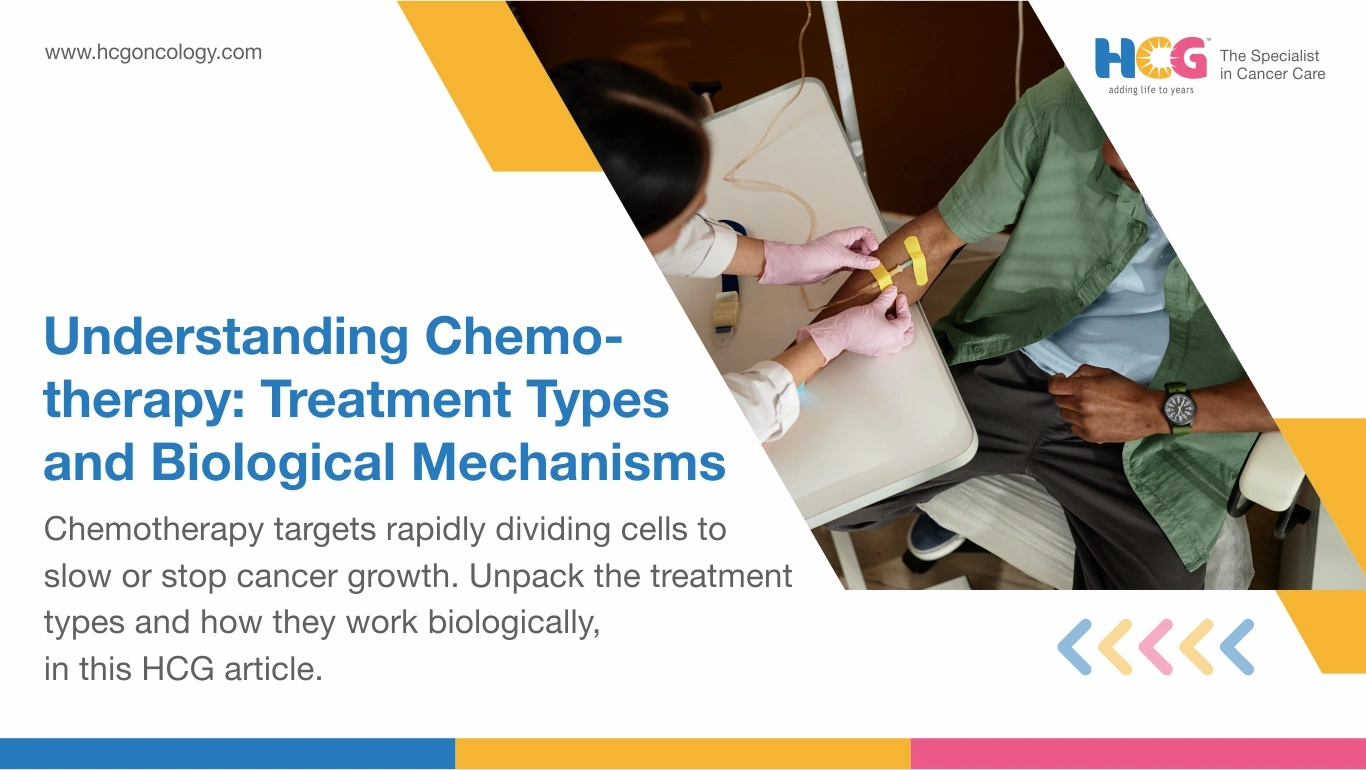
| Intravenous (IV) | Drip into a vein under clinical supervision | Most solid and blood cancers |
| Oral | Tablet or capsule at home | CML, certain breast and kidney cancers |
| Intrathecal | Injected into the cerebrospinal fluid | Leukaemia CNS treatment, CNS lymphoma |
| Intraperitoneal | Delivered into the abdominal cavity | Ovarian, peritoneal, colorectal |
| Intra-arterial | Into the artery supplying the tumor | Liver tumors, head and neck |
| Intravesical | Through a catheter into the bladder | Superficial bladder cancer |
| Topical | Cream applied to the skin surface of lesions | keratosis, actinic keratosis, skin cancers |
Oral chemotherapy is not a lighter version of IV treatment. Potency is identical. The route simply reflects how that specific molecule reaches tumor tissue most reliably.
Common confusion: Palliative chemotherapy is not giving up. It is a structured, active treatment with a clearly defined goal.
Bone marrow suppression during chemotherapy reduces white cell, red cell, and platelet production. Scheduled blood count checks are not an administrative formality; they are how the clinical team catches problems before they become dangerous.
Weight loss and appetite disruption follow most regimens. Bringing a clinical dietitian in at cycle one, rather than reactively once problems appear, meaningfully improves patients' capacity to complete the full course.
Psycho-oncology support reduces premature treatment dropout. The emotional weight of sustained chemotherapy is real, and professional counseling helps patients carry it without breaking the treatment schedule.
Fertility preservation, or egg or sperm banking, must be arranged before the first cytotoxic dose for patients of reproductive age. Raising it afterward is too late for most protocols.
Standard regimens cost between ₹3,000 and ₹200,000+ per cycle. Complex IV regimens using platinum compounds or biological agents can exceed ₹150,000 per cycle in metro hospitals.
Tier-2 cities carry lower facility charges. Ayushman Bharat and most private health policies cover the listed chemotherapy drugs. Costs vary by hospital and patient profile. Always request an itemized written estimate before committing to a regimen.
In cancer care, HCG focuses on matching every chemotherapy decision to three foundations: precise molecular tumor profiling, full multidisciplinary team consensus, and supportive care structured from the first treatment day. The six drug classes and seven delivery routes described here are the working vocabulary of oncology. Patients who understand them ask sharper questions, make steadier decisions, and complete treatment with far fewer surprises.
Disclaimer: This information is intended to educate patients and caregivers. It does not replace professional medical advice. All treatment decisions should be made in consultation with a qualified doctor.
Feel free to reach out to us.