30 Jul, 2026
30 Jul, 2026
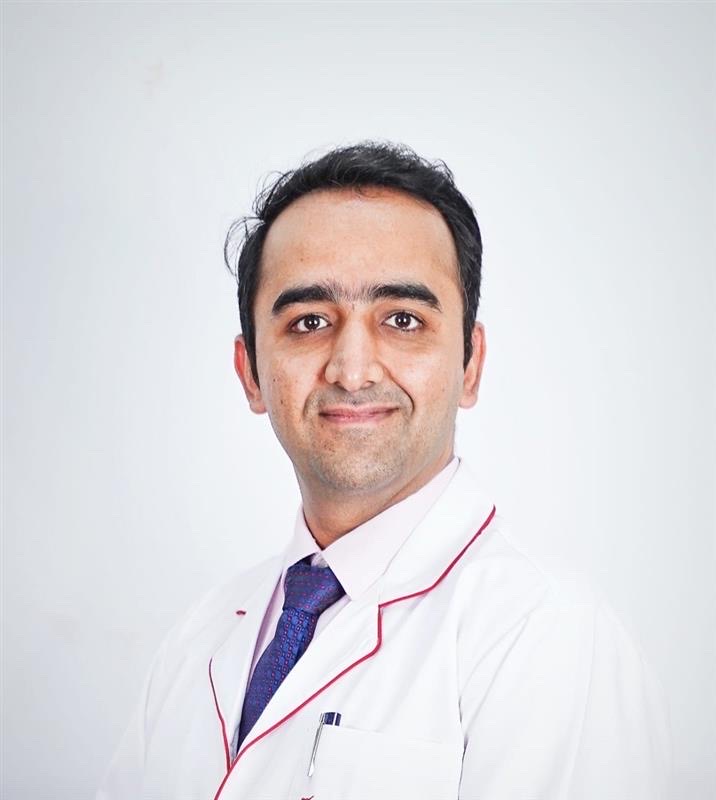
This article is medically reviewed by Dr. Tirathram Kaushik, Consultant - GI, HPB, Gynecological, & Thoracic Oncology and Robotic Surgery, HCG Cancer Hospital, Borivali.
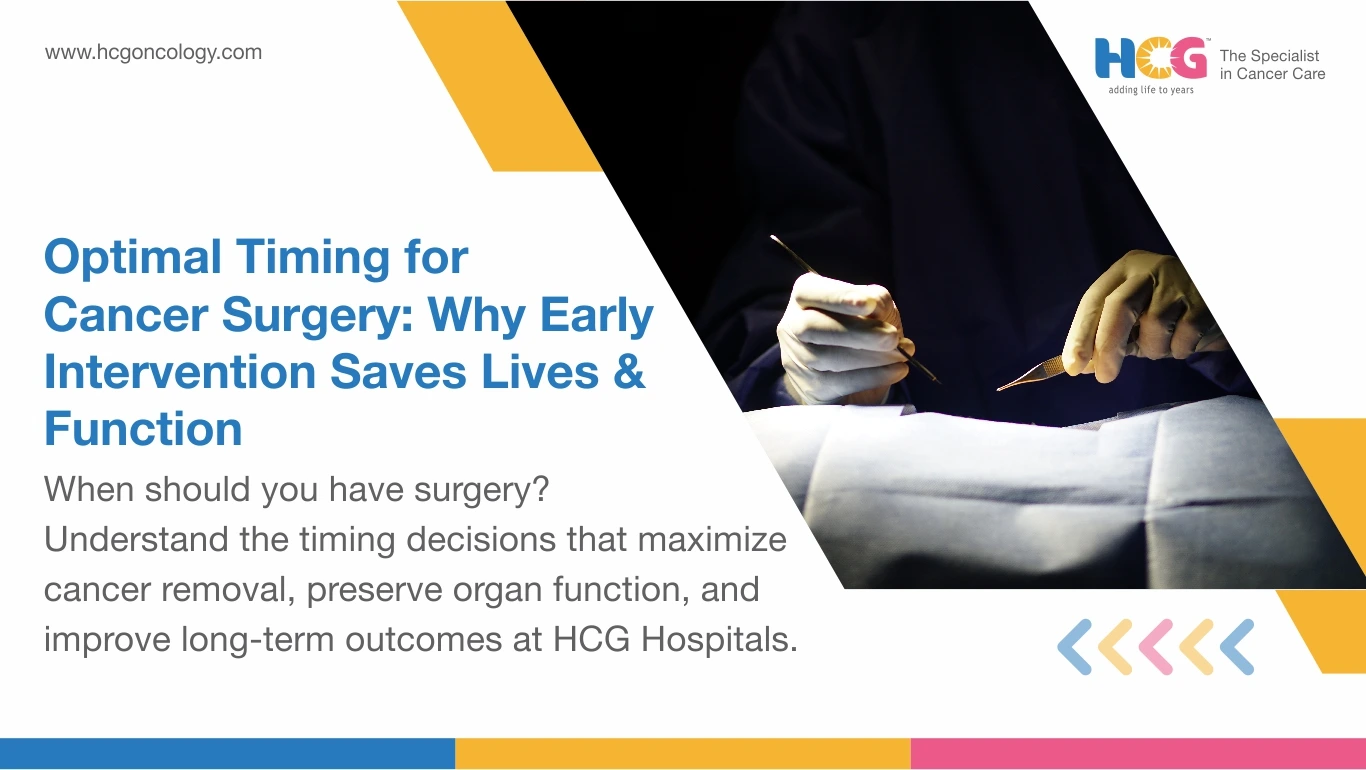
Surgery is one of the most powerful tools in cancer treatment. But its effectiveness does not depend only on the skill of the surgeon or the technology in the operating room. It depends heavily on when it happens.
Timely surgical treatment can mean removing a tumor cleanly before it spreads. Early surgical intervention can shorten recovery, reduce complications, and in many cases, make other treatments far more effective. Delayed surgery, on the other hand, can allow disease progression that changes the entire course of treatment.
This blog walks patients and families through everything they need to understand about surgical timing, the real consequences of delay, how early surgery compares to delayed surgery across outcomes, and what goes into sound surgical decision-making.
Timely surgical treatment and early medical intervention are not just clinical preferences. They directly shape how well a patient responds to treatment, how fast recovery happens, and in many cancers, whether a cure is possible at all. This blog breaks down why surgical timing is a critical factor in cancer care and what patients should know before making decisions.
Doctors do not recommend surgery on a fixed schedule. Every recommendation is based on a careful reading of tumor behavior, disease progression, patient health, and treatment planning goals. But here is what the clinical evidence consistently shows: in most solid tumor cancers, earlier surgical intervention produces better outcomes than delayed treatment.
When cancer is caught early, and surgery follows without significant delay, the tumor is more likely to be confined, more likely to be fully removable, and less likely to have spread to nearby lymph nodes or distant organs. Waiting changes that picture. Cells that were localized begin to spread. A surgery that could have been curative becomes palliative.
Early surgical intervention limits the window for disease progression. When a tumor is still localized, surgical removal is more straightforward, less physically demanding on the patient, and more likely to achieve clear margins.
The moment cancer begins invading adjacent structures or seeding lymph nodes, the complexity of any surgical procedure increases significantly, and so do the risks.
Recovery is shaped by what the surgery involves. A smaller, more targeted operation on a contained tumor is a fundamentally different experience than a complex resection performed on an advanced cancer that has invaded surrounding tissue.
Early surgical intervention often means the following:
Patients who undergo less extensive procedures also report better emotional adjustment, fewer body image concerns, and faster return to daily life. The psychological dimension of recovery is real, and early surgery supports it.
Delay in surgical care is one of the most studied risk factors in oncology. Research across multiple cancer types consistently links treatment delay to worse patient prognosis, higher rates of advanced staging at the time of surgery, and reduced survival rates.
Surgery should not be delayed when:
A few weeks may seem insignificant. For certain aggressive cancers, those weeks represent meaningful and irreversible disease progression.
| Factor | Early Surgical Intervention | Delayed Surgical Treatment |
|---|---|---|
| Tumour Stage at Surgery | Typically lower | Often advanced |
| Likelihood of Complete Removal | Higher | Reduced |
| Need for Additional Therapies | May be lower | Often higher |
| Postoperative Recovery | Generally faster | Often prolonged |
| Surgical Complications | Fewer | More likely |
| Long-term Prognosis | Improved | Worsened |
| Quality of Life Post-Surgery | Better | More variable |
This table reflects general patterns across cancer types. Individual outcomes depend on cancer biology, patient health, and the surgical team's expertise.
Delay in surgical care carries real and measurable consequences:
Not every cancer is treated with immediate surgery. Some require chemotherapy or radiation first to shrink the tumor. But in a large number of cases, early surgical intervention is the most direct path to disease control.
Cancers where early surgery has a well-established impact on outcomes include:
Early diagnosis feeds directly into the ability to intervene early. When screening programs, patient awareness, and clinical decision-making work together, the window for effective early surgery stays open longer.
Patients who are diagnosed at Stage I or II and proceed to surgery without unnecessary delay consistently show:
The recommendation to proceed with surgery, and when, comes from a detailed clinical assessment. Surgical decision-making in oncology involves:
This is a conversation, not a prescription. Patients who understand the clinical rationale behind surgical timing are better equipped to ask the right questions and participate meaningfully in their own care.
Yes, in many cases it can. Surgical complications are more common when tumors are larger, more invasive, and located near critical structures affected by disease progression. Early surgery operates in a less compromised environment.
Minimally invasive surgery, now widely available at advanced oncology centers, adds another layer of benefit. Robotic and laparoscopic approaches reduce tissue trauma, lower infection risk, and shorten hospital stays. These benefits are most accessible when surgery happens before the disease demands open, extensive resection.
Minimally invasive surgery has changed what surgical intervention looks like for eligible patients. Robotic and laparoscopic techniques offer the following:
These advantages are fully realized when surgery happens early. As the disease advances, the complexity of the procedure often rules out minimally invasive approaches, making open surgery necessary with all its associated recovery demands.
HCG Oncology is India's largest dedicated cancer care network, with over 25 centers across the country. Every center is built around one purpose: delivering the most effective cancer treatment with the least possible disruption to a patient's life.
For patients considering surgical intervention, HCG offers the following:
At HCG, surgical decision-making is never rushed and never delayed without reason. The goal is always the best possible outcome, at the right time, with the right team.
Consult our surgical oncology specialists to understand whether early surgical intervention is the right next step for your condition.
Disclaimer: This article is for general informational purposes only and is not a substitute for professional medical advice, diagnosis, or treatment. Please consult a qualified healthcare provider for any questions regarding a medical condition.

Dr. Tirathram Kaushik
Consultant - GI, HPB, Gynecological, & Thoracic Oncology and Robotic Surgery
MBBS, MS (Gen Surgery), DNB (Surgical Oncology), Fellowship in Da Vinci Robotic Surgery, USA
Dr. Tirathram Kaushik is a highly skilled and experienced Senior Consultant in GI, HPB, Gynecological & Thoracic Oncology, and Robotic Surgery at HCG Cancer Hospital in Borivali. With over a decade of expertise in delivering comprehensive cancer care, Dr. Kaushik brings a strong academic background and advanced surgical proficiency to the forefront of oncology treatment. An alumnus of the esteemed Grant Medical College, Mumbai, he pursued his MS in General Surgery from PGIMS Rohtak and went on to complete his DNB in Surgical Oncology from Kokilaben Dhirubhai Ambani Hospital.
Dr. Kaushik's surgical expertise spans thoracic oncology, gastrointestinal malignancies, hepatopancreatobiliary (HPB) surgeries, urological cancers, and gynecological oncology. He is also a certified robotic surgeon, having earned a prestigious fellowship in Da Vinci Robotic Surgery from Intuitive Surgical, USA. A dedicated academician and researcher, he has several publications to his credit in reputed national and international medical journals.
Appointment Link: Book an Appointment with Dr. Tirathram Kaushik
Feel free to reach out to us.