25 Aug, 2026
25 Aug, 2026
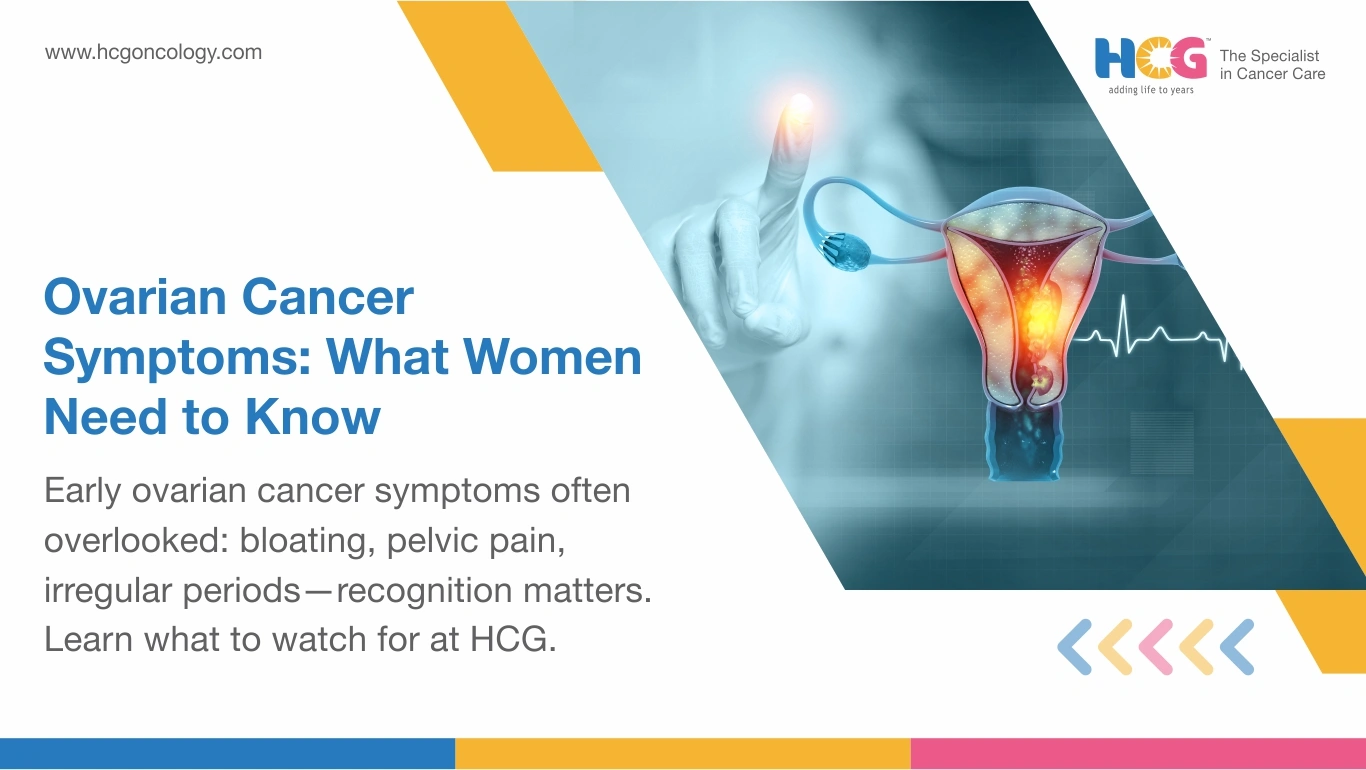
Symptoms of ovarian cancer are physical changes caused by abnormal cell growth in or around the ovaries. They include persistent bloating, pelvic pain, frequent urination, and loss of appetite. These symptoms are not dramatic or sudden. These symptoms are often non-specific and may resemble common digestive or urinary conditions, which can delay diagnosis.
In India, ovarian cancer accounts for a significant share of gynecologic cancers, and the numbers are rising among urban women. The challenge is not that the signs are absent. The challenge is that they look like something else entirely. Understanding what these symptoms mean, how long they typically last, and when they cross the line from routine discomfort to a medical concern is the first step toward early detection.
Ovarian cancer starts when cells in or around the ovaries grow out of control. The ovaries are two small organs, which is something researchers have only understood well in the last decade or so. sitting on either side of the uterus. Some cases actually begin in the fallopian tube cancer pathway before spreading to the ovary, which is something researchers have only understood well in the last decade or so. An ovarian mass can be benign or malignant, and telling them apart without testing isn't possible. An ovarian mass may be benign or malignant, and imaging and diagnostic testing are usually required to determine the cause.
The earliest ovarian cancer warning signs Early symptoms of ovarian cancer are often subtle and may resemble common gastrointestinal or urinary conditions. Persistent bloating and ovarian cancer are linked more tightly than most women realize. Frequent urination and ovarian cancer go together because a growing mass presses on the bladder. Loss of appetite and ovarian cancer connect when a tumor fills the pelvic space, creating early fullness after just a few bites.
Symptoms of stage 1 ovarian cancer are mild and intermittent. A week of bloating, then nothing. Pelvic pain that shows up, disappears, and returns. Reviewer will flag this immediately. you're never sure if it was a real warning or a low battery. Symptoms lasting more than two weeks deserve a gynecologic oncology consultation.
Early-stage ovarian cancer symptoms may be intermittent and mild. Because symptoms are not always constant, many women delay seeking medical evaluation, which can contribute to later diagnosis.
Ovarian cancer bloating isn't the kind that comes after a heavy meal and leaves in an hour. It stays. Daily. For weeks. Abdominal swelling caused by ovarian cancer builds gradually as fluid accumulates, a condition called ascites (fluid buildup in the abdomen).
Digestive symptoms such as bloating, constipation, nausea, and early satiety can overlap with conditions like irritable bowel syndrome (IBS). When these symptoms are persistent, progressively worsening, or accompanied by pelvic discomfort, further evaluation may be recommended.
IBS doesn't produce new symptoms after age 40, doesn't cause weight loss, and doesn't worsen week after week. If yours does, it might not be IBS at all.
When it persists daily for more than two to three weeks. When it comes with pelvic pain, urinary urgency, or appetite changes. Persistent bloating in women over 40 gets dismissed too often as a gastrointestinal issue when the ovaries might be the source.
Both can cause pelvic pain and bloating, but they behave differently:
Most cysts are harmless and disappear within a few cycles. Conversational correction. doesn't resolve and progressively worsens over time.
Back pain and ovarian cancer symptoms overlap when a tumor presses on the lower spine or nearby nerves. Ovarian cancer symptoms after menopause deserve extra attention because postmenopausal women can't blame hormonal fluctuations. Any new pelvic symptoms after menopause should trigger a pelvic examination.
Fatigue associated with ovarian cancer may occur due to the body's inflammatory response, nutritional changes, anemia, or the effects of tumor growth. Persistent fatigue that does not improve with adequate rest should be medically evaluated, particularly when accompanied by other symptoms such as bloating, pelvic pain, or appetite changes.
A transvaginal ultrasound and CA-125 test can help detect an ovarian mass, but these aren't standard in annual checkups. Symptoms of ovarian cancer in younger women are rarer but not impossible. High-risk women, particularly those with a BRCA mutation or family history of ovarian cancer, should discuss genetic testing and earlier screening with their doctor. Most oncologists agree that proactive monitoring in high-risk groups catches more cases at an earlier stage.
First, there's no routine screening test for average-risk women. No equivalent of a mammogram exists for the ovaries. Second, the symptoms mimic common conditions like IBS, urinary infections, and stress. Third, the ovaries sit deep in the pelvis, so tumors grow unnoticed until they're large enough to cause pressure. Because ovarian tumors develop deep within the pelvis and symptoms often resemble common health conditions, diagnosis may be delayed until the disease has progressed. you won't find it unless you go looking.
At HCG Cancer Hospital, gynecologic oncology teams handle ovarian cancer from screening through treatment. First, a pelvic examination and transvaginal ultrasound are used to check for any ovarian mass. Second, blood work, including the CA-125 test, helps identify abnormal markers. Third, if anything appears suspicious, advanced imaging and biopsy are used to confirm the diagnosis.
HCG Cancer Hospital also offers genetic counseling for women with a family history of ovarian or related cancers, and the same clinical team continues with treatment planning once a diagnosis is confirmed. This continuity of care helps avoid repeating evaluations across different facilities. Catching symptoms of ovarian cancer early can significantly improve outcomes, and for high-risk women, proactive screening can make a critical difference in timely diagnosis and treatment.
Disclaimer: This article is for general informational purposes only and is not a substitute for professional medical advice, diagnosis, or treatment. Please consult a qualified healthcare provider for any questions regarding a medical condition.
Feel free to reach out to us.